8 Ways the Retail Landscape May Change After Coronavirus
Marketers have adjusted their marketing campaigns over the recent weeks, but those will eventually revert back to normal. Retail and e-commerce, on the other hand, may be in for more permanent changes. The aftereffects of coronavirus are sure to be felt long after it’s gone, surely changing how consumers shop, interact and prioritize lifestyle choices.
In this article, I discuss 8 ways retail and services may be impacted near term and in the years to come by the coronavirus aftermath. I’ll explore topics such as:
Marketers have adjusted their marketing campaigns over the recent weeks, but those will eventually revert back to normal. Retail and e-commerce, on the other hand, may be in for more permanent changes. The aftereffects of coronavirus are sure to be felt long after it’s gone, surely changing how consumers shop, interact and prioritize lifestyle choices.
In this article, I discuss 8 ways retail and services may be impacted near term and in the years to come by the coronavirus aftermath. I’ll explore topics such as:
Local shopping
Online grocery
BOPIS and curbside pick-up
The in-store experience
At-home fitness
… and more
Click here to continue reading “8 Ways the Retail Landscape May Change After Coronavirus.”
AMA Webinar Recap: COVID-19: What It Means for E-commerce
On April 2, Omnisend hosted their first AMA (ask me anything) session on the topic of e-commerce during the COVID-19 crisis. During the session, we covered questions on a variety of topics, from how to appropriately approach your email and SMS marketing campaigns to ways to properly maneuver customer acquisition via different channels.
I was a part of a four-person expert panel with wide-ranging backgrounds where we answered questions from retailers about doing business during the crisis.
On April 2, Omnisend hosted its first AMA (ask me anything) session on the topic of ecommerce during the COVID-19 crisis. During the session, we covered questions on a variety of topics, from how to appropriately approach your email and SMS marketing campaigns to ways to properly maneuver customer acquisition via different channels.
I was a part of a four-person expert panel with wide-ranging backgrounds where we answered questions from retailers about doing business during the crisis.
The four-person panel consisted of:
Email Marketing During COVID-19: How to Send Emails During a Crisis
Marketing in a crisis, any crisis, is not easy. Marketers need to balance their human side with business needs, and knowing where that line sits is not always clear. But know this — what you do now will determine how your brand is perceived in the future.
This post by Whitney Blankenship explores the right way to approach your customers during a crisis, whether it’s COVID-19, or another future catastrophe, and how you can add value to your customers while trying to maintain your needs as a business.
Marketing in a crisis, any crisis, is not easy. Marketers need to balance their human side with business needs, and knowing where that line sits is not always clear. But know this — what you do now will determine how your brand is perceived in the future.
This post by Whitney Blankenship explores the right way to approach your customers during a crisis, whether it’s COVID-19, or another future catastrophe, and how you can add value to your customers while trying to maintain your needs as a business.
In this article, she discusses:
How to adjust your marketing during a crisis
Ways to adjust your message
How to still promote without alienating customers
Considerations to make around pricing
Top Marketing Podcasts of 2019
As host of the Commerce Marketer Podcast, I conduct a lot of interviews. But choosing my favorite episodes is like choosing a favorite child (if my kids are reading this, I love you both the same). However, I forced myself to choose some of the episodes that really resonated with me for one reason or another.
Here are some of my favorite marketing conversations from 2019, in order of episode number. I hope you enjoy.
As host of the Commerce Marketer Podcast, I conduct a lot of interviews. But choosing my favorite episodes is like choosing a favorite child (if my kids are reading this, I love you both the same). However, I forced myself to choose some of the episodes that really resonated with me for one reason or another.
Here are some of my favorite marketing conversations from 2019, in order of episode number. I hope you enjoy.
Episode 043: Super Bowl Commercial Recap Roundtable
More than 100 million people watch the Super Bowl each year, but the commercials have become the must-see event within the event. This episode discusses the Super Bowl from a marketing and entertainment perspective. We’ll revisit the commercials, halftime show, and even how we interacted with our mobile devices during the big game - after all, what good is a $5 million commercial if everyone is checking their Instagram feed?
Why I chose this episode: This episode was a three-person roundtable. The guests were fun, brought great perspective, and episodes like this are just fun to do because no one takes themselves too seriously.
Episode 046: Email Deliverability: Everything You Need to Know
Did you know that having good email deliverability does not mean your emails reach the inbox? Understanding email deliverability is crucial, yet many marketers do not fully understand what goes into it.
Why I chose this episode: My guest, deliverability expert Chris Kolbenschlag, tackles myths, best practices, things marketers shouldn’t do and other elements around email deliverability in an easy-to-understand manner — which is what I love about this episode.
Ep. 050: How Lifecycle Email Marketing Is Like a Fine Wine
This episode discuss how one compani built their email program from the ground up using lifecycle email marketing to drive nearly half of their 2018 email revenue. We cover the strategies behind triggered campaigns, how to avoid the pitfalls of email fatigue with segmentation, mistakes made with their lifecycle campaigns, and lessons learned.
Why I chose this episode: My guest was Ben Argov, president of International Wine Accessories (IWA). Ben and I met several years back and he is one of the nicest people I know. Ben is honest about what works, what doesn’t, and what needs to be improved in his email program. What made this one special was that he sent me a spreadsheet of his email metrics to help guide the conversation. If you’re into email marketing, this episode is a must-listen!
Ep. 054: How Ikonick Uses Modern-Day Marketing to Drive Success
I’m joined by Mark Brazil, co-founder of the canvas art company Ikonick, to discuss how he created a multimillion-dollar business in less than two years by combining email, video, social, and influencer marketing. Mark covers everything from social media, email marketing, content marketing, storytelling strategies, and how they measure success.
Why I chose this episode: I met Mark while speaking at a conference in Quebec City in early 2019. After our initial conversation I knew I had to have him on the show. Mark is brutally honest, in a Gary V type of way (after listening you’ll know why), and shares some amazingly useful insights. This episode is great for entrepreneurs, and email and social media marketers alike. I forgot to mention, this dude is funny as heck!
Ep. 059: How Vera Bradley Designs a Modern-Day Retail Experience
I’m joined by Harry Cunningham, vice president of retail brand experience at Vera Bradley, to discuss what goes into designing modern-day brick-and-mortar stores that appeal to consumers. Harry explains some of the driving forces behind Vera Bradley’s redesign of their storefronts, explains how the store design revolves around solving shopper challenges, and shares everything you can think of when it comes to the in-store experience.
Why I chose this episode: It’s such a cool topic — and one I find fascinating. Harry is an engaging speaker and really brings you into his world of how he approaches store design concepts through stories that demonstrate the how and why he makes the decisions he does.
Ep. 60: The Behavioral Science of Marketing
Nancy Harhut is a behavioral science marketer and chief creative officer at HBT Marketing, discusses how marketers can use behavioral science — like “eye magnet” words, the Von Restorff Effect, proper use of charts and images, tactile experiences, and landing page techniques — to nudge their customers and encourage purchase decisions.
Why I chose this episode: Again, this topic is fascinating! This was a topic I had been wanting to cover for some time, and was fortunate enough to mention it to another guest of mine who coincidentally knew someone. That someone was Nancy. And boy, did she deliver! Nancy discussed so many tactics in an easy-to-understand manner, while providing specific use-cases for each. This episode has so many practical takeaways for marketers.
Find out more about The Commerce Marketer Podcast
Back to blog home
My Five Favorite Marketing Posts of 2019
I write a lot of content throughout the year, but some pieces stand out to me more than others. From behavioral science to charting daily email sends for two-plus years, here are the five articles from 2019 that really resonated with me. I hope you enjoy.
I write a lot of content throughout the year, but some pieces stand out to me more than others. Here are the five articles from 2019 that really resonated with me. I hope you enjoy.
Behavioral Science: The Magic That Turns Prospects Into Customers
If you ask a hundred people what makes a good article headline or email subject line, you may get a hundred different answers. After all, it’s subjective, isn’t it?
Not entirely, as many marketers know. There’s a science behind what makes a consumer open an email, click on a call to action (CTA) and make a purchase. Whether it’s writing an attention-grabbing headline or getting someone to “click and convert,” this article outlines ways any business can begin using behavioral science to improve their marketing.
Cyber 10: The Holiday Shopping Sprint You REALLY Need to Prepare For
The holiday season is upon us, and, once again, it’s expected to set online sales records to the tune of $142 billion, according to eMarketer estimates. As online sales rapidly increase year-over-year, trends evolve and retailers adapt.
Marketers need to look beyond the Cyber Five -- a historically high time for holiday online sales -- and instead prepare for the 10-day period that stretches from the Sunday before Black Friday through the Tuesday following Cyber Monday. >> read more <<
How to Use Social Proof in Email Marketing
Retailers constantly seek ways to stand out in crowded inboxes and influence subscribers to make purchases, some of them by offering deep discounts. But for companies that either can’t or don’t want to shrink their margins, finding another way to influence purchase decisions inside emails is essential. This is where using social proof in your email marketing can be a powerful sales tactic.
Luckily for companies — especially online retailers — they already possess a lot of content that can be used for social proof. Here are a few ways retailers can utilize this content in their email marketing programs to influence purchases. >> read more <<
Want to Win Back Lapsed Purchasers? Focus on Customer Experience
Lapsed-purchaser campaigns, also known as win-back campaigns, are a staple in many retailers’ email marketing programs. These automated emails are sent to past purchasers who have not repurchased in a certain period of time, and the strategy typically consists of several incentivized messages that often increase in value from one email to the next.
Time and time again, I see retailers consider these messages a high priority. And for whatever reason, they’re almost always deemed a much higher priority than implementing post-purchase messages.
There’s a fundamental flaw with this approach … >> read more <<
Which Day Should You Send Your Marketing Emails?
Which days are best for sending marketing emails and which days are most popular for retailers? Should you send on the same high-volume days as other retailers, or send on lower-volume days so you can more easily stand out in the inbox?
Now, you may finally have an answer. >> read more <<
There you have it, my five favorite (for whatever reason) articles of 2019. To see more of what I’ve written, be sure to check out the Press page in the navigation.
BACK TO BLOG HOME
The Best Day to Send Your Marketing Emails
Which days are best for sending marketing emails and which days are most popular for retailers? Should you send on the same high-volume days as other retailers, or send on lower-volume days so you can more easily stand out in the inbox?
Now, you may finally have an answer.
I am signed up for hundreds of retailer email programs and monitor my inbox for daily send volume. While each retailer will have their own unique requirements, here are some tools you can use to help you determine which days might be best to send your marketing emails.

2019 Email Marketing Sends
2019 marketing email send volume broken down by day and month. Check out which days were the most and least popular days to send marketing emails.
2018 Email Marketing Sends
2018 marketing email send volume broken down by day and month. Check out which days were the most and least popular days to send marketing emails.
2018 Email Marketing Sends - By Day and Month
The chart below reflects the daily email send volume of 2018. The daily lift and declines reflect the average number of emails retailers sent on that day of the week compared to the overall number of emails sent during the entire year.
As you can see, retailers sent …
Top Email Send Days of 2018
The chart below reflects the daily email send volume of 2018. The daily lifts and declines reflect the average number of emails retailers sent on that day of the week compared to the overall number of emails sent during the entire year.
For example, retailers sent 8.61% fewer emails on Sundays than the average number of 2018 daily email sends. As you can see, Thursdays was the most popular day for retailers to send marketing emails, followed by Friday and Tuesday.
Weekends were the least popular days to send marketing emails, with Saturday being the day of the week where the fewest emails were sent.
Continue reading to see monthly and daily breakdowns. You can view 2019 results here and see how daily send patterns changed. Stay tuned for ongoing 2020 updates.

Does this chart tell you that you should avoid sending marketing emails on weekends? Absolutely not. Again, each business will have their own unique circumstances. Some retailers might look at this as an opportunity to increase their sends on lower-volume days as a way to stand out in an otherwise crowded inbox, especially during the holiday season. Others may choose to follow the crowd and send on those higher send days.
Test your email send days, but remember, people do shop on the weekends.
Monthly Email Marketing Sends
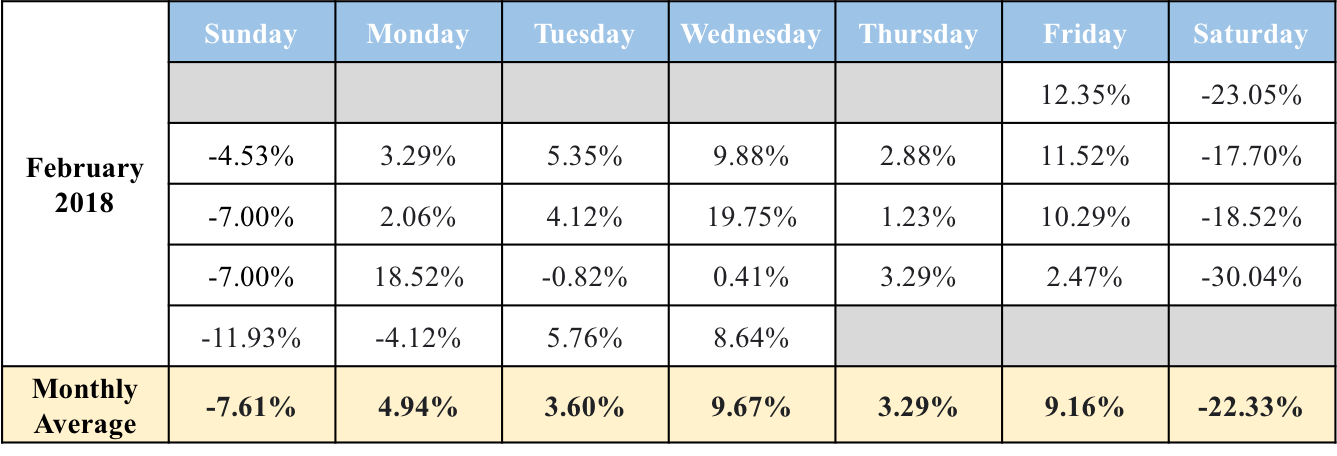
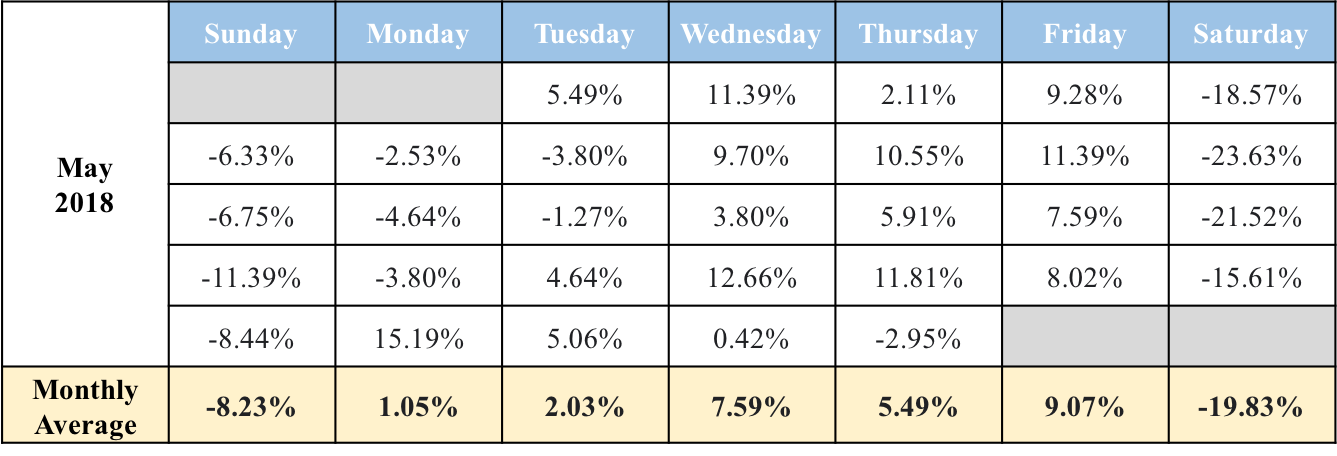
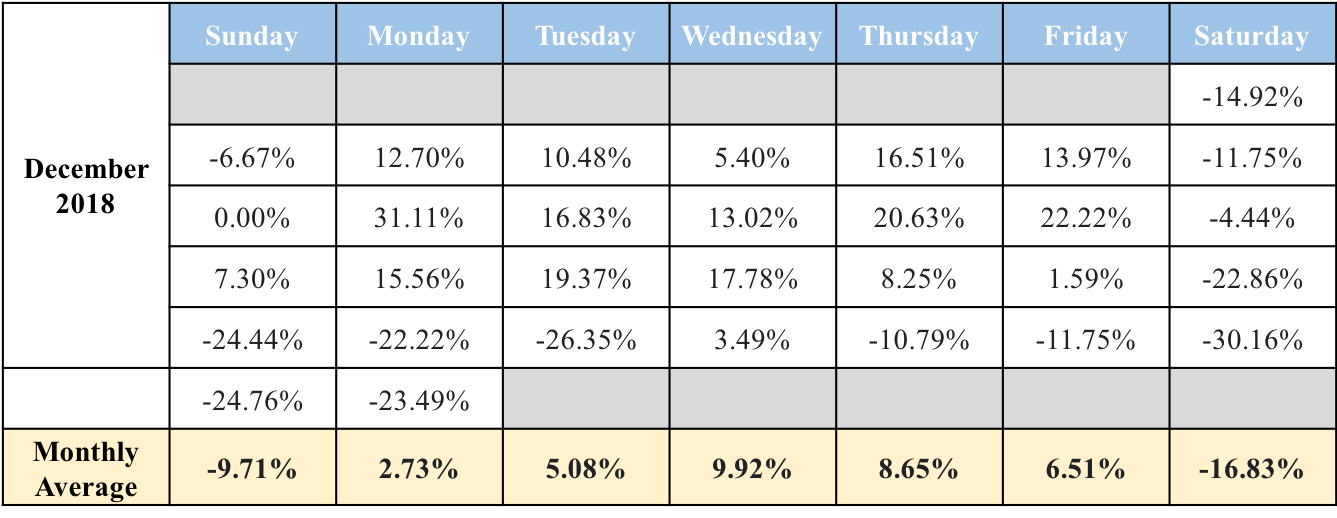
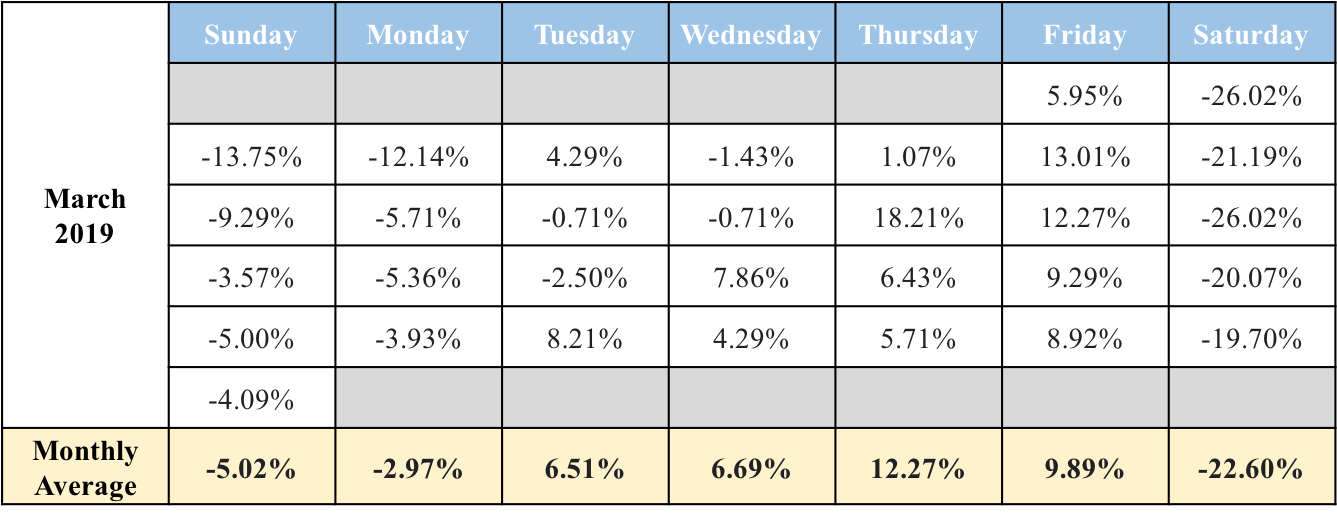
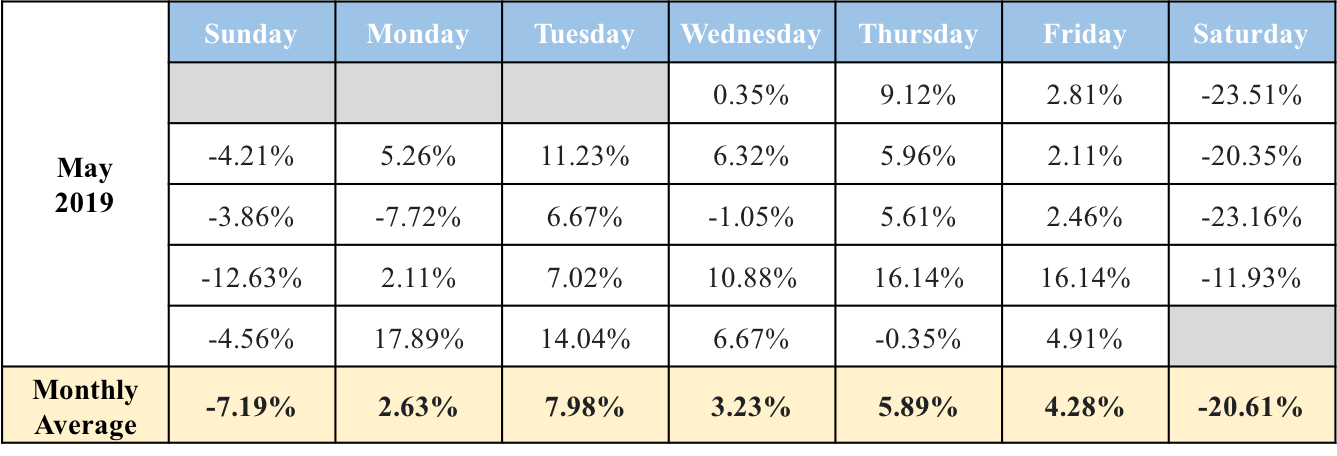
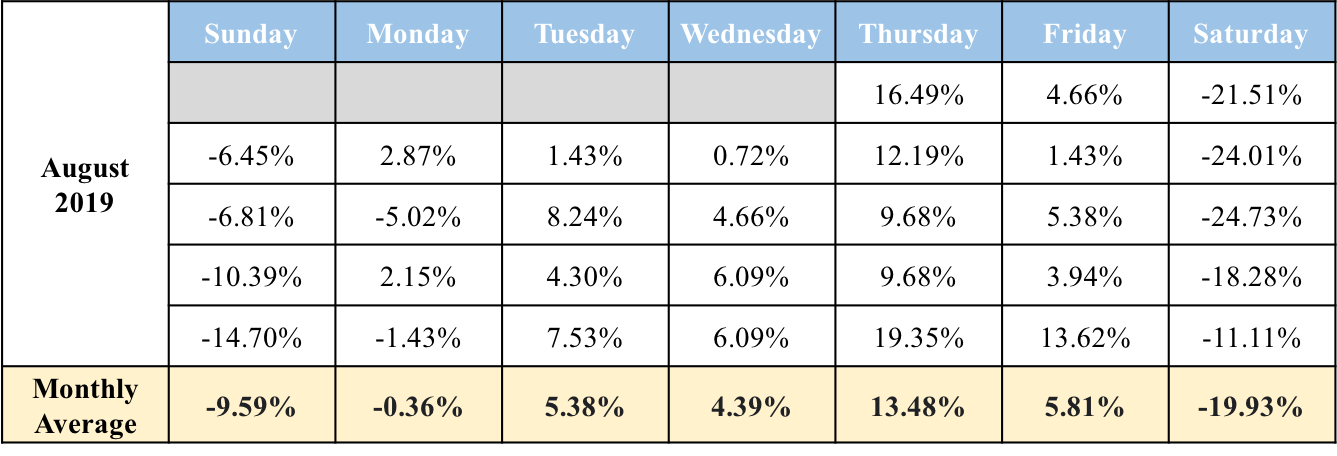
This monthly and daily breakdown is based on monthly results. The lifts and declines are based on the average number of sends for that day compared to the average number of emails send that month.
In this example, January’s highest send patterns are slightly different than the daily sends for the entire year. You’ll continue to see these daily shifts throughout the year.





2019 Email Marketing Sends - By Day and Month
(IN PROGRESS): The chart below reflects the daily email send volume of 2019. The daily lifts and declines reflect the average number of emails retailers sent on that day of the week compared to the overall number of emails sent during the entire year.
For example, retailers sent …
Top Email Send Days of 2019
The chart below reflects the daily email send volume in 2019. The daily lifts and declines reflect the average number of emails retailers sent on that day of the week compared to the overall number of emails sent during the entire year.
For example, retailers sent 8.32% fewer emails on Sundays than the average number of 2019 daily email sends. As you can see, Thursdays was the most popular day for retailers to send marketing emails, followed by Friday and Tuesday.
Weekends were the least popular days to send marketing emails, with Saturday being the day of the week where the fewest emails were sent.
Continue reading to see monthly and daily breakdowns. In 2019, Fridays saw a decrease in email sends while Tuesdays saw an increase compared to 2018. You can view 2018 results here and see how daily send patterns may have changed.

Does this chart tell you that you should avoid sending marketing emails on weekends? Absolutely not. Again, each business will have their own circumstances. Some retailers might look at this as an opportunity to increase their sends on lower-volume days as a way to stand out in an otherwise crowded inbox. Others may choose to follow the crowd.
Test your email send days, but remember, people do shop on the weekends.
Monthly Email Marketing Sends
This monthly and daily breakdown is based on monthly results. The lifts and declines are based on the average number of sends for that day compared to the average number of emails send that month.
In this example, January’s highest send days are slightly different than the daily sends for the entire year. You’ll continue to see these daily shifts throughout the year.







Keys to a Great Unboxing Experience
Unboxing is about providing a branded, aesthetic opening experience that builds excitement. The customer purchase experience shouldn’t end when the package arrives — that’s when the experience really just begins. The way customers feel about your brand after the purchase determines whether they become repeat customers or remain a one-time buyer.
Unboxing is more than opening a package
Unboxing is about providing a branded, aesthetic opening experience that builds excitement. The customer purchase experience shouldn’t end when the package arrives — that’s when the experience really just begins. The way customers feel about your brand after the purchase determines whether they become repeat customers or remain a one-time buyer.
The unboxing experience is an essential part of that journey and influences those feelings. This can be especially true for online-only retailers, as this is the only physical touchpoint the brand has with the consumer.
Click below to read my thoughts on the makings of a great customer unboxing experience, which includes:
The package
Product wrapping
Packaging materials
Inserts
Samples
Click here to continue reading
Using Behavioral Science in Marketing
Stop guessing what makes customers click. In this post, you’ll dive into real-world behavioral science applied in marketing, from headline hooks and social-proof nudges to decision-making shortcuts and conversion strategies. Science meets strategy, ready to plug into your campaigns.
What is Behavioral Science in Marketing?
Behavioral science in marketing focuses on how people think, feel, and make decisions, then applies those insights to influence engagement and conversions. By using cognitive biases, social proof cues, and decision-making shortcuts, marketers can create more persuasive messages and higher-performing campaigns.
Using Behavioral Science in Marketing
If you ask a hundred people what makes a good article headline or email subject line, you may get a hundred different answers. After all, it’s subjective, isn’t it?
Not entirely, as many marketers know. There’s a science behind what makes a consumer open an email, click on a call to action (CTA), and make a purchase. Whether it’s writing an attention-grabbing headline or getting someone to “click and convert,” understanding that people rely on certain decision-making defaults helps marketers nudge them to take a desired action.
In this article, I discuss how to use behavioral science to improve marketing campaigns. Topics include:
Strategies to write effective headlines and subject lines
Using social proof
Content and landing pages
Choosing compelling images
Use of charts and graphs
Principle of authority
The science behind pricing
CTA colors
The science behind “possession” and how it can reduce returns
Tactile experience
CLICK HERE TO CONTINUE READING
Cyber 10: The Holiday Shopping Sprint You REALLY Need to Prepare For
Most digital marketers have heard of the Cyber Five, the five shopping days from Thanksgiving Day through Cyber Monday. These five days happen to be the top five online sales days for the entire holiday season, accounting for 19% of all online holiday sales.
And now, within Gray November comes another consumer shopping evolution that will become a holiday season norm — the Cyber 10.
The holiday season is upon us, and, once again, it’s expected to set online sales records to the tune of $142 billion, according to eMarketer estimates. As online sales rapidly increase year-over-year, trends evolve and retailers adapt.
Take Gray November, for example. Over the past couple of years, we have seen those signature stand-alone online shopping days like Black Friday and Cyber Monday morph into a month-long series of discounts leading up to those days.
And now, within Gray November comes another consumer shopping evolution that will become a holiday season norm — the Cyber 10.
In this article, I discuss why marketers need to look beyond the Cyber Ten and pay attention to the Cyber Ten. Topics include:
Which days make up the Cyber Ten
Why the Cyber Ten is no longer a trend, but an annual occurrence
Which days in the Cyber Ten are seeing the biggest year-over-year growth
Why Cyber Monday, even with all of the changes, remains king
CLICK HERE TO CONTINUE READING
How to Use Social Proof in Email and on Your E-commerce Site
Using social proof, a type of conformity where one person copies the action of another, as a part of the on-site e-commerce experience can be an effective strategy for increasing sales. A social proof strategy is essentially influencer marketing, except the focus is on real customers.
Luckily for companies — especially online retailers — they already possess a lot of content that can be used for social proof. Here are a few ways retailers can utilize this content in their email marketing programs and on their e-commerce site to influence purchases.
Using social proof, a type of conformity where one person copies the action of another, as a part of the on-site e-commerce experience can be an effective strategy for increasing sales. A social proof strategy is essentially influencer marketing, except the focus is on real customers.
Luckily for companies — especially online retailers — they already possess a lot of content that can be used for social proof. Here are a few ways retailers can utilize this content in their email marketing programs and on their e-commerce site to influence purchases.
In these two articles, I write about ways to use social proof in both email marketing and on your website, and cover topics such as:
How to Use Product Reviews in Email Marketing
How to Use Social Media in Email Marketing
How to Use Your Employees in Email Marketing
Using product reviews, website Q&A sections, and employee picks on your e-commerce site
Using social proof in other channels
READ ABOUT USING SOCIAL PROOF IN EMAIL MARKETING
READ ABOUT USING SOCIAL PROOF ON YOUR WEBSITE
Are Loyalty Programs Still Doing Their Job?
It’s a pretty disloyal world out there, but can you really blame the consumer? Online shopping has never been easier, and stores have been stepping over each other to see who can offer the deepest discount. While discounting your way to a one-time purchase might work in the short term, at the end of the day, you need to aim for a higher prize: customer loyalty.
Many retailers attempt to accomplish this with an official loyalty program. There’s just one problem – they rarely work.
It’s a pretty disloyal world out there, but can you really blame the consumer? Online shopping has never been easier, and stores have been stepping over each other to see who can offer the deepest discount. While discounting your way to a one-time purchase might work in the short term, at the end of the day, you need to aim for a higher prize: customer loyalty.
Many retailers attempt to accomplish this with an official loyalty program. There’s just one problem – they rarely work.
In this article, I’ll discuss:
What makes a good loyalty program
Why customers don’t feel loyalty to programs
Examples from Starbucks, Macy’s, Bruegger’s Bagels, and Amazon
>>> Click here to continue reading on multichannel Merchant <<<
The Threat of Disappearing Brands in the Age of Voice Assistants
When you see a red and white can of soda or a Peter Pan silhouette on a jar, you see a brand. You know the product. But what happens when you don’t have those visual cues to draw you to certain items when you shop?
Brands used to rely on traditional advertising to embed their brand imagery in our minds and remain visible and relevant to their audience. But in today’s digital-first world, consumer attention is more fragmented. Television screen time is declining, while time spent on smartphones and other mediums is increasing. This has created challenges for brands trying to stay in front of consumers.
When you see a red and white can of soda or a Peter Pan silhouette on a jar, you see a brand. You know the product. But what happens when you don’t have those visual cues to draw you to certain items when you shop?
Brands used to rely on traditional advertising to embed their brand imagery in our minds and remain visible and relevant to their audience. But in today’s digital-first world, consumer attention is more fragmented. Television screen time is declining, while time spent on smartphones and other mediums is increasing. This has created challenges for brands trying to stay in front of consumers.
Voice assistants add an additional layer of uncertainty to the traditional means of keeping us brand loyal. With devices like Siri, Google Home, and Amazon’s Alexa-enabled options, consumers are relying more and more on browserless interactions. In fact, comScore predicts that 50% of all searches will be voice searches by 2020. That’s not that far away.
But while performing informational searches is one thing, the idea of searching for products and actually buying them via browserless commerce is quite another. This begs the question: if consumers are searching and buying via voice, will this erode the value of brands as we know them?
The Age of Voice Is Upon Us
Amazon claims it sold millions of Alexa devices over the Black Friday weekend and that the Echo Dot was the top-selling item on the website worldwide during the holiday season. That equates to a lot of people saying, “Hey Alexa, order me batteries.” In this scenario, the first result you get is for Amazon private-label batteries. So how do Duracell and Energizer compete with this? How do their branding efforts influence a consumer’s purchasing decision when those visual brand cues are no longer available? Are either of these two brands stronger than Amazon? Battery sales figures from Amazon indicate they’re not.
And what about those instances when Alexa fails to deliver the brand name you’re looking for and suggests you open a browser to find it? With convenience so in demand, you may opt to purchase the suggested non-branded product just to avoid spending one more second shopping for batteries. If you’re willing to take the extra step to switch devices just to make the purchase, you must really love the brand.
What Do Voice-Assisted Consumers Want?
There is no doubt that the post-Gen Z generation, often referred to as Generation Alpha, will have voice assistants as a part of their everyday life. Gen Z is coming of consumer age during this evolutionary period, and they have the spending power and skills to navigate technology. And what about millennials? According to eMarketer, thirty million were expected to use voice assistants monthly in 2017. So, what do these consumers want from the experience, and how can brands provide it?
Millennials are loyal to strong brands. And they’re drawn to both value and hyper-convenience. What does this have to do with browserless commerce? In a recent conversation with millennial marketing expert Jeff Fromm, he said this age group is loyal to brands when the brand is strong, but will trade down when it is weak. If you pair that idea with the millennial interest in value and convenience, you understand the magnitude of the challenge brands are facing. Voice assistants are the definition of hyper-convenience.
Millennials also appreciate value, which doesn’t always mean the lowest price. Think bang for the buck. It’s one reason millennials often mix brand names and private labels. If we use the Amazon battery example, Amazon hits the trifecta: a strong brand, value, and convenience. How can brand-name battery makers compete?
But millennials are just one example. Other generational groups share many of the same values. In a browserless era, brand-name paper towels, peanut butter, ketchup, underwear, mouthwash, or any other branded basic runs the risk of fading away without the visual cues that advertising built and in-person shopping enhanced.
What Can Marketers Do?
Focus on communicating your value in a way that gives consumers a reason to verbally request your brand. For example. I love Utz’s old-fashioned hard sourdough pretzels. Not pretzel rods, or small twists, but the big ones that crack my teeth! I need to convey to my wife, who does the majority of shopping, why she should specifically request that product and not settle for the recommended sourdough rods.
The same goes for when the household’s usual shopper isn’t the one ordering from the voice assistant. In the store, I might be able to recognize the laundry detergent we use by its color and logo. Without that visual, how do I choose the right one? My instinct might be to order the recommended product or the cheapest one. How you differentiate your product from generic brands is critical.
Voice assistants also change the SEO game. How we speak will become more important than the words we type into a search engine. As a non-SEO expert, I would optimize for voice by writing and producing web content in a conversational style. Consider what consumers might ask when searching for your product and how your product or content might help solve their needs. For example, I might ask, “Hey Google, what’s the best way to keep my toes warm in cold weather?” Would the content you produce or the way you write your sock’s product description be relevant enough to return a query result?
In an age of voice, the potential for brand erosion certainly exists. How far will it go? Frankly, we don’t know yet. This evolution should force existing brands to rethink how they target and interact with their audience. Staying top of mind at a time when consumers are constantly connected, value is weighted, price comparison is commonplace, and convenience is essential is difficult. And it’s especially true when the actual device returning the consumer’s request may be a direct competitor. Will brands as we currently know them be forever changed by this evolution?
In the age of voice, a familiar logo is no longer enough.
This was originally published on Multichannel Merchant.
Holiday Predictions Recap: Did I Hit the Mark or Shoot My Eye Out?
The holiday season exploded, much like a shot fired from a Red Rider carbine action, 200-shot, range model air rifle, with a compass in the stock and this thing that tells time. Back in October, I laid out my predictions for the 2017 holiday season. Now it’s time to take aim at my predictions and see whether I had Black Bart in the crosshairs or ended up shooting my eye out.
The holiday season exploded, much like a shot fired from a Red Rider carbine action, 200-shot, range model air rifle, with a compass in the stock and this thing that tells time. Back in October, I laid out my predictions for the 2017 holiday season. Now it’s time to take aim at my predictions and see whether I had Black Bart in the crosshairs or ended up shooting my eye out.
Where I Hit the Mark
Prediction: More Mobile Sales
Last year, mobile accounted for 30% of all online sales. I predicted mobile sales would increase to roughly 35%.
Result: We all saw this coming. Mobile accounted for 40% of online purchases, 33% of online revenue, and 56% of traffic, according to Adobe. If I’ve said it once, I’ve said it a million times; if you’re not optimized for mobile, you’re not optimized.
Prediction: Early Sales
Online holiday sales will start in October.
Result: Seeing as every day in November drove $1 billion in online sales, we know people were shopping the deals early. From my personal inbox, the incentives offered by retailers during the final week in October were right in line with those offered in November.
Prediction: Exclusions Apply
You will see fewer “off everything” promotions and an increase in discounts on “select items.”
Result: I did notice an uptick in select categories of sale items, such as discounts on pajamas one day and sweaters the next. While I did see exclusionary sales, I think they were handled much better than last year. Last year, in many instances, I would cart items only to find out at checkout that they were not discounted. This year, I noticed the sales having their own sections on websites and emails clearly defining which categories of products were on sale.
Prediction: Black Friday and Cyber Monday
I predicted both days would drive over $1 billion in mobile commerce and that the promotions for these days would start on Sunday or Monday prior.
Result: Black Friday raked in nearly $1.9 billion in mobile revenue, nearly 37% of all of Black Friday’s online revenue. Cyber Monday became the first day ever to reach $2 billion in mobile revenue, setting a new mobile benchmark.
Black Friday wasn’t just a day – it was a weeklong event. Even though Gray November was in full effect, many retailers started their Black Friday earlier that week. I made 92% of my purchases prior to Black Friday, and the other 8% on Black Friday itself. The deals were out early.
Prediction: Thanksgiving Day
I predicted that Thanksgiving Day would cross $2 billion in online sales for the first time ever.
Result: Online sales clocked in at $2.87 billion for the day. This day keeps growing as a critical online shopping day.
Prediction: Browserless Commerce
I predicted voice assistants would be the hottest sellers of the season, with Amazon devices being the No. 1 sellers in this group.
Result: Well, Apple’s HomePod was delayed until 2018, handing market share to Google and Amazon, and Google did not disclose how many devices were sold during the holidays.
But does it even matter? Amazon appears to be the big winner here. Amazon’s David Limp, head of devices, said that millions of Alexa-enabled devices were sold over Black Friday weekend. Amazon later said the Echo Dot was the top-selling item on the website worldwide during the holiday season, while the Fire TV Stick was runner-up. Can households claim Alexa as a dependent?
Prediction: Amazon’s Take
Amazon captured 38% of the online holiday sales in 2016, and I predicted this figure would inch up to the 45% mark.
Result: Amazon is king. GBH Insights estimated Amazon accounted for between 45% and 50% of online sales during the holidays. On Thanksgiving and Black Friday, Amazon accounted for 45% of online transactions among the 50 top retailers, according to Hitwise. Amazon also announced Cyber Monday was its best day ever, surpassing even Prime Day. Considering they were responsible for 44% of all online sales in 2017, this all sounds like just another day in Amazon-land.
A Few Half-Baked Holiday Results
Prediction: Even More Mobile Clicks
In Q4 2016, mobile accounted for nearly 57% of paid search clicks, with 47% coming from smartphones. I predicted we would see continued increases.
Result: At the time of writing, the data is not yet available. However, with 56% of holiday traffic coming from mobile, I would expect this prediction to be a successful one.
Prediction: In-Store Exclusives
In an attempt to drive in-store traffic, I predicted you might see a rise in brick-and-mortar retailers offering “off everything” or deeper discount sales for in-store only.
Result: There was a noticeable increase in retailers offering an additional discount, on top of the online discount, for shopping in-store. However, a relatively small number offered store-only discounts. In fact, I was astounded to see some omnichannel retailers make specific mention of the discounts being for online purchases only. Why would they not want their customers to come into the store? If anything, make it available in both places.
Prediction: Re-engineering the Brick-and-Mortar Experience
I predicted we’d see a lot of in-store-only Black Friday and Cyber Monday sales, as well as some in-store price-matching.
Result: While there was a noticeable rise in extra in-store incentives, there seemed to be relatively few in-store-only sales for these signature days. This might be why Shopertrak reported that foot traffic to physical retail stores was down 1% on Black Friday.
And to no one’s surprise, Black Friday deals were widely available for the entire week (and weekend) of Thanksgiving. Looking at my own inbox, more than 20% of all email subject lines contained the term “Black Friday” on the Monday before.
And yes, price-matching was seemingly everywhere. Stores like Dick’s, Walmart, Best Buy, Sears, Newegg, and even Amazon, in some cases, all deployed price-matching strategies during the holidays.
Prediction: Email Marketing Will Continue to Dominate
Result: This one is still pending, as complete data is still being analyzed. Adobe did report that on Cyber Monday, email drove 24.9% of sales, closely followed by the 22.9% from paid search. My inbox was extremely busy. In November, I received almost 25% more emails this year than last year. Year over year, Bronto sent more than 25% more emails on both Black Friday and Cyber Monday. Email continues to be a highly effective marketing tool for retailers.
Where I Shot My Eye Out
Prediction: More Billion Dollar Days.
I predicted we’d see 60 of the 61 days in November and December rake in $1 billion in online sales, up from the 57 days in 2017.
Result: 58 of 61 days topped the $1 billion mark. Every day in November reached this milestone, further reinforcing Gray November as a mainstay, not a trend. While improving upon last year, December let me down. Come on, December!
Prediction: The largest online shopping day of the year
I predicted that for the first time, Black Friday – not Cyber Monday – would be the largest online shopping day of the year.
Result: Here’s the big one. I predicted Black Friday to be the online king of the year. My reasoning was based on the industry-accepted benchmark of 2016 Black Friday and Cyber Monday online sales of $3.34 and $3.45 billion, respectively. We have been seeing this gap seemingly close year over year. Inexplicably, when the 2016 baselines were referenced, these numbers were surprisingly different, at over $4.3 and $5.65 billion each day, respectively. What a difference! While the industry thought Black Friday was about to catch Cyber Monday in sales, these adjusted numbers show that this wasn’t quite the case.
All in all, this year’s Cyber Monday reportedly clocked in at $6.59 billion, and outperformed Black Friday by $1.5 billion. Although Cyber Monday has some breathing room as king of online sales, Black Friday, at over $5 billion, is no day to smirk at.
And What About My “Bold” Predictions?
Predictions:
Starbucks will take flak over its holiday cup design. ‘Tis the season!
I will once again purchase my tree on Black Friday.
Fruitcake, while good in theory, will continue to be a poor party dessert.
Results: A little, yes, and yes!
The Starbucks cup design faced only minor controversy this year. Hey, someone has to complain, right?
I again purchased my tree on Black Friday, but not from the usual store. Upon arriving at my usual retailer, I was greeted with a ghost town. My local fire department’s tree lot was the winner this year. I absolutely loved my tree, and that usual retailer may have just lost my tree business forever.
And no, I did not serve fruitcake at my holiday party.
While not all of my predictions for 2017 hit the target, coming up with them is always fun. And by all accounts, this holiday season was great for consumers looking for a deal. Although retailer margins may have been squeezed, retailers certainly benefited from the high shopping turnout. This year, I look forward to seeing who Amazon acquires (I have my thoughts), how consumer behaviors will shift, and how retailers will adapt to meet their needs. These will, of course, all affect my predictions. Hopefully, next year, my predictions will be more like a Red Rider and less like pink bunny pajamas. Only time will tell.
This was originally published on Multichannel Merchant.