Featured Post: My Reading & Podcast List
Here are recent books I’ve read and podcasts I enjoy. If you’re looking for something interesting to listen to or read, these are a few that have stood out to me. Let me know if you have a recommendations.
8 Ways the Retail Landscape May Change After Coronavirus
The world is a different place than it was just a month ago. As companies try to maintain their business and stay afloat, many are wondering about the long-term impact of coronavirus on the retail and ecommerce industry. Here are some ways the dynamics of retail and services may be impacted in near term and in the years to come.
The world is a different place than it was just a month ago. As companies try to maintain their business and stay afloat, many are wondering about the long-term impact of coronavirus on the retail and ecommerce industry.
Marketers have adjusted their marketing campaigns over the recent weeks, but those will eventually revert back to normal. Retail and e-commerce, on the other hand, may be in for more permanent changes. The aftereffects of coronavirus are sure to be felt long after it’s gone, surely changing how consumers shop, interact and prioritize lifestyle choices.
We’ve all experienced some consumer shifts, but are they a product of the times or will they stick around for the long haul? Here are some ways the dynamics of retail and services may be impacted near term and in the years to come by the coronavirus aftermath.
Consumers Become Hyper-Focused on Shopping Local
There’s been a growing trend to shop local. But millions have been furloughed or unemployed, many from local businesses including retail shops. In many places, keeping dollars in the local community and supporting small businesses post-pandemic will become more important than ever.
I wouldn’t be surprised to see local restaurant days or other small business days pop up across the country. Communities have a way of coming together after catastrophes like New Orleans did after Hurricane Katrina.
Local businesses should invest in growing their online presence an their email and SMS subscriber list for when things return to “normal.”
E-Grocery Delivery Goes for a Ride
Online grocery adoption has been slow in the U.S., but the coronavirus pandemic may turn out to be the catalyst grocers have been seeking.
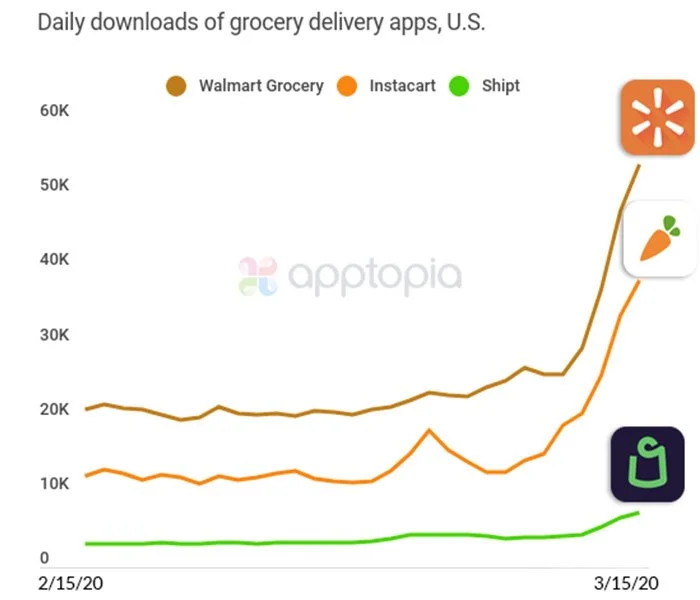
According to CivicScience, 47% of consumers said they were shopping for online groceries more during the week of March 22, 2020, compared to only 11% just three weeks prior. And a recent Gordon Hasket Research Advisors survey conducted on March 13, 2020 found 41% of those who ordered food online during the previous week were first-time online grocery customers.
Apptopia reported a spike in app downloads for e-grocery services. Walmart’s grocery app downloads increased by 160% and Instacart by 218% compared to the average in February.
For consumers, one challenge with e-grocery is getting used to selecting and ordering a large number of items. Normally, the time to adjust to this process can be too much of a hurdle, but forced quarantines have accelerated that process. The convenience may be too much for some consumers to ignore post coronavirus.
BOPIS and Curbside Pickup Accelerate
Buy-online pick-up in-store (BOPIS) and curbside pickup have become increasingly popular, but similar to e-grocery have seen a sharp increase because of coronavirus.
According to Adobe, BOPIS saw a 62% year-over-year increase from Feb. 24 to March 21, 2020, and according to apptopia, U.S. downloads of Target’s mobile app more than doubled from Feb. 15-March 15, 2020. Arts and crafts retailer Michael’s and fabric retailer Joann are two of many who started offering curbside in response to the call for social distancing.
As with e-grocery, BOPIS and curbside are all about convenience. For retailers, this comes with both pros and cons. In-store foot traffic drives planned and unplanned purchases and helps them merchandise the square footage they’re already paying for. On the other hand, pickup services drive sales from convenience-minded shoppers and can make store economics look “normal.”
According to Target CEO Brian Cornell, when an online order is fulfilled from the back of a store instead of an FC, about 40% of the cost goes away. And when a customer orders online and uses BOPIS, curbside or Shipt, about 90% of the cost goes away. So, there are some hefty benefits for stores to keep the adoption of these services high.
Even with BOPIS adoption increasing over recent years, the necessity of using it now may cause permanent adoption to spike.
Improving the In-Store Experience
While brick-and-mortar retailers were already investing in ecommerce and reshaping their store economics to become more profitable, massive store closures may force them to rethink their physical assets. Every CEO has to be thinking, “What if this happens again?”
Thus, we may see store footprints shrink further, meaning less staff required to operate them. We may see an increase in offerings like BOPIS and same-day delivery to hedge against a possible future situation.
We may also see more testing of concepts that draw customers into stores, whether it’s experiential elements like VR or designing entirely new concepts. Some are already planning pickup-only locations.
Of course, there may be a boomerang effect where consumers will want to shop stores because they crave the social aspect. But will retailers benefit from this or local shops?
At-Home Fitness Goes Mainstream
The at-home fitness market, from stationary bikes and treadmills to smart fitness mirrors, has been increasing in popularity an self-containment may finally convert skeptics into customers. Just because gyms temporarily close their doors doesn’t mean people want to stop exercising.
With people forced to exercise at home, many may adapt to the flexibility it affords, especially if they recently purchased equipment. While the social aspect is one draw at the local gym, at-home providers like Peloton provide an online community of friends and virtual high-fives.
They also offer instructors to keep you motivated and on-task. Users can partake in live and recorded workouts, including engagement with other users and instructors. Now, with connected bikes, treadmills, and smart workout mirrors there are devices to meet just about everyone’s needs.
An Increase in Popularity of the “Side Hustle”
Like in previous recessions, unemployment is a hard-hitting reality of the pandemic. While jobs were lost in all sectors and levels, uncertainty may cause workers to look for added income and protect against future outbreaks.
We may be at a similar turning point, but unlike in the post-9/11 world with its explosion of entrepreneurship, we’ll more likely see a greater emphasis on gig economy jobs.These service-type businesses may help not only individual workers but also retail businesses expand and thrive in areas like e-grocery.
Subscription Services Get a Lifeline
It seems like everything is subscription-based nowadays. I never thought they were a sustainable business model, but consumer reliance on delivery has substantially increased with coronavirus. This speaks to the heart of product subscription businesses.
One common challenge with this model is the cost of customer acquisition. Now, between consumers seeking out subscription services (reducing acquisition cost) and the convenience factor, this may be a time for these companies to retain customers and remain viable.
The Supply Chain Evolves Yet Again
The retail supply chain, which has already been evolving, is one again under pressure to adapt. As more and more U.S. retailers have outsourced manufacturing overseas, especially to China, they put most or all of their eggs in one basket, and are now paying the consequences. Some have already reallocated sourcing to other countries like Vietnam in the wake of the 2019 trade/tariff wars, but even that is tied up in coronavirus-related issues.
Retailers have to rethink their manufacturing and distribution models and plan for diversification. As a result, some may re-shore a portion of their manufacturing, while others set up multiple facilities in different countries to mitigate any potential future risk.
For consumers, this might mean higher prices. By reducing production at certain facilities, a company’s power to negotiate price may be diminished. Layering on additional costs for shipping from multiple facilities may force retailers to pass on the added costs. It might be tough on consumers but a boon for those in the supply chain business.
Imagining the Post-COVID World is Hard
Will we be in a prolonged recession, or slide right past it to a depression? If the economy recovers quickly, will consumers be more reluctant to spend, especially during the Q4 shopping season? And what f a second wave hits this fall as some predict?
While there are many unknowns, we do know that consumer shopping habits will change, and retailers need to adapt in concert while remaining financially viable. With adversity comes opportunity. For retailers, focusing on customer needs and building loyalty may never be as important as it is right now.
AMA Webinar Recap: COVID-19: What It Means for E-commerce
On April 2, Omnisend hosted their first AMA (ask me anything) session on the topic of e-commerce during the COVID-19 crisis. During the session, we covered questions on a variety of topics, from how to appropriately approach your email and SMS marketing campaigns to ways to properly maneuver customer acquisition via different channels.
I was a part of a four-person expert panel with wide-ranging backgrounds where we answered questions from retailers about doing business during the crisis.
On April 2, Omnisend hosted its first AMA (ask me anything) session on the topic of ecommerce during the COVID-19 crisis. During the session, we covered questions on a variety of topics, from how to appropriately approach your email and SMS marketing campaigns to ways to properly maneuver customer acquisition via different channels.
I was a part of a four-person expert panel with wide-ranging backgrounds where we answered questions from retailers about doing business during the crisis.
The four-person panel consisted of:
Email Marketing During COVID-19: How to Send Emails During a Crisis
Marketing in a crisis, any crisis, is not easy. Marketers need to balance their human side with business needs, and knowing where that line sits is not always clear. But know this — what you do now will determine how your brand is perceived in the future.
This post by Whitney Blankenship explores the right way to approach your customers during a crisis, whether it’s COVID-19, or another future catastrophe, and how you can add value to your customers while trying to maintain your needs as a business.
Marketing in a crisis, any crisis, is not easy. Marketers need to balance their human side with business needs, and knowing where that line sits is not always clear. But know this — what you do now will determine how your brand is perceived in the future.
This post by Whitney Blankenship explores the right way to approach your customers during a crisis, whether it’s COVID-19, or another future catastrophe, and how you can add value to your customers while trying to maintain your needs as a business.
In this article, she discusses:
How to adjust your marketing during a crisis
Ways to adjust your message
How to still promote without alienating customers
Considerations to make around pricing
7 Ways to Use Cause Marketing in Your Email Campaigns
Retailers who use social causes as part of their brand ethos need to find ways to influence purchase decisions by integrating this messaging into their promotional channels, including email marketing. Here are 7 ways brands can incorporate cause marketing into your email marketing efforts.
There are an increasing number of retailers who make corporate responsibility and social causes a part of their brand ethos. Some brands, such as TOMS, have even built their business models around them.
This type of cause marketing can translate to sales, with 69% of Gen Z saying they’re more likely to buy from a company that contributes to such causes.
Retailers who use social causes as part of their brand ethos need to find ways to influence purchase decisions by integrating this messaging into their promotional channels, including email marketing.
Here are 7 ways brands can incorporate cause marketing into your email marketing efforts:
Using Cause Marketing in Promotional Email
Banners: Let’s start simple. Include a banner that reinforces your cause in every email sent, either at the top of the message or in the recovery section of the email. Using these banners will help reinforce your brand’s commitment to positive social change with your customers.
Sell by giving: Run campaigns centered on the cause vs. ones focused on selling products. With Boxed Water, for example, the company promotes ways to help plant trees to combat the California wildfires, all while generating social engagement. Notice the subtle preheader text as well as the recovery call to action, both based on shopping. Even with these two promotional elements of the email, the message does not scream “buy now.”
Cause campaigns: Promotional campaigns that tie in the social good of the company can be a great way to drive sales. TOMS’ campaigns often feature limited-edition shoes based on a partnership with Save the Children. While creating campaigns in conjunction with a charity is not a requirement, think of ways you can use specific giving campaigns to generate sales — all while making the purchaser feel good about buying.
While this campaign is from the Christmas season, think of all of the holidays you can use as tentpole giving campaigns. If using national holidays, choose those that best align with your brand, such as Veterans Day, Thanksgiving or Christmas. If your brand centers on other types of causes, use signature designated periods such as Breast Cancer Awareness Month, National Adoption Day or World Autism Awareness Day.
Social update emails: Companies with loyalty programs occasionally send loyalty point update emails, and there’s no reason that brands aligned with social causes shouldn’t do the same. Try showcasing the progress the company has made because of its customers. This cause marketing messaging could include the number of products, items, services provided, resources saved or the amount of money donated because of purchases. These messages also lend themselves to social sharing, so be sure to include a “share now” CTA to extend the reach of your email.
Using Cause Marketing in Automated Lifecycle Emails
Welcome messages: If doing social good is a major component of your brand, don’t hold back in your welcome messages. Create both standalone and secondary content that proudly shares this message with new subscribers and informs them of why they should align with your brand. For new subscribers who may be considering a purchase, this can help also provide a competitive differentiator.
Post purchase: Don’t let this messaging end once the purchase has been made. This is your opportunity to reinforce why the customer should feel good about their purchase and your brand. Include messaging that showcases what their purchase has done for someone less fortunate, and be sure to tie this purchase to social media and make the customer become an advocate for your brand. Try creating a purchase-related hashtag and asking the customer to share their purchase with others.
Cart abandonment: When a customer is close to making a purchase, you want to use every tactic in the book to get them to cross the finish line, like using a sense of urgency, discounts and fear of loss or FOMO. But for socially conscious consumers, this can also be social responsibility. Be sure to include messaging about your social causes in these messages as well, even if it’s in the recovery section of the email.
Where to Begin?
While these are not the only ways to integrate cause marketing into your emails, they do provide good starting points. But when it comes to creating the content to include in the emails themselves, don’t worry. Many times, you won’t have to look much further than your site and social pages. Many brands that commit to social good, such as Bombas, have sections on their site and dedicated social posts providing updates about their contributions. This content can easily be repurposed for use inside of your emails.
Integrating corporate responsibility in email through cause marketing can differentiate your brand, help build an emotional connection with the customer, influence purchase decisions and generate brand advocacy. After all, a brand in some ways becomes a reflection of themselves after a purchase. Allowing people to feel good about their purchase and wanting to share it can create a multichannel ecosystem of brand advocacy.
2019 Email and E-commerce Holiday Season Recap
The 2019 holiday season has concluded, and once again ecommerce experienced record-breaking sales. This online holiday season registered just above $142 billion in online sales, a 13% increase from last year, according to Adobe Analytics.
But what made the 2019 holiday season so successful, and which trends have become the new normal? In this recap I’ll discuss the Cyber Five, the Cyber Ten, smartphone growth, the value of email marketing, daily sales benchmarks and more.
The 2019 holiday season has concluded, and once again ecommerce experienced record-breaking sales. This online holiday season registered just above $142 billion in online sales, a 13% increase from last year, according to Adobe Analytics.
But what made the 2019 holiday season so successful, and which trends have become the new normal? Let’s explore.
The Subtle Nuances of November
In sports, subtle moves with a major impact are called the “game within the game,” which succinctly describes the continuing evolution of Gray November’s month-long series of discounts.
We started seeing pre-Black Friday deals and other heavy discounts start in late October. But once we entered November, we started seeing this “game within the game” begin to play out.
Black Friday is Now a Week-long Event
The concept of Black Friday week started in 2018 and became an official thing this year. Many retailers started their sales on the previous Sunday, and many others jumped in on Monday.
Beginning that day, more than a quarter of subject lines in my personal retailer tracking inbox had the term “Black Friday.” It’s possible that Black Friday week was a result of the day falling later in the year, but it continues the trend of a growing sales event. Expect this to be the new norm.
The Cyber Five Expands to the Cyber Ten
The Cyber Five (Thanksgiving through Cyber Monday) now accounts for 20% of the holiday season’s ecommerce revenue. But this period has morphed into the Cyber Ten, thanks in part to Black Friday week.
The ten days from the Sunday before Thanksgiving to Cyber Monday accounted for seven of the top online sales days of the entire season, with six of them hitting $3 billion+ in ecommerce sales and accounting for 27% of the total holiday revenue.
Black Friday, Cyber Monday Remain Tentpoles
Black Friday recorded $7.4 billion in ecommerce sales, falling just short of Cyber Monday 2018’s record-setting $7.9 billion day.
But this year, shoppers propelled Cyber Monday to $9.4 billion in ecommerce sales, meaning both days grew nearly 20% year-over-year. While consumers show a willingness to shop early, they’re also willing to shop often, especially on these tentpole days.
The New Daily Online Sales Benchmark is $2B
Only a couple of years ago, $1 billion in one-day ecommerce sales was the benchmark to hit during the holidays. In 2018, only the period of Dec. 22-25 failed to reach that mark.
But in 2019, only Christmas Eve missed it, with $850 million in ecommerce sales. Two billion dollars is now the new online sales benchmark, with 29 days reaching it, including each day during the Cyber Ten.
Mobile Revenue Grows, Smartphones Gain Share
Mobile continued its march toward the dominant shopping method in the 2019 holiday season. However, tablet’s share of mobile was replaced by smartphones.
In 2019, purchases on smartphones accounted for nearly 35% of revenue, according to Adobe, while tablets accounted for 5%
In 2018 season, smartphones made up 31% of revenue, and tablets 9%
We saw this same shifting pattern for mobile devices in web traffic:
In 2019, smartphones accounted for 58% of retail web traffic, while tablets hit 5%
This was up from 51% in 2018, when tablets made up 8% of the traffic
I have repeatedly said if you’re not mobile optimized, you’re not optimized – and we’re clearly at the point now where smartphone optimization is table stakes.
Consumers Continue to Value Email
Email marketing continued to drive ecommerce sales, accounting for 17% of online revenue this year, nearly half of which (49%) came from smartphones. To put this in context, social media drove less than 2% of sales. You can see why email marketing is a powerful promotional tactic.
Email volume continues to increase year over year, confirming that Gray November is alive and well. This season, average daily sends began to increase the last week of October and continued through November. Overall, there were 10% more emails sent in November than in October.
Emails sent from the Bronto Marketing Platform supports the notion that Black Friday week is a promotional event. In November, there were 54% more emails sent during Black Friday week than in the previous weeks. This represents a significant increase in sends during the week of Black Friday compared to previous years.
Of course, discounting in email remained the top tactic. Eighty-four percent of consumers said they’re more likely to open emails with discounts, and 58% felt that relevant email offers had a higher likelihood of purchasing.
2019 Holiday Season Takeaways and How to Use Them
Analyzing the 2019 holiday season does no good unless you implement the lessons learned to further your marketing program. From the takeaways above, here are opportunities for some marketing reflection and optimization throughout 2020:
$2B is the New Daily Ecommerce Sales Benchmark
Question: How do you plan to attract new customers and increase AOV to take advantage of this increase in consumer spending?
Email Marketing Needs to be a Major Program Component
Question: What specifically can you do to improve your email program throughout the year?
The Cyber Ten replaced the Cyber Five
Question: Do you have enough value-adds and promotional strategies to take full advantage of this extended sales period?
Smartphones Took Over Web Traffic, Getting There for Online Sales
Question: Are your website, emails, popup forms and paid search strategies optimized for mobile users?
Now is the time to dive deep into the types of offers customers responded to, the types and timing of automated email messages (i.e., abandoned cart, post-purchase, etc.), subject line tactics, paid search strategies, and the traffic sources and devices.
These tactics will allow you to test hypotheses and roadmap improvements to your overall marketing programs, giving you an early start on next year’s planning while driving increased sales year-round.
Dreams That Last
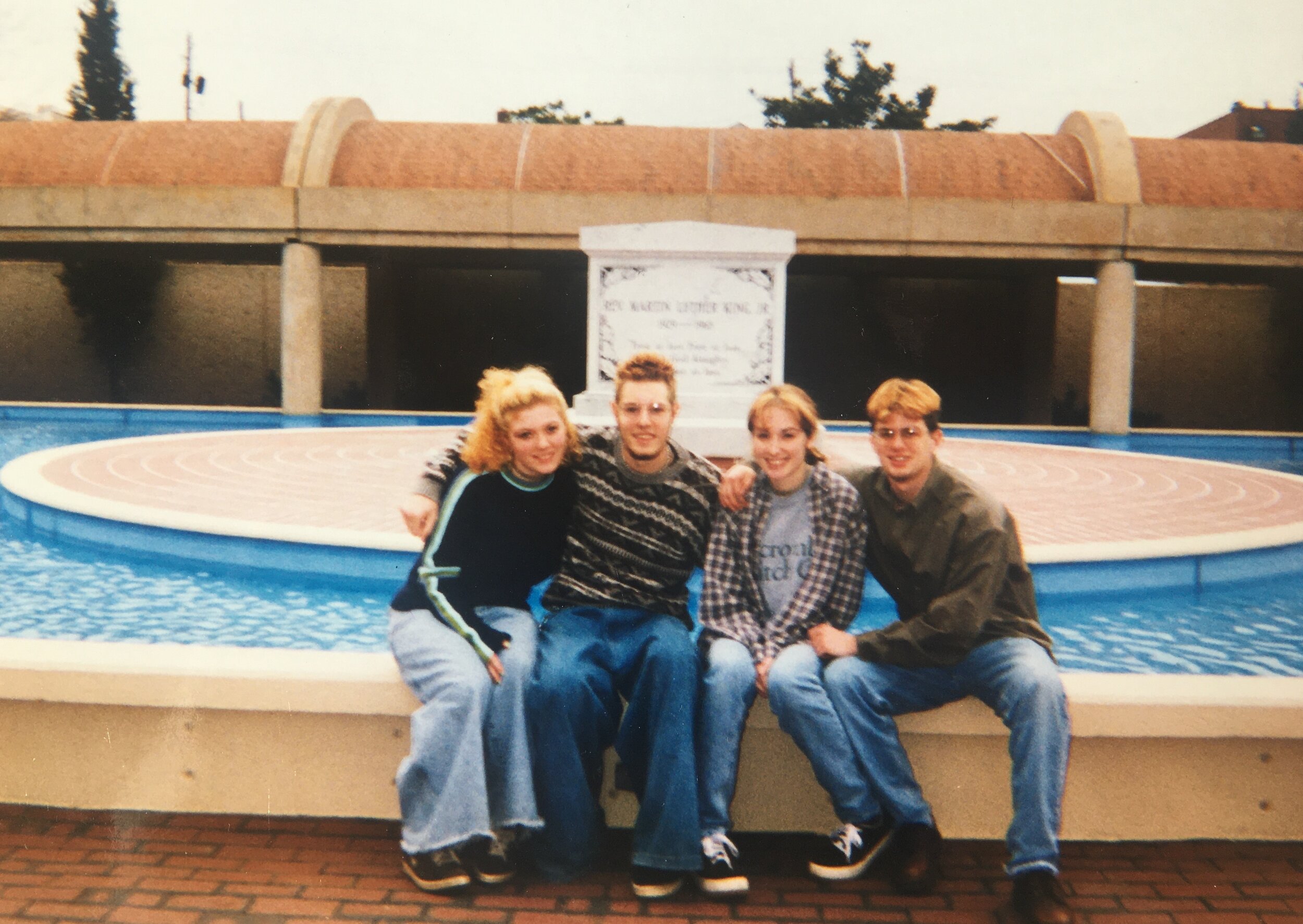
Look at this picture. What do you see?
We whipped out our cameras to take some pictures when something stopped us — our earlier inability to save pictures for the next stop. There were no photos left in the cameras. This was going to have to be one of those moments where we simply experienced it (something more people nowadays should do). But then it all changed. We were no longer alone.
A lone figure appeared and slowly made her way toward us.
Look at this picture. What do you see?

It was 1997 in Atlanta. I was 19. I had recently moved there, with my questionable hairstyle and 42” JNCO jeans (although I still spike my hair), when a couple of my friends came to visit. We did what tourists do: went to Stone Mountain, the Conyers Monastery, Centennial Olympic Park, Underground Atlanta, the Westin rooftop restaurant, CNN, Coke’s HQ, etc.
This day was a bit gloomy. It was cool and overcast and featured on-and-off misting. It didn’t matter, our plans stayed the same. We ventured down to Centennial Olympic Park and Underground Atlanta where we joked around like 19-year-olds do and posed for funny photos to document the trip.
But back then, photos were a bit different — they came with a cost. We took ours with disposable cameras. There were no smartphones, no Instagram, and no selfies. After all, without Instagram, there was no use for them. Back then you had to be thoughtful about pushing that “take photo” button. One after another, we posed, turned the wheel until we heard the camera click, and pushed that precious take photo button.
As we made our way through Centennial Park and Underground Atlanta we had one last stop planned. It was to King Plaza, the gravesite of MLK Jr.
We made the quick drive from downtown to the site, parked, and began to walk around. It was eerily deserted, with the lone exception of one security officer casually patrolling the grounds. We walked around processing what we were seeing. It became real that this young man was killed advocating for something that seems so inherently basic: Equality. Justice. Freedom.
But during that time, he was judged, labeled, and, dare I say, feared for going against the status quo, for questioning what is deemed “right.” He was labeled by some, or many, a troublemaker. A radical. A villain.
He fought for something all people should have. And he paid the ultimate price because of it.
We took out our cameras, but something stopped us — our earlier inability to save pictures for the next stop. There were no photos left in the cameras. This was going to have to be one of those moments we simply experienced (something more people nowadays should do). But then it all changed.
We were no longer alone.
A lone figure appeared and slowly made her way toward us. As she approached we gave each other one of those quick hello nods and welcoming smirks — you know the kind. We continued to look around for a few moments and then I noticed something. She was holding a camera of her own.
I walked over and introduced myself. I explained our camera situation and made her a proposition: If she would take a photo of us and send me a copy, I would mail her the money for developing her film (yep, we used to have to PAY to get our photos, even if your thumb covered up the shot).
She gladly accepted. Was it sincere, or did she just not want to be rude to an odd request? I didn’t know.
As she snapped a photo of our group, I asked if I could take a photo with her. I can still remember her face. She smiled and said that she’d love to — proudly posing with me and my friend Kevin.
We continued talking for a few moments. She told me she lived in Baltimore but was considering relocating to Atlanta. She traveled from Baltimore via bus and was heading back home the following day. Before we parted ways, I provided this stranger with my home address. We chatted for a brief moment and went our separate ways.
One month later …
I received an envelope in the mail. The Baltimore return address was unfamiliar to me. I had mostly forgotten about the pictures. After all, even though the task was small, it was a lot to ask a stranger to do. Inside the envelope were four copies of each photo (one for each of us) along with a handwritten note.
I had saved that note for many years, but between repeated moving and organizing it had gone missing. The note was heartfelt. In essence, it remarked how grateful she was to have met us on that overcast day in Atlanta. How, at the grave of the man who advocated for basic human rights and race equality, race did not matter between two strangers. How one stranger asked for some form of help (as trivial as it might have been), and another gladly provided that help. How, on some tiny scale, he did not die in vain.
I responded with a note of my own (along with more than enough to cover the photo developing). I echoed the same sentiments to her. That no matter what you see on the news, most people do care and share the same belief in equality.
As I post this on MLK Jr. Day, I reflect on days like these that truly matter, yet seem insignificant at the time. I hope this woman from Baltimore/Atlanta remembers this day as fondly as I do.
So now, when you look at this photo, what do you see?
To me, the photo is more than a photo. It’s a story. A feeling. A moment of peace. A small representation of all that is good in the world. While there is a lot of progress that needs to be made, this moment of unconditional acceptance and kindness is what MLK Jr. worked so hard and gave his life for.
2019 Holiday Season Takeaways and Ecommerce Marketing Action Items
The 2019 holiday season has concluded, and once again ecommerce experienced record-breaking sales. But what made the 2019 holiday season so successful, and which trends have become the new normal? Analyzing the results does no good unless you implement the lessons learned to further your marketing program.
The 2019 holiday season has concluded, and once again ecommerce experienced record-breaking sales. This online holiday season registered just above $142 billion in online sales, a 13% increase from last year, according to Adobe Analytics.
But what made the 2019 holiday season so successful, and which trends have become the new normal? Let’s explore.
The Subtle Nuances of November
In sports, subtle moves with a major impact are called the “game within the game,” which succinctly describes the continuing evolution of Gray November’s monthlong series of discounts.
We started seeing pre-Black Friday deals and other heavy discounts start in late October. But once we entered November, we started seeing this “game within the game” begin to play out.
Black Friday is Now a Week-long Event
The concept of Black Friday week started in 2018 and became an official thing this year. Many retailers started their sales on the previous Sunday, and many others jumped in on Monday.
Beginning that day, more than a quarter of subject lines in my personal retailer tracking inbox had the term “Black Friday.” It’s possible that Black Friday week was a result of the day falling later in the year, but it continues the trend of a growing sales event. Expect this to be the new norm.
The Cyber Five Expands to the Cyber Ten
The Cyber Five (Thanksgiving through Cyber Monday) now accounts for 20% of the holiday season’s ecommerce revenue. But this period has morphed into the Cyber Ten, thanks in part to Black Friday week.
The ten days from the Sunday before Thanksgiving to Cyber Monday accounted for seven of the top online sales days of the entire season, with six of them hitting $3 billion+ in ecommerce sales and accounting for 27% of the total holiday revenue.
Black Friday, Cyber Monday Remain Tentpoles
Black Friday recorded $7.4 billion in ecommerce sales, falling just short of Cyber Monday 2018’s record-setting $7.9 billion day.
But this year, shoppers propelled Cyber Monday to $9.4 billion in ecommerce sales, meaning both days grew nearly 20% year-over-year. While consumers show a willingness to shop early, they’re also willing to shop often, especially on these tentpole days.
The New Daily Online Sales Benchmark is $2B
Only a couple of years ago, $1 billion in one-day ecommerce sales was the benchmark to hit during the holidays. In 2018, only the period of Dec. 22-25 failed to reach that mark.
But in 2019, only Christmas Eve missed it, with $850 million in ecommerce sales. Two billion dollars is now the new online sales benchmark, with 29 days reaching it, including each day during the Cyber Ten.
Mobile Revenue Grows, Smartphones Gain Share
Mobile continued its march toward the dominant shopping method in the 2019 holiday season. However, tablet’s share of mobile was replaced by smartphones.
In 2019, purchases on smartphones accounted for nearly 35% of revenue, according to Adobe, while tablets accounted for 5%
In 2018 season, smartphones made up 31% of revenue, and tablets 9%
We saw this same shifting pattern for mobile devices in web traffic:
In 2019, smartphones accounted for 58% of retail web traffic, while tablets hit 5%
This was up from 51% in 2018, when tablets made up 8% of the traffic
I have repeatedly said if you’re not mobile optimized, you’re not optimized – and we’re clearly at the point now where smartphone optimization is table stakes.
Consumers Continue to Value Email
Email marketing continued to drive ecommerce sales, accounting for 17% of online revenue this year, nearly half of which (49%) came from smartphones. To put this in context, social media drove less than 2% of sales. You can see why email marketing is a powerful promotional tactic.
Email volume continues to increase year over year, confirming that Gray November is alive and well. This season, average daily sends began to increase the last week of October and continued through November. Overall, there were 10% more emails sent in November than in October.
Emails sent from the Bronto Marketing Platform supports the notion that Black Friday week is a promotional event. In November, there were 54% more emails sent during Black Friday week than in the previous weeks. This represents a significant increase in sends during the week of Black Friday compared to previous years.
Of course, discounting in email remained the top tactic. Eighty-four percent of consumers said they’re more likely to open emails with discounts, and 58% felt that relevant email offers had a higher likelihood of purchasing.
2019 Holiday Season Takeaways and How to Use Them
Analyzing the 2019 holiday season does no good unless you implement the lessons learned to further your marketing program. From the takeaways above, here are opportunities for some marketing reflection and optimization throughout 2020:
$2B is the New Daily Ecommerce Sales Benchmark
Question: How do you plan to attract new customers and increase AOV to take advantage of this increase in consumer spending?
Email Marketing Needs to be a Major Program Component
Question: What specifically can you do to improve your email program throughout the year?
The Cyber Ten replaced the Cyber Five
Question: Do you have enough value-adds and promotional strategies to take full advantage of this extended sales period?
Smartphones Took Over Web Traffic, Getting There for Online Sales
Question: Are your website, emails, popup forms and paid search strategies optimized for mobile users?
Now is the time to dive deep into the types of offers customers responded to, the types and timing of automated email messages (i.e., abandoned cart, post-purchase, etc.), subject line tactics, paid search strategies, and the traffic sources and devices.
These tactics will allow you to test hypotheses and roadmap improvements to your overall marketing programs, giving you an early start on next year’s planning while driving increased sales year-round.
How to Use Video in Email Marketing
For years, marketers have said video in emails will be the next evolution in email marketing, but the challenges of implementing it have held it back. Email clients not supporting it, file size restrictions and video production time have been too much to overcome.
Now, 98% of email clients support video, the number one type of content to inspire consumer research, and the time has never been better to bring new life to your email marketing with video.
Here are ways to incorporate video in your email marketing program.
For years, marketers have said video would be the next evolution in email marketing, but the challenges of implementing it have held it back. Email clients not supporting it, file size restrictions and video production time have been too much to overcome.
Instead, we’ve gotten animated GIFs and static images with overlay play buttons. While serviceable, it’s not the video experience we imagined.
Animated GIFs result in static animation and looks less like a video. Images with an overlay play button make it clear there’s a video to watch, but the user has to click out of the email to view it — often to a third-party site like YouTube — and take another action to drive them to your site.
Now, 98% of email clients support video, the number one type of content to inspire consumer research, and the time has never been better to bring new life to your email marketing with video. Here are ways to incorporate video in your email marketing program.
Using Video in Automated Lifecycle Messages
Automated lifecycle messages already have higher-than-average email engagement, and video provides an opportunity to engage and entice email subscribers further. While video could work in just about any lifecycle message, consider these opportunities:
Welcome series: Instead of a generic welcome graphic, include a welcome video featuring the company founder, showcasing products, reinforcing a lifestyle or communicating what the company is all about.
Post-purchase series: These emails are designed to enhance the customers’ purchase experience and build customer loyalty. You can thank customers and introduce other types of post-purchase content such as how-to or resource sections, product review requests and customer service info.
Lapsed-purchase series: Lapsed-purchase messages are sent to customers who’ve made a purchase but haven’t returned in a designated period of time. Reengage them with your brand and products through video by introducing new or trending products and styles.
Combining Social Media and Email Videos
Videos are popular content on social media, with 60% of internet users aged 18-64 watching video on social properties other than YouTube.
Repurpose some of your most-liked videos, such as Instagram Stories, into emails. This is a great way to reduce content production time while still providing content you already know appeals to your customers.
Here are two other ideas for weaving social media and video into your email marketing.
Social invite messages: You’re probably used to seeing those generic “connect with us on social” emails found in a welcome series. Instead, use videos from your social media accounts to take these messages to a whole new level by showing off what shoppers can expect when they visit your social pages.
Unboxing videos: You can also use user-generated unboxing videos of customers opening your carefully branded packaging. These videos are a great way to showcase products and the joy of the purchase experience. To take it a step further, add value to cart abandonment messages, building the feeling of anticipation and excitement from a potential purchase.
Promotional Emails and Other Uses
Video can be used in virtually any message you send, but the trick is finding ways to use the video to actually add value to the message. Here are a few ideas for adding video into your promotional email mix:
Tell your brand story: Video can help you tell your story and humanize your brand. Use it to take consumers behind the scenes of an event, like employees volunteering, office life, company outings and photo shoots. Content like this can serve as a wonderful complement to a promotional email.
Top-rated products: Top product emails are a great way to harness the power of social proof in marketing. Instead of using static images to list your top products, incorporate a video element to showcase one or all of the products, customer testimonials, or build anticipation as you “reveal” the top product.
Daily deals: Have a daily deal offer for a specific product or category of products? Use video to demonstrate what makes the product so great or show customers using the product.
Lights, Camera and Most Importantly, Action!
One of the common challenges for retailers when it comes to video is finding the time and resources to create content. While uniquely-created content can be doable for some, don’t feel like you need reinvent the wheel.
Use content you already have, such as videos posted to your social networks or ones that live on the ecommerce or resource section of your site.
When it comes to the optimal video length in email, Playable CEO Bob Hitching recommends keeping them to 10 seconds or less. This fits in nicely with things like Instagram, SnapChat and TikTok videos. The shorter length also help marketers source and create content.
But what about those pesky 2% of email clients that don’t support video? For subscribers using those clients, you’re in the same position you are now: The first frame of the video will display as a static image. A good practice, whether the email client renders video or not, is to ensure this first frame supports your overall email message.
No matter the type of message, video can enhance the email experience and make your brand stand out from the crowd — if you use it effectively. But like all tactics, overuse can lead to subscriber fatigue. Find emails that can most benefit from the use of video and take advantage of the content you already have to give your emails an extra punch.
Video may have killed the radio star, but it will do wonders for email marketing.
Top Marketing Podcasts of 2019
As host of the Commerce Marketer Podcast, I conduct a lot of interviews. But choosing my favorite episodes is like choosing a favorite child (if my kids are reading this, I love you both the same). However, I forced myself to choose some of the episodes that really resonated with me for one reason or another.
Here are some of my favorite marketing conversations from 2019, in order of episode number. I hope you enjoy.
As host of the Commerce Marketer Podcast, I conduct a lot of interviews. But choosing my favorite episodes is like choosing a favorite child (if my kids are reading this, I love you both the same). However, I forced myself to choose some of the episodes that really resonated with me for one reason or another.
Here are some of my favorite marketing conversations from 2019, in order of episode number. I hope you enjoy.
Episode 043: Super Bowl Commercial Recap Roundtable
More than 100 million people watch the Super Bowl each year, but the commercials have become the must-see event within the event. This episode discusses the Super Bowl from a marketing and entertainment perspective. We’ll revisit the commercials, halftime show, and even how we interacted with our mobile devices during the big game - after all, what good is a $5 million commercial if everyone is checking their Instagram feed?
Why I chose this episode: This episode was a three-person roundtable. The guests were fun, brought great perspective, and episodes like this are just fun to do because no one takes themselves too seriously.
Episode 046: Email Deliverability: Everything You Need to Know
Did you know that having good email deliverability does not mean your emails reach the inbox? Understanding email deliverability is crucial, yet many marketers do not fully understand what goes into it.
Why I chose this episode: My guest, deliverability expert Chris Kolbenschlag, tackles myths, best practices, things marketers shouldn’t do and other elements around email deliverability in an easy-to-understand manner — which is what I love about this episode.
Ep. 050: How Lifecycle Email Marketing Is Like a Fine Wine
This episode discuss how one compani built their email program from the ground up using lifecycle email marketing to drive nearly half of their 2018 email revenue. We cover the strategies behind triggered campaigns, how to avoid the pitfalls of email fatigue with segmentation, mistakes made with their lifecycle campaigns, and lessons learned.
Why I chose this episode: My guest was Ben Argov, president of International Wine Accessories (IWA). Ben and I met several years back and he is one of the nicest people I know. Ben is honest about what works, what doesn’t, and what needs to be improved in his email program. What made this one special was that he sent me a spreadsheet of his email metrics to help guide the conversation. If you’re into email marketing, this episode is a must-listen!
Ep. 054: How Ikonick Uses Modern-Day Marketing to Drive Success
I’m joined by Mark Brazil, co-founder of the canvas art company Ikonick, to discuss how he created a multimillion-dollar business in less than two years by combining email, video, social, and influencer marketing. Mark covers everything from social media, email marketing, content marketing, storytelling strategies, and how they measure success.
Why I chose this episode: I met Mark while speaking at a conference in Quebec City in early 2019. After our initial conversation I knew I had to have him on the show. Mark is brutally honest, in a Gary V type of way (after listening you’ll know why), and shares some amazingly useful insights. This episode is great for entrepreneurs, and email and social media marketers alike. I forgot to mention, this dude is funny as heck!
Ep. 059: How Vera Bradley Designs a Modern-Day Retail Experience
I’m joined by Harry Cunningham, vice president of retail brand experience at Vera Bradley, to discuss what goes into designing modern-day brick-and-mortar stores that appeal to consumers. Harry explains some of the driving forces behind Vera Bradley’s redesign of their storefronts, explains how the store design revolves around solving shopper challenges, and shares everything you can think of when it comes to the in-store experience.
Why I chose this episode: It’s such a cool topic — and one I find fascinating. Harry is an engaging speaker and really brings you into his world of how he approaches store design concepts through stories that demonstrate the how and why he makes the decisions he does.
Ep. 60: The Behavioral Science of Marketing
Nancy Harhut is a behavioral science marketer and chief creative officer at HBT Marketing, discusses how marketers can use behavioral science — like “eye magnet” words, the Von Restorff Effect, proper use of charts and images, tactile experiences, and landing page techniques — to nudge their customers and encourage purchase decisions.
Why I chose this episode: Again, this topic is fascinating! This was a topic I had been wanting to cover for some time, and was fortunate enough to mention it to another guest of mine who coincidentally knew someone. That someone was Nancy. And boy, did she deliver! Nancy discussed so many tactics in an easy-to-understand manner, while providing specific use-cases for each. This episode has so many practical takeaways for marketers.
Find out more about The Commerce Marketer Podcast
Back to blog home
My Five Favorite Marketing Posts of 2019
I write a lot of content throughout the year, but some pieces stand out to me more than others. From behavioral science to charting daily email sends for two-plus years, here are the five articles from 2019 that really resonated with me. I hope you enjoy.
I write a lot of content throughout the year, but some pieces stand out to me more than others. Here are the five articles from 2019 that really resonated with me. I hope you enjoy.
Behavioral Science: The Magic That Turns Prospects Into Customers
If you ask a hundred people what makes a good article headline or email subject line, you may get a hundred different answers. After all, it’s subjective, isn’t it?
Not entirely, as many marketers know. There’s a science behind what makes a consumer open an email, click on a call to action (CTA) and make a purchase. Whether it’s writing an attention-grabbing headline or getting someone to “click and convert,” this article outlines ways any business can begin using behavioral science to improve their marketing.
Cyber 10: The Holiday Shopping Sprint You REALLY Need to Prepare For
The holiday season is upon us, and, once again, it’s expected to set online sales records to the tune of $142 billion, according to eMarketer estimates. As online sales rapidly increase year-over-year, trends evolve and retailers adapt.
Marketers need to look beyond the Cyber Five -- a historically high time for holiday online sales -- and instead prepare for the 10-day period that stretches from the Sunday before Black Friday through the Tuesday following Cyber Monday. >> read more <<
How to Use Social Proof in Email Marketing
Retailers constantly seek ways to stand out in crowded inboxes and influence subscribers to make purchases, some of them by offering deep discounts. But for companies that either can’t or don’t want to shrink their margins, finding another way to influence purchase decisions inside emails is essential. This is where using social proof in your email marketing can be a powerful sales tactic.
Luckily for companies — especially online retailers — they already possess a lot of content that can be used for social proof. Here are a few ways retailers can utilize this content in their email marketing programs to influence purchases. >> read more <<
Want to Win Back Lapsed Purchasers? Focus on Customer Experience
Lapsed-purchaser campaigns, also known as win-back campaigns, are a staple in many retailers’ email marketing programs. These automated emails are sent to past purchasers who have not repurchased in a certain period of time, and the strategy typically consists of several incentivized messages that often increase in value from one email to the next.
Time and time again, I see retailers consider these messages a high priority. And for whatever reason, they’re almost always deemed a much higher priority than implementing post-purchase messages.
There’s a fundamental flaw with this approach … >> read more <<
Which Day Should You Send Your Marketing Emails?
Which days are best for sending marketing emails and which days are most popular for retailers? Should you send on the same high-volume days as other retailers, or send on lower-volume days so you can more easily stand out in the inbox?
Now, you may finally have an answer. >> read more <<
There you have it, my five favorite (for whatever reason) articles of 2019. To see more of what I’ve written, be sure to check out the Press page in the navigation.
BACK TO BLOG HOME
The Best Day to Send Your Marketing Emails
Which days are best for sending marketing emails and which days are most popular for retailers? Should you send on the same high-volume days as other retailers, or send on lower-volume days so you can more easily stand out in the inbox?
Now, you may finally have an answer.
Which days are best for sending marketing emails and which days are most popular for retailers? Should you send on the same high-volume days as other retailers, or send on lower-volume days so you can more easily stand out in the inbox?
Now, you may finally have an answer.
I am signed up for hundreds of retailer email programs and monitor my inbox for daily send volume. While each retailer will have their own unique requirements, here are some tools you can use to help you determine which days might be best to send your marketing emails.

2019 Email Marketing Sends
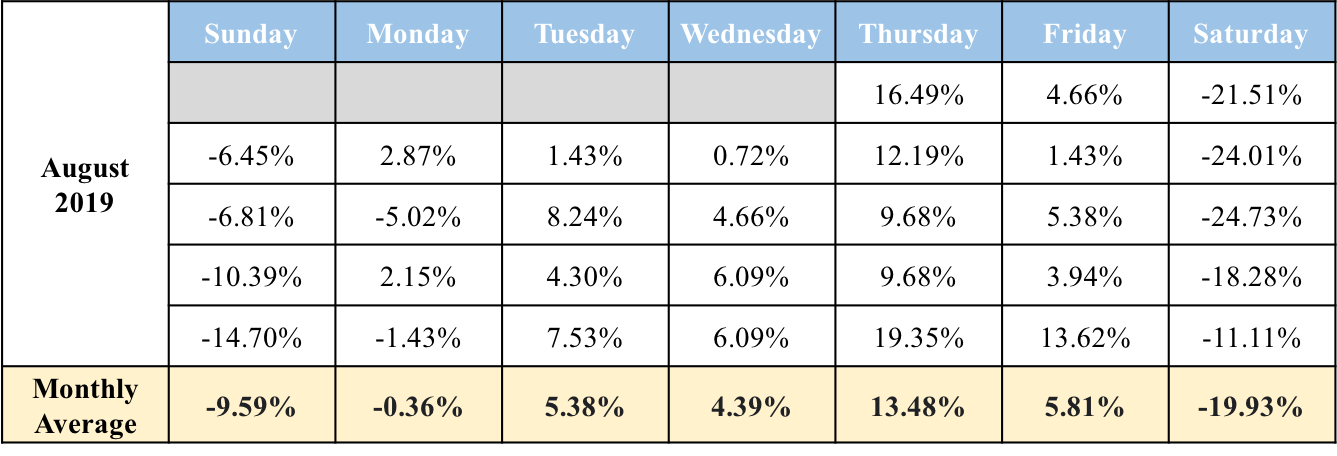
2019 marketing email send volume broken down by day and month. Check out which days were the most and least popular days to send marketing emails.
2018 Email Marketing Sends
2018 marketing email send volume broken down by day and month. Check out which days were the most and least popular days to send marketing emails.
2018 Email Marketing Sends - By Day and Month
The chart below reflects the daily email send volume of 2018. The daily lift and declines reflect the average number of emails retailers sent on that day of the week compared to the overall number of emails sent during the entire year.
As you can see, retailers sent …
Top Email Send Days of 2018
The chart below reflects the daily email send volume of 2018. The daily lifts and declines reflect the average number of emails retailers sent on that day of the week compared to the overall number of emails sent during the entire year.
For example, retailers sent 8.61% fewer emails on Sundays than the average number of 2018 daily email sends. As you can see, Thursdays was the most popular day for retailers to send marketing emails, followed by Friday and Tuesday.
Weekends were the least popular days to send marketing emails, with Saturday being the day of the week where the fewest emails were sent.
Continue reading to see monthly and daily breakdowns. You can view 2019 results here and see how daily send patterns changed. Stay tuned for ongoing 2020 updates.

Does this chart tell you that you should avoid sending marketing emails on weekends? Absolutely not. Again, each business will have their own unique circumstances. Some retailers might look at this as an opportunity to increase their sends on lower-volume days as a way to stand out in an otherwise crowded inbox, especially during the holiday season. Others may choose to follow the crowd and send on those higher send days.
Test your email send days, but remember, people do shop on the weekends.
Monthly Email Marketing Sends
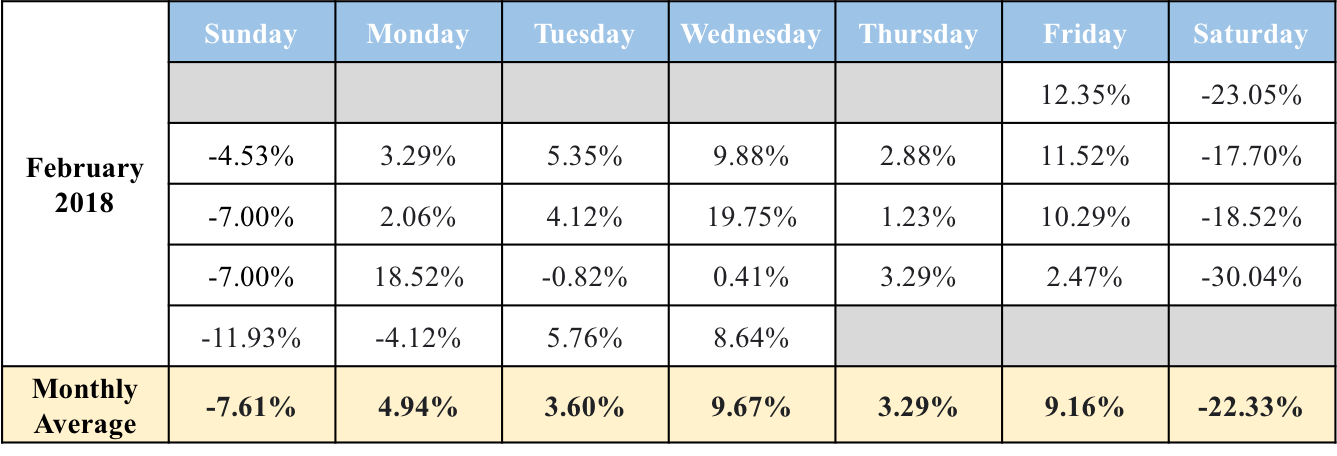
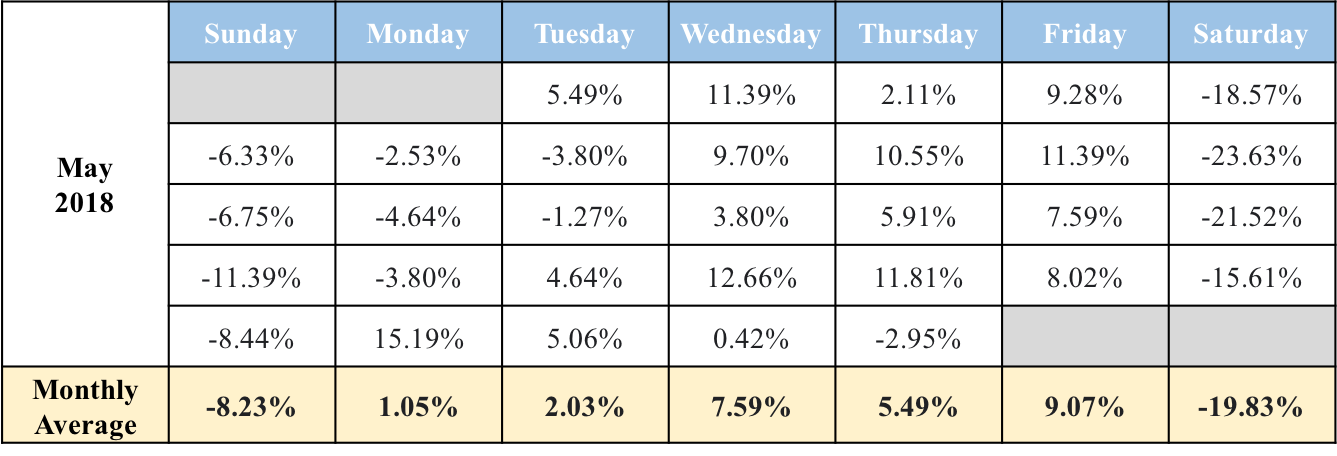
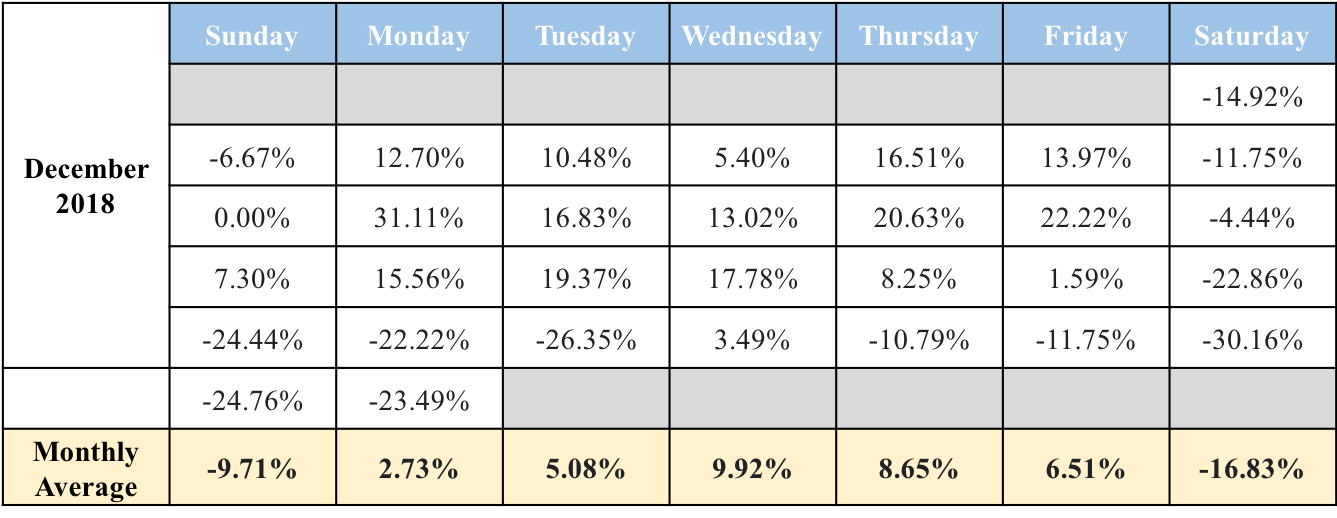
This monthly and daily breakdown is based on monthly results. The lifts and declines are based on the average number of sends for that day compared to the average number of emails send that month.
In this example, January’s highest send patterns are slightly different than the daily sends for the entire year. You’ll continue to see these daily shifts throughout the year.





2019 Email Marketing Sends - By Day and Month
(IN PROGRESS): The chart below reflects the daily email send volume of 2019. The daily lifts and declines reflect the average number of emails retailers sent on that day of the week compared to the overall number of emails sent during the entire year.
For example, retailers sent …
Top Email Send Days of 2019
The chart below reflects the daily email send volume in 2019. The daily lifts and declines reflect the average number of emails retailers sent on that day of the week compared to the overall number of emails sent during the entire year.
For example, retailers sent 8.32% fewer emails on Sundays than the average number of 2019 daily email sends. As you can see, Thursdays was the most popular day for retailers to send marketing emails, followed by Friday and Tuesday.
Weekends were the least popular days to send marketing emails, with Saturday being the day of the week where the fewest emails were sent.
Continue reading to see monthly and daily breakdowns. In 2019, Fridays saw a decrease in email sends while Tuesdays saw an increase compared to 2018. You can view 2018 results here and see how daily send patterns may have changed.

Does this chart tell you that you should avoid sending marketing emails on weekends? Absolutely not. Again, each business will have their own circumstances. Some retailers might look at this as an opportunity to increase their sends on lower-volume days as a way to stand out in an otherwise crowded inbox. Others may choose to follow the crowd.
Test your email send days, but remember, people do shop on the weekends.
Monthly Email Marketing Sends
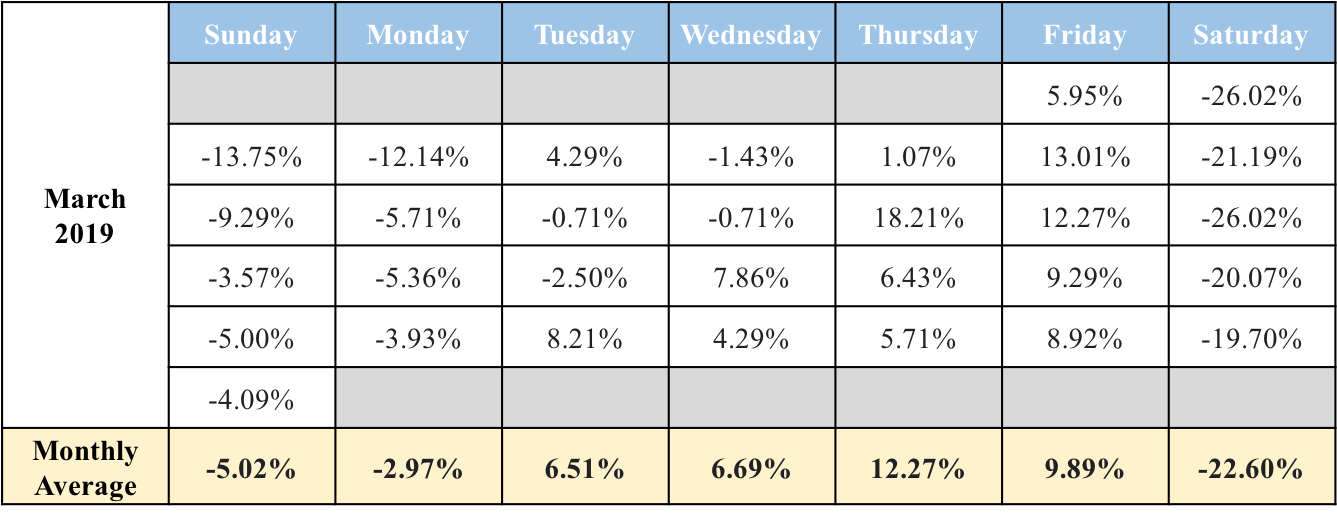
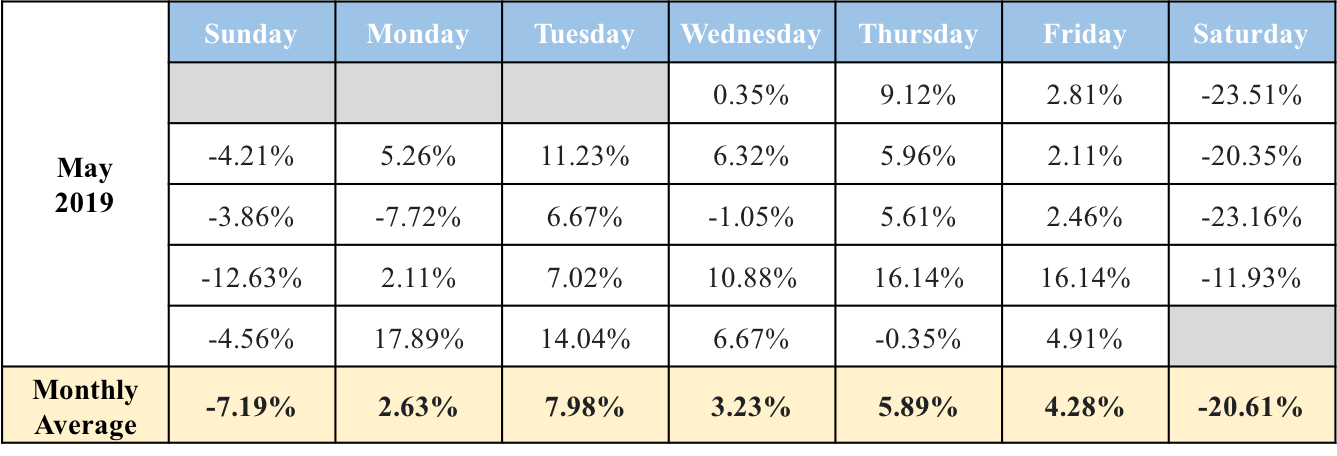
This monthly and daily breakdown is based on monthly results. The lifts and declines are based on the average number of sends for that day compared to the average number of emails send that month.
In this example, January’s highest send days are slightly different than the daily sends for the entire year. You’ll continue to see these daily shifts throughout the year.







Keys to a Great Unboxing Experience
Unboxing is about providing a branded, aesthetic opening experience that builds excitement. The customer purchase experience shouldn’t end when the package arrives — that’s when the experience really just begins. The way customers feel about your brand after the purchase determines whether they become repeat customers or remain a one-time buyer.
Unboxing is more than opening a package
Unboxing is about providing a branded, aesthetic opening experience that builds excitement. The customer purchase experience shouldn’t end when the package arrives — that’s when the experience really just begins. The way customers feel about your brand after the purchase determines whether they become repeat customers or remain a one-time buyer.
The unboxing experience is an essential part of that journey and influences those feelings. This can be especially true for online-only retailers, as this is the only physical touchpoint the brand has with the consumer.
Click below to read my thoughts on the makings of a great customer unboxing experience, which includes:
The package
Product wrapping
Packaging materials
Inserts
Samples
Click here to continue reading
Using Behavioral Science in Marketing
Stop guessing what makes customers click. In this post, you’ll dive into real-world behavioral science applied in marketing, from headline hooks and social-proof nudges to decision-making shortcuts and conversion strategies. Science meets strategy, ready to plug into your campaigns.
What is Behavioral Science in Marketing?
Behavioral science in marketing focuses on how people think, feel, and make decisions, then applies those insights to influence engagement and conversions. By using cognitive biases, social proof cues, and decision-making shortcuts, marketers can create more persuasive messages and higher-performing campaigns.
Using Behavioral Science in Marketing
If you ask a hundred people what makes a good article headline or email subject line, you may get a hundred different answers. After all, it’s subjective, isn’t it?
Not entirely, as many marketers know. There’s a science behind what makes a consumer open an email, click on a call to action (CTA), and make a purchase. Whether it’s writing an attention-grabbing headline or getting someone to “click and convert,” understanding that people rely on certain decision-making defaults helps marketers nudge them to take a desired action.
In this article, I discuss how to use behavioral science to improve marketing campaigns. Topics include:
Strategies to write effective headlines and subject lines
Using social proof
Content and landing pages
Choosing compelling images
Use of charts and graphs
Principle of authority
The science behind pricing
CTA colors
The science behind “possession” and how it can reduce returns
Tactile experience