Featured Post: My Reading & Podcast List
Here are recent books I’ve read and podcasts I enjoy. If you’re looking for something interesting to listen to or read, these are a few that have stood out to me. Let me know if you have a recommendations.
3-Minute Video Tip Series: How to Grow Your Email Marketing List
I recently created a three-minute marketing tip series designed to help busy marketers generate more revenue from their email marketing program. The idea was simple: in three minutes or less each day, I would provide easy-to-follow advice on how to improve specific aspects of their program. Each episode can be found on YouTube, embedded below, and syndicated as season four of the Cart Insiders Podcast.
The topics I covered were:
Email marketing list growth
Email marketing welcome series
Email marketing cart abandonment
SMS marketing
This week’s tips covered how to grow your email marketing list. Let’s dive in.
I recently created a three-minute marketing tip series designed to help busy marketers generate more revenue from their email marketing program. The idea was simple: in three minutes or less each day, I would provide easy-to-follow advice on how to improve specific aspects of their program. Each episode can be found on YouTube, embedded below, and syndicated as season four of the Cart Insiders Podcast.
The topics I covered were:
Email marketing list growth
Email marketing welcome series
Email marketing cart abandonment
SMS marketing
This week’s tips covered how to grow your email marketing list. Let’s dive in.
What kinds of information should I collect on an email pop-up form?
My recommendation is to keep this information to a need-to-know minimum, focus on customer intent, and let them carry on with their shopping session. Collect only what you need or will immediately use.
When it comes to customer intent, think to yourself, “why did someone sign up for my email program?” Was it so they could receive a birthday message 8 months from now or so they could share their zip code? Of course not. Their intent is most likely to make a purchase.
So while birthdate and location are nice to have, they are not need-to-have pieces of information.
Information like gender is slightly different. Knowing their gender may help you determine what style of products they may be shopping for. If this is information you will USE immediately, like with customized product recommendations or features in your welcome series, then you can collect it. Otherwise, don’t bother. You can get this info with your welcome messages themselves — more on this in a later episode.
The same holds true for other types of similar information, like whether they are a B2B or B2C buyer if you service both types of customers, or for some sites are shopping for themselves or as a gift.
Listen to the complete answer below.
Should I collect mobile numbers on an email marketing pop-up form?
The short answer is yes!, regardless of whether or not you have an SMS program in place. SMS is a must-have marketing channel, and collecting this info now will be beneficial for a few reasons.
Here are 5 reasons you should collect mobile numbers for SMS marketing:
It is an opt-in channel, meaning only people who want to sign up will.
It will indicate whether your audience wants to receive SMS messages from your brand.
SMS can fill in brand-to-consumer marketing gaps left from email unsubscribed.
It can help reduce your retargeting costs (especially for email unsubscribers), since SMS is an opt-in channel.
Everyone texts! It is no longer about generational cohorts. Baby Boomers, Gen X, Millennials, and Gen Z all text.
Need more proof? SMS sends increased 94% in 2021 compared to the year before, and 2020 saw a nearly 400% increase from the year prior. If you’re not using SMS, you’re leaving money on the table.
Listen to the complete answer below.
What Types of email list growth forms should I use?
Three types of email sign-up forms your store can use are a common pop-up form, an exit-intent form, and a spin-the-wheel form.
An email capture pop-up form is the most common form you likely come across on most brands’ websites, like is seen here. A visitor is prompted to enter their email address to sign up for a brand’s marketing emails.
A spin-the-wheel form is a gamified form where a visitor enters their email address and after clicking “submit,” a game wheel spins, stopping on a discount. This discount can then be used immediately and encourages a purchase.
An Exit-intent form is a pop-up that appears when a web visitor makes a movement indicative of leaving. Ecommerce brands can reveal a form that makes a last-ditch effort to capture an email address before the visitor leaves.
How to style an email pop-up form?
When designing your pop-up form be sure to incorporate your brand assets like colors, product images, and company logo. At certain times of the year, consider creating holiday-specific designs, such as for Valentine’s and St. Patrick’s Day.
Listen to the complete answer below.
How to Make your list growth pop-up form convert better
First, make sure the pop-up can easily be closed if the subscriber is not interested. Make sure you can easily find the “close” button on both mobile and laptop.
Second, test the pop-up on multiple browsers and phones, including using different text sizes on phones. Zoomed-in text can make pop-ups frustrating for users. While you can’t account for every size, do your best.
Third, if you are OK doing so, offer an incentive. Presume the intention of being on your site is to shop. Offering an incentive can help you increase the sign-up and conversion rate.
Fourth, make sure your pop-ups are ADA compliant. Using ADA-compliant forms can help you sidestep any legal obstacles that may arise.
Finally, make sure the information is being added to your email provider after submission. After all, that’s the point!
Listen to the complete answer below.
Email list growth and pop-up best practices
Ecommerce brands looking to grow their email and SMS marketing lists should utilize optimized pop-up forms. Here are 8 list growth best practices I talked about this week.
When it comes to asking for information on your pop-up, focus on things that will help you immediately send more relevant messages, such as gender or the purpose of shopping—like gifting. Consider collecting nice-to-have information such as birthdate later.
Collect mobile numbers. SMS is a must-have opt-in channel used by all generational cohorts.
Brand your form with stylized text, colors, images, and logos.
Test different types of email collection forms, including gamified spin-the-wheel and exit intent forms.
Offer an incentive if you can, but don’t feel required to.
Ensure the pop-ups are easy to exit out of and test them on different browsers and phones.
Be sure your pop-ups are ADA-compliant.
Ensure all contacts are being passed to your email marketing provider.
I hope you enjoyed these list growth tips.
If you think these tips can help someone else, please feel free to share them. and be sure to reach out if I can help in another way. Cheers!
How to Use Video in Email Marketing
For years, marketers have said video in emails will be the next evolution in email marketing, but the challenges of implementing it have held it back. Email clients not supporting it, file size restrictions and video production time have been too much to overcome.
Now, 98% of email clients support video, the number one type of content to inspire consumer research, and the time has never been better to bring new life to your email marketing with video.
Here are ways to incorporate video in your email marketing program.
For years, marketers have said video in emails will be the next evolution in email marketing, but the challenges of implementing it have held it back. Email clients not supporting it, file size restrictions and video production time have been too much to overcome.
Instead, we’ve gotten animated GIFs and static images with overlay play buttons. While serviceable, it’s not the video experience we imagined.
Now, 98% of email clients support video, the number one type of content to inspire consumer research, and the time has never been better to bring new life to your email marketing with video. Here are ways to incorporate video in your email marketing program.
In this article, I’ll discuss:
Using Video in Automated Lifecycle Messages
Combining Social Media and Email Videos
Promotional Emails and Other Uses
2018 Email Marketing Sends - By Day and Month
The chart below reflects the daily email send volume of 2018. The daily lift and declines reflect the average number of emails retailers sent on that day of the week compared to the overall number of emails sent during the entire year.
As you can see, retailers sent …
Top Email Send Days of 2018
The chart below reflects the daily email send volume of 2018. The daily lifts and declines reflect the average number of emails retailers sent on that day of the week compared to the overall number of emails sent during the entire year.
For example, retailers sent 8.61% fewer emails on Sundays than the average number of 2018 daily email sends. As you can see, Thursdays was the most popular day for retailers to send marketing emails, followed by Friday and Tuesday.
Weekends were the least popular days to send marketing emails, with Saturday being the day of the week where the fewest emails were sent.
Continue reading to see monthly and daily breakdowns. You can view 2019 results here and see how daily send patterns changed. Stay tuned for ongoing 2020 updates.

Does this chart tell you that you should avoid sending marketing emails on weekends? Absolutely not. Again, each business will have their own unique circumstances. Some retailers might look at this as an opportunity to increase their sends on lower-volume days as a way to stand out in an otherwise crowded inbox, especially during the holiday season. Others may choose to follow the crowd and send on those higher send days.
Test your email send days, but remember, people do shop on the weekends.
Monthly Email Marketing Sends
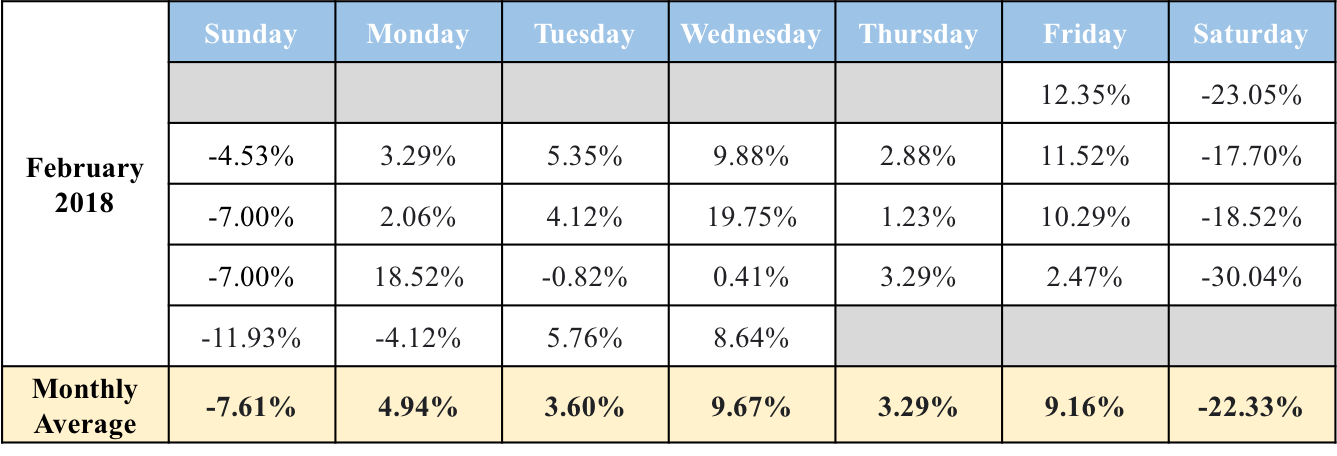
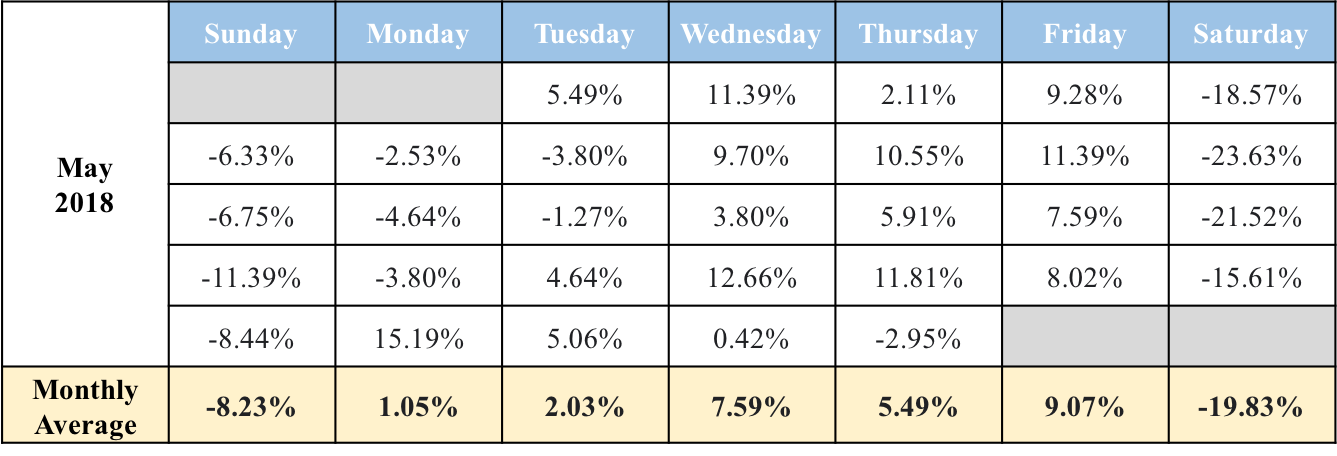
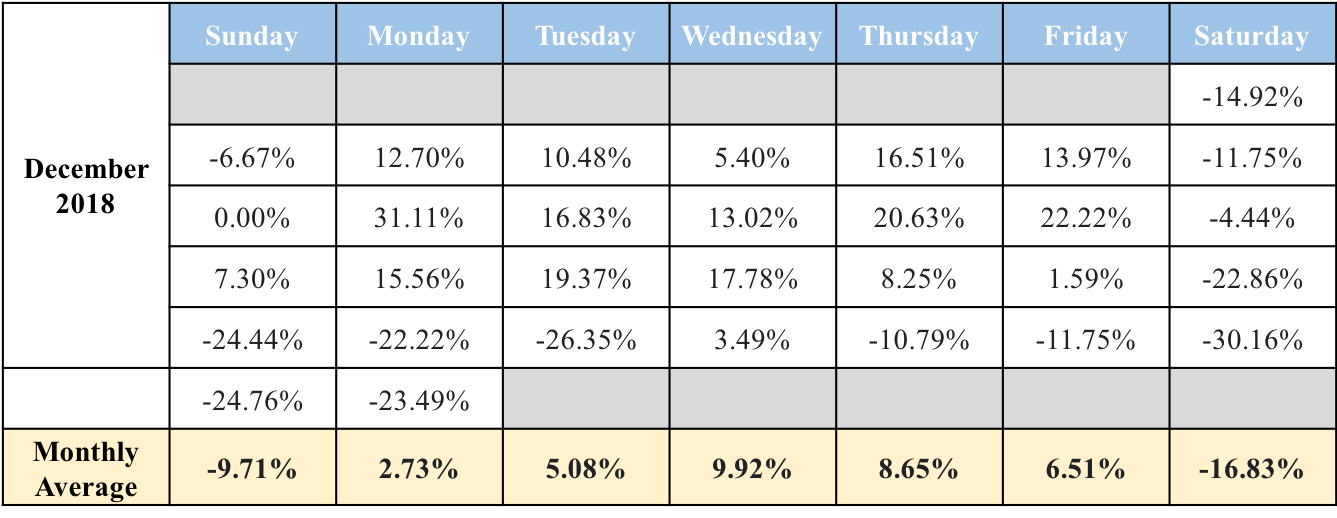
This monthly and daily breakdown is based on monthly results. The lifts and declines are based on the average number of sends for that day compared to the average number of emails send that month.
In this example, January’s highest send patterns are slightly different than the daily sends for the entire year. You’ll continue to see these daily shifts throughout the year.





The Threat of Disappearing Brands in the Age of Voice Assistants
When you see a red and white can of soda or a Peter Pan silhouette on a jar, you see a brand. You know the product. But what happens when you don’t have those visual cues to draw you to certain items when you shop?
Brands used to rely on traditional advertising to embed their brand imagery in our minds and remain visible and relevant to their audience. But in today’s digital-first world, consumer attention is more fragmented. Television screen time is declining, while time spent on smartphones and other mediums is increasing. This has created challenges for brands trying to stay in front of consumers.
When you see a red and white can of soda or a Peter Pan silhouette on a jar, you see a brand. You know the product. But what happens when you don’t have those visual cues to draw you to certain items when you shop?
Brands used to rely on traditional advertising to embed their brand imagery in our minds and remain visible and relevant to their audience. But in today’s digital-first world, consumer attention is more fragmented. Television screen time is declining, while time spent on smartphones and other mediums is increasing. This has created challenges for brands trying to stay in front of consumers.
Voice assistants add an additional layer of uncertainty to the traditional means of keeping us brand loyal. With devices like Siri, Google Home, and Amazon’s Alexa-enabled options, consumers are relying more and more on browserless interactions. In fact, comScore predicts that 50% of all searches will be voice searches by 2020. That’s not that far away.
But while performing informational searches is one thing, the idea of searching for products and actually buying them via browserless commerce is quite another. This begs the question: if consumers are searching and buying via voice, will this erode the value of brands as we know them?
The Age of Voice Is Upon Us
Amazon claims it sold millions of Alexa devices over the Black Friday weekend and that the Echo Dot was the top-selling item on the website worldwide during the holiday season. That equates to a lot of people saying, “Hey Alexa, order me batteries.” In this scenario, the first result you get is for Amazon private-label batteries. So how do Duracell and Energizer compete with this? How do their branding efforts influence a consumer’s purchasing decision when those visual brand cues are no longer available? Are either of these two brands stronger than Amazon? Battery sales figures from Amazon indicate they’re not.
And what about those instances when Alexa fails to deliver the brand name you’re looking for and suggests you open a browser to find it? With convenience so in demand, you may opt to purchase the suggested non-branded product just to avoid spending one more second shopping for batteries. If you’re willing to take the extra step to switch devices just to make the purchase, you must really love the brand.
What Do Voice-Assisted Consumers Want?
There is no doubt that the post-Gen Z generation, often referred to as Generation Alpha, will have voice assistants as a part of their everyday life. Gen Z is coming of consumer age during this evolutionary period, and they have the spending power and skills to navigate technology. And what about millennials? According to eMarketer, thirty million were expected to use voice assistants monthly in 2017. So, what do these consumers want from the experience, and how can brands provide it?
Millennials are loyal to strong brands. And they’re drawn to both value and hyper-convenience. What does this have to do with browserless commerce? In a recent conversation with millennial marketing expert Jeff Fromm, he said this age group is loyal to brands when the brand is strong, but will trade down when it is weak. If you pair that idea with the millennial interest in value and convenience, you understand the magnitude of the challenge brands are facing. Voice assistants are the definition of hyper-convenience.
Millennials also appreciate value, which doesn’t always mean the lowest price. Think bang for the buck. It’s one reason millennials often mix brand names and private labels. If we use the Amazon battery example, Amazon hits the trifecta: a strong brand, value, and convenience. How can brand-name battery makers compete?
But millennials are just one example. Other generational groups share many of the same values. In a browserless era, brand-name paper towels, peanut butter, ketchup, underwear, mouthwash, or any other branded basic runs the risk of fading away without the visual cues that advertising built and in-person shopping enhanced.
What Can Marketers Do?
Focus on communicating your value in a way that gives consumers a reason to verbally request your brand. For example. I love Utz’s old-fashioned hard sourdough pretzels. Not pretzel rods, or small twists, but the big ones that crack my teeth! I need to convey to my wife, who does the majority of shopping, why she should specifically request that product and not settle for the recommended sourdough rods.
The same goes for when the household’s usual shopper isn’t the one ordering from the voice assistant. In the store, I might be able to recognize the laundry detergent we use by its color and logo. Without that visual, how do I choose the right one? My instinct might be to order the recommended product or the cheapest one. How you differentiate your product from generic brands is critical.
Voice assistants also change the SEO game. How we speak will become more important than the words we type into a search engine. As a non-SEO expert, I would optimize for voice by writing and producing web content in a conversational style. Consider what consumers might ask when searching for your product and how your product or content might help solve their needs. For example, I might ask, “Hey Google, what’s the best way to keep my toes warm in cold weather?” Would the content you produce or the way you write your sock’s product description be relevant enough to return a query result?
In an age of voice, the potential for brand erosion certainly exists. How far will it go? Frankly, we don’t know yet. This evolution should force existing brands to rethink how they target and interact with their audience. Staying top of mind at a time when consumers are constantly connected, value is weighted, price comparison is commonplace, and convenience is essential is difficult. And it’s especially true when the actual device returning the consumer’s request may be a direct competitor. Will brands as we currently know them be forever changed by this evolution?
In the age of voice, a familiar logo is no longer enough.
This was originally published on Multichannel Merchant.
Holiday Predictions Recap: Did I Hit the Mark or Shoot My Eye Out?
The holiday season exploded, much like a shot fired from a Red Rider carbine action, 200-shot, range model air rifle, with a compass in the stock and this thing that tells time. Back in October, I laid out my predictions for the 2017 holiday season. Now it’s time to take aim at my predictions and see whether I had Black Bart in the crosshairs or ended up shooting my eye out.
The holiday season exploded, much like a shot fired from a Red Rider carbine action, 200-shot, range model air rifle, with a compass in the stock and this thing that tells time. Back in October, I laid out my predictions for the 2017 holiday season. Now it’s time to take aim at my predictions and see whether I had Black Bart in the crosshairs or ended up shooting my eye out.
Where I Hit the Mark
Prediction: More Mobile Sales
Last year, mobile accounted for 30% of all online sales. I predicted mobile sales would increase to roughly 35%.
Result: We all saw this coming. Mobile accounted for 40% of online purchases, 33% of online revenue, and 56% of traffic, according to Adobe. If I’ve said it once, I’ve said it a million times; if you’re not optimized for mobile, you’re not optimized.
Prediction: Early Sales
Online holiday sales will start in October.
Result: Seeing as every day in November drove $1 billion in online sales, we know people were shopping the deals early. From my personal inbox, the incentives offered by retailers during the final week in October were right in line with those offered in November.
Prediction: Exclusions Apply
You will see fewer “off everything” promotions and an increase in discounts on “select items.”
Result: I did notice an uptick in select categories of sale items, such as discounts on pajamas one day and sweaters the next. While I did see exclusionary sales, I think they were handled much better than last year. Last year, in many instances, I would cart items only to find out at checkout that they were not discounted. This year, I noticed the sales having their own sections on websites and emails clearly defining which categories of products were on sale.
Prediction: Black Friday and Cyber Monday
I predicted both days would drive over $1 billion in mobile commerce and that the promotions for these days would start on Sunday or Monday prior.
Result: Black Friday raked in nearly $1.9 billion in mobile revenue, nearly 37% of all of Black Friday’s online revenue. Cyber Monday became the first day ever to reach $2 billion in mobile revenue, setting a new mobile benchmark.
Black Friday wasn’t just a day – it was a weeklong event. Even though Gray November was in full effect, many retailers started their Black Friday earlier that week. I made 92% of my purchases prior to Black Friday, and the other 8% on Black Friday itself. The deals were out early.
Prediction: Thanksgiving Day
I predicted that Thanksgiving Day would cross $2 billion in online sales for the first time ever.
Result: Online sales clocked in at $2.87 billion for the day. This day keeps growing as a critical online shopping day.
Prediction: Browserless Commerce
I predicted voice assistants would be the hottest sellers of the season, with Amazon devices being the No. 1 sellers in this group.
Result: Well, Apple’s HomePod was delayed until 2018, handing market share to Google and Amazon, and Google did not disclose how many devices were sold during the holidays.
But does it even matter? Amazon appears to be the big winner here. Amazon’s David Limp, head of devices, said that millions of Alexa-enabled devices were sold over Black Friday weekend. Amazon later said the Echo Dot was the top-selling item on the website worldwide during the holiday season, while the Fire TV Stick was runner-up. Can households claim Alexa as a dependent?
Prediction: Amazon’s Take
Amazon captured 38% of the online holiday sales in 2016, and I predicted this figure would inch up to the 45% mark.
Result: Amazon is king. GBH Insights estimated Amazon accounted for between 45% and 50% of online sales during the holidays. On Thanksgiving and Black Friday, Amazon accounted for 45% of online transactions among the 50 top retailers, according to Hitwise. Amazon also announced Cyber Monday was its best day ever, surpassing even Prime Day. Considering they were responsible for 44% of all online sales in 2017, this all sounds like just another day in Amazon-land.
A Few Half-Baked Holiday Results
Prediction: Even More Mobile Clicks
In Q4 2016, mobile accounted for nearly 57% of paid search clicks, with 47% coming from smartphones. I predicted we would see continued increases.
Result: At the time of writing, the data is not yet available. However, with 56% of holiday traffic coming from mobile, I would expect this prediction to be a successful one.
Prediction: In-Store Exclusives
In an attempt to drive in-store traffic, I predicted you might see a rise in brick-and-mortar retailers offering “off everything” or deeper discount sales for in-store only.
Result: There was a noticeable increase in retailers offering an additional discount, on top of the online discount, for shopping in-store. However, a relatively small number offered store-only discounts. In fact, I was astounded to see some omnichannel retailers make specific mention of the discounts being for online purchases only. Why would they not want their customers to come into the store? If anything, make it available in both places.
Prediction: Re-engineering the Brick-and-Mortar Experience
I predicted we’d see a lot of in-store-only Black Friday and Cyber Monday sales, as well as some in-store price-matching.
Result: While there was a noticeable rise in extra in-store incentives, there seemed to be relatively few in-store-only sales for these signature days. This might be why Shopertrak reported that foot traffic to physical retail stores was down 1% on Black Friday.
And to no one’s surprise, Black Friday deals were widely available for the entire week (and weekend) of Thanksgiving. Looking at my own inbox, more than 20% of all email subject lines contained the term “Black Friday” on the Monday before.
And yes, price-matching was seemingly everywhere. Stores like Dick’s, Walmart, Best Buy, Sears, Newegg, and even Amazon, in some cases, all deployed price-matching strategies during the holidays.
Prediction: Email Marketing Will Continue to Dominate
Result: This one is still pending, as complete data is still being analyzed. Adobe did report that on Cyber Monday, email drove 24.9% of sales, closely followed by the 22.9% from paid search. My inbox was extremely busy. In November, I received almost 25% more emails this year than last year. Year over year, Bronto sent more than 25% more emails on both Black Friday and Cyber Monday. Email continues to be a highly effective marketing tool for retailers.
Where I Shot My Eye Out
Prediction: More Billion Dollar Days.
I predicted we’d see 60 of the 61 days in November and December rake in $1 billion in online sales, up from the 57 days in 2017.
Result: 58 of 61 days topped the $1 billion mark. Every day in November reached this milestone, further reinforcing Gray November as a mainstay, not a trend. While improving upon last year, December let me down. Come on, December!
Prediction: The largest online shopping day of the year
I predicted that for the first time, Black Friday – not Cyber Monday – would be the largest online shopping day of the year.
Result: Here’s the big one. I predicted Black Friday to be the online king of the year. My reasoning was based on the industry-accepted benchmark of 2016 Black Friday and Cyber Monday online sales of $3.34 and $3.45 billion, respectively. We have been seeing this gap seemingly close year over year. Inexplicably, when the 2016 baselines were referenced, these numbers were surprisingly different, at over $4.3 and $5.65 billion each day, respectively. What a difference! While the industry thought Black Friday was about to catch Cyber Monday in sales, these adjusted numbers show that this wasn’t quite the case.
All in all, this year’s Cyber Monday reportedly clocked in at $6.59 billion, and outperformed Black Friday by $1.5 billion. Although Cyber Monday has some breathing room as king of online sales, Black Friday, at over $5 billion, is no day to smirk at.
And What About My “Bold” Predictions?
Predictions:
Starbucks will take flak over its holiday cup design. ‘Tis the season!
I will once again purchase my tree on Black Friday.
Fruitcake, while good in theory, will continue to be a poor party dessert.
Results: A little, yes, and yes!
The Starbucks cup design faced only minor controversy this year. Hey, someone has to complain, right?
I again purchased my tree on Black Friday, but not from the usual store. Upon arriving at my usual retailer, I was greeted with a ghost town. My local fire department’s tree lot was the winner this year. I absolutely loved my tree, and that usual retailer may have just lost my tree business forever.
And no, I did not serve fruitcake at my holiday party.
While not all of my predictions for 2017 hit the target, coming up with them is always fun. And by all accounts, this holiday season was great for consumers looking for a deal. Although retailer margins may have been squeezed, retailers certainly benefited from the high shopping turnout. This year, I look forward to seeing who Amazon acquires (I have my thoughts), how consumer behaviors will shift, and how retailers will adapt to meet their needs. These will, of course, all affect my predictions. Hopefully, next year, my predictions will be more like a Red Rider and less like pink bunny pajamas. Only time will tell.
This was originally published on Multichannel Merchant.
Top Retail Trends for 2018: Industry Experts Share Their Predictions
Many in the industry called 2017 a “retail apocalypse” and there were certainly strong elements of this. There were hundreds of store closings and several major bankruptcy filings as companies felt the ongoing pain of retail’s evolution. But the year ended on a high note with loads of anecdotal evidence of stronger-than-expected holiday sales; final figures will be in later this month.
Below, some industry experts provide their predictions on where retail, and B2C commerce in general, will be headed in 2018.
(Intro by Daniela Forte) In 2017, we saw a tremendous number of changes happen in the retail industry. Artificial intelligence and virtual/augmented reality were just starting to take flight in terms of marketing to customers.
Amazon bought Whole Foods, changing how we thought about grocery as a whole. Voice ordering was all people could talk about as products like Amazon Echo and Google Home were changing the way people shop.
We saw Walmart take aim at Amazon with its checkout-less stores, its offer of free two-day shipping, testing in-home grocery delivery, and partnering with Google to make it possible for customers to voice order. The list goes on here.
We can expect to see more of the in-store and online battle as retailers push to win over customers by meeting them where it’s most convenient and catering to their needs and expectations.
Many in the industry called 2017 a “retail apocalypse,” and there were certainly strong elements of this. There were hundreds of store closings and several major bankruptcy filings as companies felt the ongoing pain of retail’s evolution. But the year ended on a high note with loads of anecdotal evidence of stronger-than-expected holiday sales; final figures will be in later this month.
Below, some industry experts provide their predictions on where retail and B2C commerce in general will be headed in 2018.
Greg Zakowicz
Amazon, Walmart and Winning Over Customers
Brick-and-mortar stores will continue trying to position themselves as a more customer-friendly shopping option. Meanwhile, online retailers will keep offering deep discounts to attract and retain customers. Consumers will continue to demand free and quick shipping, as that is the new standard. Brick-and-mortar, if done right, can use this to their advantage by enhancing their buy online, pickup in store (BOPIS) offerings.
One big battle will be in online grocery, where the likes of Amazon, Walmart, Target, and Kroger are all trying to find ways to win over customers in the at-home-delivery market. This will not be solved in 2018.
The most intriguing aspect to me is how voice will continue to develop. Amazon is already trying to figure out how ads can be delivered via this medium. For name brands, figuring out how they will be able to compete in this Amazon-driven environment will be critical to defining if they view the ecommerce leader as friend or foe.
Who will Amazon acquire next? From a retail standpoint, they’re making a move into the superstore-type format. This will not only help them sell more private label brands but also provide a location for BOPIS and returns, which in turn cuts shipping costs. I don’t think all the Target chatter makes sense. A store footprint the size of Kohl’s seems about right to me. Ultimately, I see the bigger news story with Amazon being in the business and entertainment space, not just in direct-to-consumer retail. I can see something that would overlap with Amazon Web Services, such as an ecommerce platform solution. I could also see a media creation/distribution company acquisition that would make them a much stronger player in not only acquiring new Prime customers, but also becoming a major over-the-top media provider.
This was originally published on Multichannel Merchant.
2017 Email Marketing Report Card: Did Your Program Make the Grade?
As 2017 finds itself in your rearview mirror, ask yourself a question. What changes did I make to my email program in 2017 that had a significant impact? It’s a simple question, but I bet many of you won’t have a good answer. Some of you are likely doing the same thing now at the end of the year that you were at the start of it, possibly due to the rush of day-to-day execution or limited internal resources.
Here’s a checklist to help you plan for 2018:
As 2017 finds itself in your rearview mirror, ask yourself a question. What changes did I make to my email program in 2017 that had a significant impact? It’s a simple question, but I bet many of you won’t have a good answer. Some of you are likely doing the same thing now at the end of the year that you were at the start of it, possibly due to the rush of day-to-day execution or limited internal resources.
But email continues to be a powerful marketing tool. According to Econsultancy, 73% of in-house marketers worldwide said that email marketing provided a strong ROI, the most of any marketing channel. Yet, it’s too often overlooked or taken for granted.
While you may be planning to grow your email ROI in 2018, it will require some reflection and careful planning. Take a good hard look at where your program started and ended the year, and why you did or did not accomplish your goals.
Here’s a checklist to help you plan for 2018:
Review your previous goals. What were your 2017 email marketing initiatives? If you didn’t commit to any specific goals in 2017, keep reading. Now’s the time to start planning and setting goals for the coming year.
Document major accomplishments. Look at your program from the top down. What were your major accomplishments from this past year? Did you implement any new email programs, such as browse recovery? If so, how are they performing?
Optimize your messages. If you made an effort to optimize your messaging in 2017, how has it performed? Did the changes work as intended? If not, why? If so, how can you apply these principles to other messages in 2018? Don’t stop there. How can you further optimize your messages in 2018?
Assess incomplete goals. Which initiatives are left undone, and why? What roadblocks prevented you from accomplishing your goals, and how will you overcome them in 2018? And here’s another question. How much revenue did you leave on the table by not reaching these goals?
Plan for 2018. What key initiatives do you want to achieve in 2018? How much will each help your overall email program?
Analyze your resources. If you realize that you simply can’t get things done, ask for help. Find someone internally who can lend a hand. Look for partners, such as your email provider, who might be able to guide and assist you with executing your vision. Find outside third parties who may be able to help. There’s no shortage of help out here.
Don’t set it and forget it. Always look at the numbers and identify areas for improvement. If you don’t change the oil in your car, it will eventually stop working. The same goes for your automated messages. Consider editing subject lines, freshening up hero images, changing verbiage, updating template layouts, and split-testing multiple versions of your messages. What looked good two years ago may be stale and out of date today.
Don’t stop with best practices. Just because you implemented new programs this year doesn’t mean they can’t be improved. Remember: Best practices are not the endpoint, but rather the starting point. How can you make these messages more relevant for your subscribers?
Doing the same thing and hoping for better results is not only impractical, but it’s not a sustainable model for success, particularly now that consumers are more in control and expect more from retailers. If you haven’t done so yet, it’s time to come up with your roadmap for improvement. Perhaps you’ll focus on product recommendations, behavioral segmentation, optimized automated messages, user-generated content, or a combination of them all. I recently wrote about several strategies for doing just that.
With so much available out there to help you improve your email ROI, you should be asking yourself not “What can we do?” but “How much can we do?”
This was originally published on Multichannel Merchant.
Why Amazon is trying to out‑Walmart Walmart
Cash is king. Well, actually, Amazon is king. And it certainly creates a lot of cash. Not only does Amazon continue to dominate e-commerce, but it also impacts almost every line of business—from supermarkets to web services. Now it’s even getting into pharmaceuticals.
The folks over at Amazon are not dumb. They test, and they try. Often times, they even fail. But while they push the limits of getting to market, they’ve also proven to be patient. More importantly, they’re very calculated.
Cash is king. Well, actually, Amazon is king. And it certainly creates a lot of cash. Not only does Amazon continue to dominate e-commerce, but it also impacts almost every line of business—from supermarkets to web services. Now it’s even getting into pharmaceuticals.
The folks over at Amazon are not dumb. They test, and they try. Oftentimes, they even fail. But while they push the limits of getting to market, they’ve also proven to be patient. More importantly, they’re very calculated.
Walmart is trying to become Amazon. Ironically, though, I see Amazon as actually trying to become Walmart. Why? Because while e-commerce is growing, 92% of retail sales come from brick-and-mortar stores. Brick-and-mortar sales will continue to give up share to e-commerce, but e-commerce won’t replace it. People will continue to shop in-store, and Amazon knows that.
Here’s why I think it makes sense for Amazon to get into the supercenter game. I’m sure they’ll come up with a snazzier name, but let’s call it Amazon Life. Anyway, let’s explore this a bit, shall we?
Brick-and-Mortar: We all know Amazon is no longer an ecommerce pure-play. It has its own book stores, it now has Whole Foods (and is expanding pick-up lockers in some locations), it has stand-alone pickup lockers, and it’s also partnered with Kohl’s. This partnership makes Kohl’s a return hub for Amazon customers, as well as a place to purchase some Amazon products, such as the Echo. From what I can tell, the only reason Kohl’s agreed to this is that they believe in the “if you can’t beat ‘em, join ‘em” philosophy. I don’t see this ending well for them.
I envision Amazon using Kohl’s as a testing ground to track how many returns are actually made at these locations. Are people willing to drive to a physical store to make returns? If so, how frequently? Will this additional flexibility increase the rate of return, or will it remain steady? I’ll bet Amazon is analyzing this very closely.
Kohl’s, on the other hand, is likely banking on the idea that when someone returns an item, notably clothing, they might stick around to shop for better-fitting replacement items. While this makes sense, it’s not sustainable. Amazon offers too many products for Kohl’s to bank on generating enough clothing returns and related sales to expand its market share. Amazon has over a dozen private labels in the clothing category alone and is showing no sign of slowing its expansion in this category. Why would Amazon want to potentially lose sales to Kohl’s, whose shoppers are the perfect demographic for some of its own product lines?
Shipping costs continue to rise and eat away at margins. Having a more central location where consumers could pick up orders, even same day, could cut these costs significantly. According to fulfillment software vendor Temando, 82% of shoppers said they want the option to buy online and pick up in-store. The cost of paying for returns would be significantly reduced as well. Much like the Kohl’s model, consumers would bring their returns to the store. And, oh yeah, as with the Kohl’s theory, people may want to shop for a new size or product to replace the return while they’re there. The good news here is that all the money would stay with Amazon.
Amazon’s private labels. They continue to be big sellers, and they’re constantly expanding. This includes the most recent launch of Amazon’s first two furniture lines. With over 30 private labels, there will be no shortage of products to display in-store, especially with the fashion lines. I’m going to guess that clothing makes up a large percentage of Amazon’s returns. And with the investment made in the Amazon Look [the version of Echo with a built-in camera], having a local store to assemble a wardrobe for try-on makes sense. It should also help reduce back-and-forth shipping costs under the current Prime Wardrobe subscription model.
The Whole Foods play. The chain is already a brick-and-mortar presence with over 400 stores, but they’re often cramped. Being able to buy groceries (even for pickup) while grabbing a new USB charger, a pair of socks, and your prescription refill all in one stop certainly sounds like a win-win for consumers. It has been for Walmart. This combination into a supercenter format should allow for a more streamlined distribution process.
Amazon pharmacies. While it doesn’t yet have the permits to operate an actual pharmacy, Amazon is certainly going to get there. Now, unless it purchases a drugstore chain (which is quite possible), it will have to either build out stand-alone drug stores (too costly), integrate them into an already cramped Whole Foods space (not likely), or simply be mail-order-only (least likely).
Amazon warehousing and fulfillment. Consolidation into storefronts could provide Amazon with even more leverage when dealing with brands to use its warehouse and fulfillment services. Knowing consumers could buy and pick up same-day would create some urgency for brands to want to keep their product both in stock in stores and for quick shipping online. Brands would likely need to pay for larger Amazon warehousing, increasing Amazon billings.
Showrooming. Of course, consumers love showrooming. Just ask Best Buy! This is especially true for larger purchases, such as TVs. Too bad Amazon doesn’t sell electronics. Oh, wait. You won’t need to visit a showroom and then check Amazon for its price.
Data suggests that millennials and Gen Zers actually like going into stores, but they’re also quite comfortable shopping online. More importantly, they value time, convenience, and the experience. Many retailers lack a focus on the in-store customer experience. Amazon doesn’t—and won’t. You can bet that people walking into an Amazon Life (name not official) location would be greeted with convenience and excellent customer service.
Could This Change Prime Memberships?
Consider this. If all of this happened, Amazon might have the ability to differentiate Prime offerings, such as Prime Standard and Prime+. How would they differ?
Just hypothesizing, Prime Standard could be similar to what you have today. Free two-day shipping and free returns, as well as other media-type services. There would remain a charge for Prime Pantry deliveries; however, instead of offering same-day delivery for free, you would instead have access to same-day pickup at one of their locations.
Prime+ could be offered at a slightly higher price point and include the same-day delivery as an added option. You may even have the delivery charge for grocery orders waived one time each month. You could look for other added benefits to either program, such as tying in meal or fashion subscription services in some way.
So, while Walmart is chasing Amazon, I think Amazon quietly has its sights set on being more like Walmart. Being able to physically provide a customer-centric experience that Prime and non-Prime members alike have come to expect from Amazon can go a long way toward further cementing customer loyalty to the brand.
Brick-and-mortar isn’t dead. It just needs to be done better! And I bet Amazon will be just the one to prove it to us.
This was originally published by Internet Retailer.
New Year, New Emails, No More Excuses
With email continuing to be one of the top-performing online marketing channels, I guess it shouldn’t be a surprise that my inbox is overrun with bland, generic emails. Why change what seems to be working? But change is inevitable. If you don’t believe me, just look at what evolving consumer expectations have done to many legacy retailers.
The fact is, while some strategies require larger resources or investments, many do not – and those that don’t can pay huge dividends. Make 2018 excuse-free. Roll up your sleeves, and improve your email program. Here are three ways to get started.
With email continuing to be one of the top-performing online marketing channels, I guess it shouldn’t be a surprise that my inbox is overrun with bland, generic emails. Why change what seems to be working? But change is inevitable. If you don’t believe me, just look at what evolving consumer expectations have done to many legacy retailers.
First, a look at some numbers. The Relevancy Group reports that U.S. marketing executives attribute 23% of total revenue in Q2 2017 to email, a 21% year-over-year increase. But other research suggests consumers expect more. A Flagship Research report from 2016 showed that 62% of consumers expect website browsing behavior to be used to personalize emails, and 76% expect the same with purchase history. Relevance matters to consumers, especially when it comes to marketing emails.
Traditional promotional emails can still deliver revenue, but relevant, personalized emails can deliver much more. I know, you don’t have a lot of resources at your disposal. I know, it’s only you running the show. And yes, I know you already have a welcome series (well, really, I hope you do). But I also know an excuse when I hear one.
The fact is, while some strategies require larger resources or investments, many do not – and those that don’t can pay huge dividends. Make 2018 excuse-free. Roll up your sleeves and improve your email program. Here are three ways to get started.
Step 1: Reassess Your Welcome Series
If a 60-year-old man and an 18-year-old woman sign up to receive your emails, will they receive the same welcome series? If the answer is yes, you need to make adjustments. Consumers expect relevance. Sending the same message to both subscribers is not that.
There are a couple of ways to do this. Look at what page, or category, the sign-up came from, and deliver specific messaging based on the acquisition source. If they signed up from the maternity category, customize their messaging to match. If they signed up on the men’s swim trunks page, do the same. Apply this strategy not only to the first message, but the entire series as well. Tracking the source is easy to do with a simple piece of source code, a field identifier or by using a unique sign-up form. The best part is that you can implement this tracking before any messages are even created, which gives you valuable segmentation information on your subscribers before new welcome messages start sending.
In lieu of this tactic, or in addition to it, determine the welcome series based on the actual clicks inside of your welcome email. If a subscriber receives a generic welcome message and clicks on the maternity navigation bar link, the next message should be maternity-focused. The same goes for other clicks. This allows subscribers to control their own onboarding experience. One company that tried this saw increases in every email metric for the customized message versus the generic one. The personalized message generated 140% more revenue than the generic version, while making up only 3% of the volume of sends.
In both instances, setting up the automation and tracking the data are extremely easy to do. And messages can be created and implemented one at a time. Gradually implementing new messages will require fewer resources for execution because it’s not an all-at-once strategy. As a bonus, think about all of the segmentation data you’ll capture with this click behavior while implementing your plan.
Step 2: Personalize Your Cart Recovery Strategy
Should a customer abandoning $800 worth of products receive the same message as the customer who abandoned one $50 item? Their obstacles to conversion and motivations for purchase are likely very different. Yet, in most cases, each gets the same message.
Why not customize the message to overcome potential hurdles? You have a lot of cart data readily available that can help you make these messages more relevant. For products themselves, look at things like cart total, SKUs, product category, margin of products, sale price, what gender would likely use it and/or sale end date. Consider the actual shopper by looking at their purchase history, such as recency of last purchase, lifetime AOV or total number of orders.
Such data can help you determine how to overcome conversion obstacles and what types of messages to communicate to the would-be buyer, including when to send them, how many to send, and what types of incentives to offer, if any. Addressing the shoppers’ needs – for example, communicating about installation and haul-away services for specific cart SKUs – can be a great way to address the individual shopper. Personalizing messages in a meaningful way, while protecting margins, lets both customers and retailers win.
Step 3: Think About What They Want
While relevant lifecycle messages can drive significant revenue, so too can your promotional messages. Crafting 50 segments to use in daily promotional emails isn’t realistic for most retailers, but you don’t have to settle for generic batch-and-blast messaging either. Inserting intuitive product recommendations into your emails is an excellent way to make emails more relevant.
Using product recommendations that take into account individual browsing and purchase history, email content, and even your select business rules can deliver powerful results. Think about your everyday promotional email sends. With a batch-and-blast strategy, each message is relevant to only a portion of the audience at any one time. With individual recommendations, some part of that message will be relevant at all times.
Include recommendations not only in your promotional messages but also in any triggered message, such as order and shipping confirmations, birthday messages, post-purchase messages, and even cart abandonment emails. You can even use recommendations as stand-alone email content. In addition to being relevant, these types of emails provide a nice change of pace from the standard promotional messages.
The best thing about using product recommendations is that they don’t require extra resources, so you can still focus on growing your email ROI. How does generating 33% more revenue from your emails sound? That’s what one company saw from emails sent with recommendations versus those without. People like personalization.
“Get Busy Living or Get Busy Dying”
This line is from one of my favorite movies, and it sums up email marketing perfectly. Being complacent with your email program in 2018 is not the key to success. In fact, it may be the ticket to gradual failure. With competition coming from every direction, consumers are quick to tune it out. Personalization can help you cut through the noise. Are your emails differentiating you from your competitors? Do they give consumers what they want? If not, 2018 is a perfect time to ditch the monotonous one-size-fits-all messaging and get personal.
This was originally published on Multichannel Merchant.
Eggnog and Fruitcake: Holiday Predictions That You Can Stomach
With the holiday shopping season about to begin, I thought this would be the perfect time to share my expectations for the end of the year. After all, planning is all about anticipation, and knowing what to anticipate will help you better prepare for the holidays. Here goes:
With the holiday shopping season about to begin, I thought this would be the perfect time to share my expectations for the end of the year. After all, planning is all about anticipation, and knowing what to anticipate will help you better prepare for the holidays. Here goes:
More Billion Dollar Days. 2016 saw 57 of 61 days in November and December rake in $1 billion in online sales. This year, I expect to see 60 of 61 days hit that mark. Why not all 61? Everyone needs a day to rest.
More Mobile Sales. Last year, mobile commerce grew nearly 54% during the holidays and accounted for 30% of all online sales. Mobile sales have been increasing year over year, and this trend will continue. Be sure you’re optimized for mobile because I expect it will account for roughly 35% of all online holiday sales.
And Even More Mobile Clicks. In Q4 2016, mobile accounted for nearly 57% of paid search clicks, with 47% coming from smartphones. Expect this to continue. Mobile is no longer a trend; it’s the way most consumers shop – at least some of the time. The smartphone is now the primary device that the majority of internet visitors use to access the internet. And in the not-so-distant future, it’ll be their primary device for buying online.
Promotions and In-Store Sales
Early Sales. Online holiday sales will start in October. Retailers have been discounting earlier and earlier to get a jump-start on their competition, turning Cyber Weekend into a month-long event that I like to call Gray November. But with Amazon taking in nearly 40% of all online sales last holiday season, and Prime memberships continuing to rise, retailers have even more to lose by not getting an early start.
Exclusions Apply. For the past several years, especially last year, I saw a noticeable trend in holiday sales having mass exclusions. As a heavy shopper during this period of time, I found myself frustrated. But frustrated or not, I expect this trend to continue. You will see fewer “off everything” promotions and an increase in discounts on “select items.” If you plan to restrict sales, be clear as to what is – and isn’t – included.
In-Store Exclusives. You may see a rise in brick-and-mortar retailers offering “off everything” or deeper discount sales for in-store only. This allows a retailer to drive that sought-after in-store traffic, while offering shoppers deeper discounts and no shipping fees. Seems like an obvious win-win.
Re-engineering the Brick-and-Mortar Experience. I expect in-store sales to increase from last year, but not as much as ecommerce sales. You’ll see a large push from multichannel merchants to drive in-store traffic, touting extra incentives for shopping in-store and even discounts for in-store pickup. As 65% of consumers make additional purchases when going in to pick up items, the tactic makes a lot of sense. Expect to see in-store-only Black Friday and Cyber Monday sales (likely all weekend long), as well as some in-store price-matching. While never a long-term model for success, many retailers may find it worthwhile during the holidays.
The Big Shopping Days
Black Friday and Cyber Monday. While no longer the start of the shopping season, these days are still known as deep discount days. Shoppers oblige and spend more online on these two marquee days than any others during the year. But which day is bigger?
Both days will drive over $1 billion in mobile commerce.
For the first time, Black Friday –not Cyber Monday – will be the largest online shopping day of the year.
Of course, the marketing and promotions for these days will start on the Sunday or Monday prior.
Thanksgiving Day. This will continue its growth as an online shopping day and cross $2 billion in online sales for the first time ever.
Marketing Tools, Top Gifts and the Obligatory Amazon Mention
Browserless Commerce. Speaking of the Echo, voice assistants will be the hottest sellers of the season. While I predict Amazon devices to be the number-one sellers in this group, Google and Apple will see significant sales in this arena. The age of voice is upon us. “Hey Santa, bring me a new train set.”
Email Marketing. Email will continue to dominate as an online marketing tool during the holidays. Last year, Bronto sent 50% more messages than they did during Black Friday and Cyber Monday 2015, sending more messages in November than ever before in company history. I know my inbox will be busy.
Amazon’s Take. Amazon captured 38% of the online holiday sales last year, and it will once again own a substantial portion of the holiday ecommerce space. With the rise in Prime memberships and adoption of the Echo, I would not be surprised to see this figure inch up to the 45% mark.
Three Even Bolder Predictions:
Starbucks will take flack over its holiday cup design. ‘Tis the season!
I will once again purchase my tree on Black Friday.
Fruitcake, while good in theory, will continue to be a poor party dessert.
What could go wrong? Apart from the hostility of rogue nation states, what else could throw holiday shopping into a tailspin? How about fallout from the Equifax data breach? Potential widespread credit card fraud resulting from this breach could put a major wrench in holiday spending and shopping habits. Credit cards could be frozen due to fraud, consumers could lose trust in online security when purchasing, and it could over-inflate online sales data if fraudulent sales are racked up. There have already been reports of a 15% increase in fraud as early as August of this year. This lack of trust in security might wind up benefiting major, name-brand retailers, as many consumers tend to put more trust in them.
What do you think you’ll see this holiday season? I plan to watch my inbox, shop my exclusionary sales online, and sip my coffee from a ridiculed Starbuck’s cup, all from the comfort of my living room. Just don’t be a Scrooge and charge me for shipping!
This was originally published on Multichannel Merchant.
3 Holiday Trends: Prepare for the Marathon, Not a Sprint
The holiday shopping season is the ecommerce version of the Boston Marathon’s Heartbreak Hill. It’s a season that will challenge retailers, stress them, push them to their limits and, many times, either make or break them. Effectively planning for the final stretch requires not only looking at last year’s results, but considering what went well for your peers. Let’s look at three trends from last year that will keep you from hitting the wall this year.
The holiday shopping season is the ecommerce version of the Boston Marathon’s Heartbreak Hill. It’s a season that will challenge retailers, stress them, push them to their limits and, many times, either make or break them. Effectively planning for the final stretch requires not only looking at last year’s results, but considering what went well for your peers. Let’s look at three trends from last year that will keep you from hitting the wall this year.
Every Day Is a Holiday
Last year, 57 of the 61 days in November and December generated over $1 billion in online sales. In November, 29 of 30 days reached this major milestone. The rise of consumer self-gifting and the tendency of retailers to offer earlier and deeper discounts have contributed to this trend. Premier stand-alone days like Black Friday and Cyber Monday have increasingly given way to Gray November, a month-long discounting period, and consumers have quickly bought into it.
When preparing for the holiday season, don’t wait until Black Friday week. Treat the season as a marathon, not a sprint. Many of your competitors will begin their holiday marketing when the calendar flips to November, if not sooner. Planning for an extended holiday season will allow you to better balance the types of promotions and discounts you offer.
Mobile Is King
We all know mobile shopping is growing, and last holiday season really proved that. Mobile accounted for 30% of all online holiday sales, growing nearly 54% and outpacing that of not only retail (4.8%), but also ecommerce (17.8%). Mobile purchasing is becoming more prevalent each year. Expect this trend to continue.
If people are searching more via mobile devices, you would expect paid ad results to follow a similar trend. Predictably, they did. The percentage of paid search clicks on mobile devices has been steadily rising year over year. In Q4, it accounted for nearly 57% of all paid search clicks, with 47% coming from mobile phones. In 2015, those numbers were 48% and 32.6% respectively. When planning your paid search spend this holiday season, factor in which devices you are targeting with that budget.
The Resurgence of Black Friday … Online
Everyone knows Black Friday and Cyber Monday have historically been premier seasonal shopping days. But with the emergence of Gray November, they are no longer the “start” of the shopping season – they’re merely a part of it. In some respects, they even mark the final days before gift-giving and stocking stuffers become the major marketing theme.
As we know that promotions and consumer shopping now starts at the beginning of November, it’s important to plan your special sales around these key dates. Let’s look at what we’re seeing play out between these two premier days.
Last year, Black Friday online sales totaled $3.34 billion. At that time, it was the largest online shopping day in history. Not only that, but this was the first day ever to see $1 billion in mobile commerce.
The title of history’s largest online sales day lasted only a couple of days, however, as Cyber Monday edged it out with $3.45 billion in online sales. Online retailers might expect Cyber Monday to be the prime promotional day of the year, but I believe this is a mistake. Remember: While Cyber Monday is commonly regarded as an online retailer sales day, almost everyone is online nowadays. Cyber Monday is no longer the online version of Black Friday. Black Friday is.
Black Friday has been growing as an online sale day year after year. In fact, it’s growing faster than Cyber Monday. Even as close as they were in online sales last year, Black Friday grew nearly 22% year over year, whereas Cyber Monday grew only 12%. Expect Black Friday to be the biggest online shopping day of 2017.
If you are planning your peak sales or promotions around these mid-season days, I would make Black Friday the pinnacle. You don’t want to be late to the party and miss out because customers shopped other Black Friday deals. And don’t forget that many retailers will start their Black Friday deals prior to Black Friday. Welcome to Gray November!
Plan for Success
Even the best planning won’t guarantee success. The season is long, and the hill is steep. But we know consumers will shop – and shop early. We know they will browse and buy on mobile devices. And we know every day will be its own little holiday. A bit of internal analysis and time spent planning for these trends will give you the best chance of crossing the holiday finish line with ease.
This was originally published on Multichannel Merchant.
Greg Zakowicz is a eCommerce and retail marketing speaker, analyst, strategist, and award-winning podcaster whose experience spans email, mobile, and social media marketing. More about Greg here.
Alexa, Order Me Browserless Commerce
My five-year-old son recently uttered the phrase, “Why don’t you just ask Siri?” This was in response to my wife asking me a question. Even though my answer, “because I am smarter than Siri” wasn’t fully accepted, something occurred to me. This is his normal.
What does this mean for online retailers and brands that are accustomed to consumers navigating browsers rather than barking voice commands?
My five-year-old son recently uttered the phrase, “Why don’t you just ask Siri?” This was in response to my wife asking me a question. Even though my answer, “because I am smarter than Siri,” wasn’t fully accepted, something occurred to me. This is his normal.
Voice assistants appear to be poised to be the next big thing. After all, outside of emojis, speech is the most natural way to communicate. While assistants like Siri have been adopted for things like answering questions, texting, or setting reminders, the commerce capabilities are emerging. Amazon, Apple, Google, Microsoft, and Alibaba are all in, or getting into, the voice assistant market. While home voice-controlled devices are still new, consumers are showing their willingness to adopt this evolving technology.
What does this mean for online retailers and brands that are accustomed to consumers navigating browsers rather than barking voice commands?
Browserless commerce, or conversational commerce, is still in its infancy. No one really knows what it will look like for sure. I have no doubt that ordering items in bulk, such as diapers and wipes together, will become a reality sooner rather than later. Once that’s tackled, what’s next?
How do Brands and Retailers Fit Into Browserless Commerce?
The first company people think of when it comes to voice ordering is Amazon – and with good reason. But if voice control becomes a major part of people’s daily experience, how will traditional online retailers adapt? Will retailers and brands be forced to sell on Amazon or Jet to have product exposure to customers? Will they be able to create their own browserless commerce “site,” and if so, how will consumers navigate it? Or will more marketplace competitors spring up to compete with Amazon, Jet, and eBay?
There are hurdles. Comparison shoppers and those who use reviews aren’t necessarily going to trust the voice assistant to deliver the right product at the right price. This may be less of an issue for those growing up with these tools. But for today’s shoppers, there needs to be a high level of trust in the device and company.
And how will we browse the internet via voice? Can the voice assistant search reviews and read them to us when we are shopping for a refrigerator? What does this do to advertisements and retargeting strategies?
And more importantly, who controls all of this data, and what will they do with it? If browserless shopping and voice search become an everyday reality, could this lead to the resurgence of offline marketing, like direct mail? Think about it. The data needed by retailers to narrowly target customers will be owned by whatever company is collecting it through their device. Retailers could easily purchase/rent targeted data from these companies (hello revenue stream) for direct-mail or other types of advertising techniques. Theoretically, they would even be able to fine-tune the types of customers they are targeting, from location, lifestyle, and real-time browsing history, just to name a few.
What Does This Mean for Brand Value?
Hey voice assistant, order me glass cleaner. Does it send me Windex or generic glass cleaner? Interestingly, voice-assisted shopping could erode name brands. Voice-ordering glass cleaner from Amazon means you may be automatically shipped a private label brand versus a name brand. Or what if a user uses laundry detergent for sensitive skin, but tires of the price of the brand-name “free and clear” detergent? If they order another detergent for sensitive skin, who makes the decision of which one to send?
As this way of shopping becomes more common, this issue has the potential to expand even further than just these examples. How will retailers react? Will the consumer care, and if so, should they? Remember, older generations might have stronger brand loyalties, but consumers growing up when this is the norm may not. Ordering name brands may be a break from the norm, especially if they are more expensive.
What about searching for other goods, like clothing? How can the browserless experience incorporate visuals? A spoken command could open a synced TV (through a device like a fire stick) or the Echo Show. This would allow consumers to visually browse products initiated by speech. Your voice could control the navigation, allowing you to choose the brand-name product you want. This would allow a site, such as Amazon, to avoid alienating its marketplace sellers, continue to collect ad revenue for higher displayed products, and provide the consumer with a transparent purchase process.
Could Households Be Branded?
Voice assistants are designed to make life “easier.” But connectivity to other electronics in the house is what will truly make life easier. We may be looking at a future where homes are dominated by one brand, like Amazon, Google, or Apple. In this situation, you may have a Google Home device synced with your Nest and Chromecast devices. Intermixing Amazon or Apple products could potentially cause a disruption to your user experience, although a little competitive partnership will almost certainly be required. We may see a day when there are branded homes, with all household devices being synced and owned by one main company.
If there is consolidation around one company’s devices, will these companies go on a spending spree to purchase complementary systems to integrate, like alarm, appliance, or heating and air to provide an all-in-one home solution? I don’t think this will be the case, as fostering integrations seems the likeliest path to consumer adoption, but I wouldn’t be surprised to one day see companies experiment with a one-stop home connectivity approach.
While I may be living through the start of the spoken assistance era, my children will grow up with browserless commerce as the norm. Shopping via voice may seem unnatural for most of us, but it won’t be for them. I look back on pay phones as an example of something that was common when I grew up. Now, if I see one, I am startled at the sight. Ten years from now, my children may look back at smartphones in the same light.
This was originally published on Multichannel Merchant.
Email Expectations vs. Reality: Are You Letting Your Customers Down?
Consumer expectations versus reality. It is a complex topic for all retailers, but especially for those who sell online. Look at how Amazon has raised the bar on consumer expectations, such as with fast and free shipping. Consider how accessible mobile phones are, allowing consumers to find any product they are searching for, regardless of where they or the product is located. Social media, and its integration into the shopping experience, is providing a direct connection between brand and consumer.
Consumer expectations versus reality. It is a complex topic for all retailers, but especially for those who sell online. Look at how Amazon has raised the bar on consumer expectations, such as with fast and free shipping. Consider how accessible mobile phones are, allowing consumers to find any product they are searching for, regardless of where they or the product is located. Social media, and its integration into the shopping experience, is providing a direct connection between brand and consumer.
The best way to meet consumer expectations is to develop a more robust personalization program, especially when it comes to email marketing. According to a 2016 Flagship Research survey, nearly 60% of consumers expect gender to be used to make email messages more relevant. More than 60% of consumers expect emails to be personalized based on interests they gave in their profile, their birthday, purchases they made online, and what they looked at on their website. While these figures are telling, what is even more daunting for retailers is that 40% of consumers expect offline purchases to be used to make email marketing more relevant. I repeat, offline purchases!
The good news is that many of the necessary data points are already being collected by retailers. When it comes to email marketing, retailers often ask for this data at signup or inside of messaging itself. Consumers who provide this information do so willingly, but expect something in return: relevance.
Perception is Reality
Retailers aren’t meeting that expectation. Instead, consumers find marketing emails consistently useful only 15% of the time, and at the same time, consistently find emails not useful nearly 60% of the time. This is a drastic difference between expectations and reality.
The primary reason for this gap is the prevalence of batch-and-blast messaging. Too often, retailers have limited internal resources that prevent them from sending deeply segmented emails to their subscribers. The result is generic messaging aimed at the masses rather than the individual. Whether a subscriber purchased yesterday, last month, or never, they get the same message.
Retailers can upend that habit by honing in on those data points that can make their email marketing more relevant. For instance, retailers can look at the source of the email subscriber. The person signing up from the maternity section of the website is likely much different than the one signing up from the men’s clothing section. The same holds true for those clicking inside emails. The person clicking on maternity links in a message should receive different messaging than the men looking at button-down shirts. After all, they have different needs from your store.
Sixty-two percent of consumers expect their website browsing data to be used to personalize the emails they receive. Give them what they expect by implementing a browse recovery strategy. These messages can be a significant revenue driver for any email program. While these messages are generally clothed as promotional messages (pun intended), they are immediately relevant to the recent online window shopper.
What’s It All Worth?
At the end of the day, does this all really matter? The answer is yes! One retailer did just this and implemented a unique second welcome series message based only on a specific link click in the first message. This targeted message was sent to just 3% of the new subscribers, but generated a 140% lift in total message revenue, compared to the generic second welcome series message. This is the power of relevance!
Only 15% of consumers say that marketing emails are consistently relevant. Your competitors likely know this. Take the initiative to meet consumer expectations before they do.
This was originally published on Multichannel Merchant.
Bridging the Online-Offline Personalization Gap
Consumers are so keyed in about personalization that a recent study found 40% of online shoppers expect that multichannel merchants know about their offline purchases and factor those into their marketing emails. Let me repeat, we’re talking about offline purchases!
Retailers recognize this as a challenge, and are eager to solve it. But realistically, too many retailers struggle to connect their consumer profile data, purchase data, and email data — much less bridge the gap between the online and offline world. Consumers are coming to expect something most retailers are not yet poised to provide.
Consumers are so keyed in about personalization that a recent study found 40% of online shoppers expect that multichannel merchants know about their offline purchases and factor those into their marketing emails. Let me repeat, we’re talking about offline purchases!
Retailers recognize this as a challenge and are eager to solve it. But realistically, too many retailers struggle to connect their consumer profile data, purchase data, and email data — much less bridge the gap between the online and offline world. Consumers are coming to expect something most retailers are not yet poised to provide.
Retailers today need to use the options available to bridge the online-offline personalization gap.
Location-Based Targeting on the Web
Geotargeting is sometimes thought of as exclusively a brick-and-mortar tool – but it shouldn’t be thought of that way. Location-based options exist that can provide a customized and relevant user experience for the online shopper. For example, if a user visits an online clothing retailer’s website in December, the content should be tailored based on their location. Buffalo-dwelling Kyle should have a different online experience than Miami-based Kevin.
What if you only sell warm-weather clothing? User location can help you guide a user not only to a purchase, but also to a higher order total. For example, if Kyle in Buffalo is visiting the site, it may be an indication that he is planning a trip to escape the cold. Your product recommendations may be tailored to upsell complete outfits, or frequently forgotten vacation items, such as sunglasses, waterproof camera cases, or beach bags.
These same principles can apply to marketing emails. Detecting not only an email reader’s location, but also the device they are on, allows you to serve up user-specific content. For example, if they are an avid runner and rain is forecast three days out, you can display content and/or product recommendations showcasing top-rated gear for running in the rain. You might even combine this with an upgraded shipping offer to speed the product to their door – and secure the deal. If they are on a mobile device, you can change the content to be more streamlined, and maybe more interactive, such as offering a video or user-generated content.
The consequences of not doing this can put off customers. Outdoor furniture company RST Brands learned that when it sent out a “Dreaming of Summer” email during the winter and heard back from a Miami customer who pointed out that this is the time of year when people in his area enjoy the outdoors. RST responded with a geotargeting strategy that avoids those kinds of miscues.
Offline Location-Based Targeting
If done right, geotargeting can be a great way to provide a better in-person experience. Let’s say I abandon my shopping cart. Instead of just sending me the general abandoned cart message, I receive a note about the abandoned products and information about a nearby store where I can try on the items I abandoned. That is a great way to create a terrific in-person experience. But retailers need to understand how to provide actual value to nearby consumers to make this work.
Unfortunately, that isn’t always the case. Recently, Yelp announced the acquisition of Wi-Fi marketing company TurnStyle Analytics. At a high level, TurnStyle allows retailers to require a login to access a company’s free Wi-Fi. This allows consumers to opt-in to receiving emails, SMS or social messages from that retailer in exchange for Wi-Fi access. The consumer gets free Wi-Fi and, perhaps, some location-based promotions. The retailer gets to grow their subscriber list. This method offers a lot of benefits for both retailers and consumers, but it also has challenges.
The biggest challenge is that consumers have come to expect free Wi-Fi in public establishments. I know I certainly do! It can be a point of friction for consumers to turn over info just to use Wi-Fi for a brief period. I know if offered the choice, I often opt to use cellular data rather than go through the hassle of inputting my data and deleting messages I don’t want. Consumers have shown they will provide access to their data, but the immediate and long-term value needs to be there.
While this type of geo-targeting can be beneficial, it may lose its long-term effectiveness. Retailers may choose to take the Starbucks method and ensure their Wi-Fi is accessible to everyone, and instead focus on providing excellent customer value through every other stage of customer interaction.
Ultimate adoption and tolerance will be determined by value. If a retailer is not rewarding consumers for providing info, then the ongoing marketing messages, and potentially their entire view of the retailer, may lose their luster.
Connecting the Data
So, while there is value in each example mentioned above, these connection points need to work together to provide a more cohesive consumer experience. Connecting the data is the critical part. Otherwise, your marketing efforts will continue to be fragmented, less valuable, and will leave consumers where they are today…wanting and, more importantly, expecting more.
This was originally published on Multichannel Merchant.
Why fast fashion retailers should slow down and emphasize trust
Consumers are on the move, and their expectations are higher than ever, thanks to supply chain innovations pioneered by fashion industry front runners. Speedy product development and great logistics management have helped brands like Zara and Uniqlo expand their brands’ presence and popularity in North America, bringing new benefits to consumers and new challenges to retailers.
Consumers are on the move, and their expectations are higher than ever, thanks to supply chain innovations pioneered by fashion industry front-runners. Speedy product development and great logistics management have helped brands like Zara and Uniqlo expand their presence and popularity in North America, bringing new benefits to consumers and new challenges to retailers.
Today’s consumers expect far more speed and accuracy from the brands that market to them. The challenge: How do fast fashion retailers balance speed with consumer preferences and incorporate both into their digital marketing strategy?
It’s About Balance
There’s no denying that speed is an important part of the equation. Expectations are on the rise, and consumers want the latest fashion trends yesterday. But when it comes to your digital marketing strategy, it’s relevance – not simply speed – that will win over shoppers.
For example, it’s always a good idea to recommend a new product that you know will get customers excited. But don’t promote or recommend a product that is at dangerously low stock levels. You don’t want to get a customer excited about buying that cool new jacket, only for that jacket to no longer be available come checkout time. It leaves a bad impression and can cause irreparable damage to your reputation with your customers.
The above is a prime example of retailers needing to balance their desire to make speedy recommendations for new products with their ability to deliver the goods.
Build Trust With Relevant Recommendations
Consumer trust is a crucial component for any retailer, but it’s doubly important in the fast fashion industry. How does your brand build trust with consumers? One way is to provide relevant product recommendations.
And it’s not hard to see why this is key for retailers.
If I purchase items from your online store and you continue to provide me with recommendations that are tailored to my needs, three things are likely to happen. I’m going to appreciate getting personalized recommendations based on what I like. I’m going to start trusting your recommendations and enjoy opening the emails you send me. And I’m going to be more likely to purchase from you.
Dive Into Your Data
Great, you may say, but how do you actually put that into action, and which customer data points do you need to evaluate to ensure your recommendations are relevant?
The most obvious data point to monitor is customer purchase activity. If a customer is purchasing sandals, T-shirts, and swim trunks, chances are they’re not interested in a down jacket.
Likewise, if you have a male customer who, as I do, exclusively shops for men’s products, the likelihood of them being interested in women’s products is slim. If you continue to send product recommendations designed for women, that customer’s trust in your recommendations will erode quickly.
Email activity is another source of indicative data. If a customer is opening their emails but not following through to your site, then perhaps there is some disconnect with your content or messaging for that customer. Perhaps your lack of compelling imagery, mobile rendering, or aesthetic design of the email is the problem.
Pick Up the Pace
Speed isn’t the most important factor when it comes to delivering a positive consumer experience, but make no mistake: speed is an important factor.
Purchase activity gives you a sense of the importance of speed to a shopper. To find out how much your customers value speed and to meet their expectations accordingly, try to answer these questions:
Has your customer paid for expedited shipping in the past, or do they always choose standard delivery?
Have they responded to upgraded shipping promotions? Try testing different speed thresholds to see where the breaking point is. Consider offering promotions at intervals of 7 days, 5 days, 3 days, or 2 days, and monitor the results.
Race to the Front
The fast fashion industry operates at breakneck speeds, but that doesn’t mean you’ll be left in the dust if you sacrifice a bit of speed to ensure the experience is personalized and optimized. Consumers are flocking to the fast fashion industry in droves, but they still expect a positive, relevant shopping experience. Delivering new, unique, and exciting products isn’t enough – and it isn’t anything if those products are mistargeted.
Take the time to emphasize and establish trust with consumers and build that relationship by continuing to deliver relevant recommendations to each customer. After all, if you don’t do it, someone else will.
This was originally published on Internet Retailer.