SMS Marketing Examples & Stats
SMS and MMS Marketing Examples
SMS is a must-have marketing channel for ecommerce brands. The reason: everyone texts. It is no longer reserved for younger generations. Brands that fail to utilize SMS marketing are missing out on sales.
SMS Marketing Statistics
SMS marketing continues to grow. Ecommerce brands sent 31% more SMS sends in 2024 than the year before. Previously, the year-over-year lift was 58% in 2023, 62% in 2022, and 75% in 2021.
2024 SMS Marketing Statistics (promotional messages):
Click rate: 5.05%
Conversion rate: 0.11%
2024 SMS Marketing Statistics (automated messages):
Click rate: 12.47%
Conversion rate: 0.24%
Automated SMS accounted for 18% of orders while making up just 9% of sends
Interested in more? Check out the full SMS marketing statistics report.
Just here for examples of SMS marketing? Here are some SMS and MMS examples to draw inspiration from.
I’ve been saying it for years, SMS is a must-have channel in the shopping journey. — Greg Zakowicz, Email & SMS Marketing Epxert
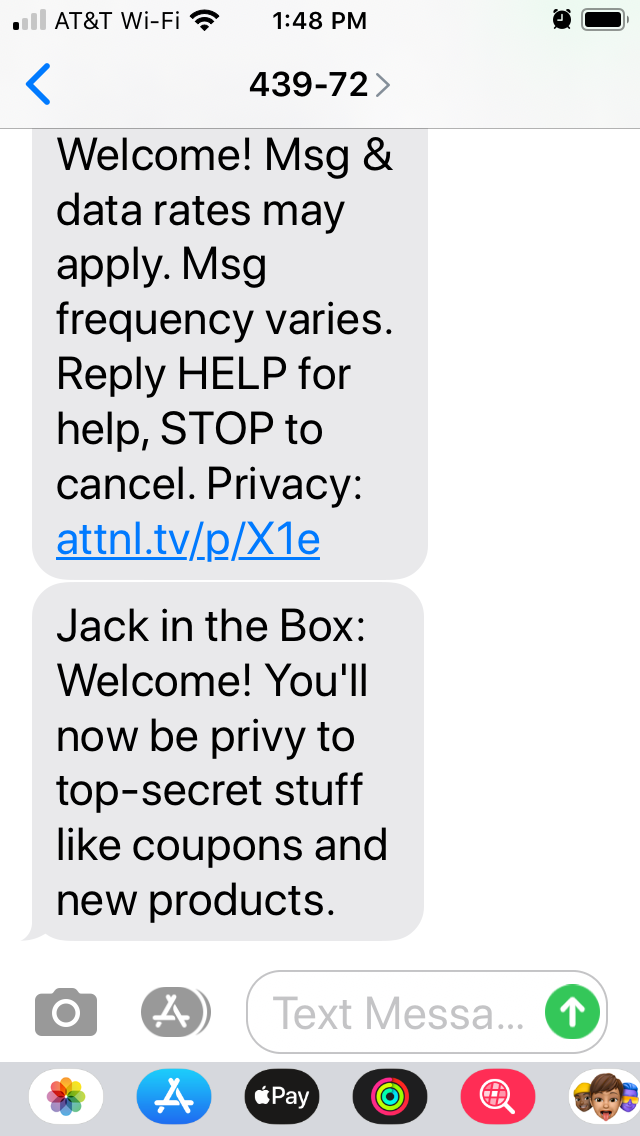
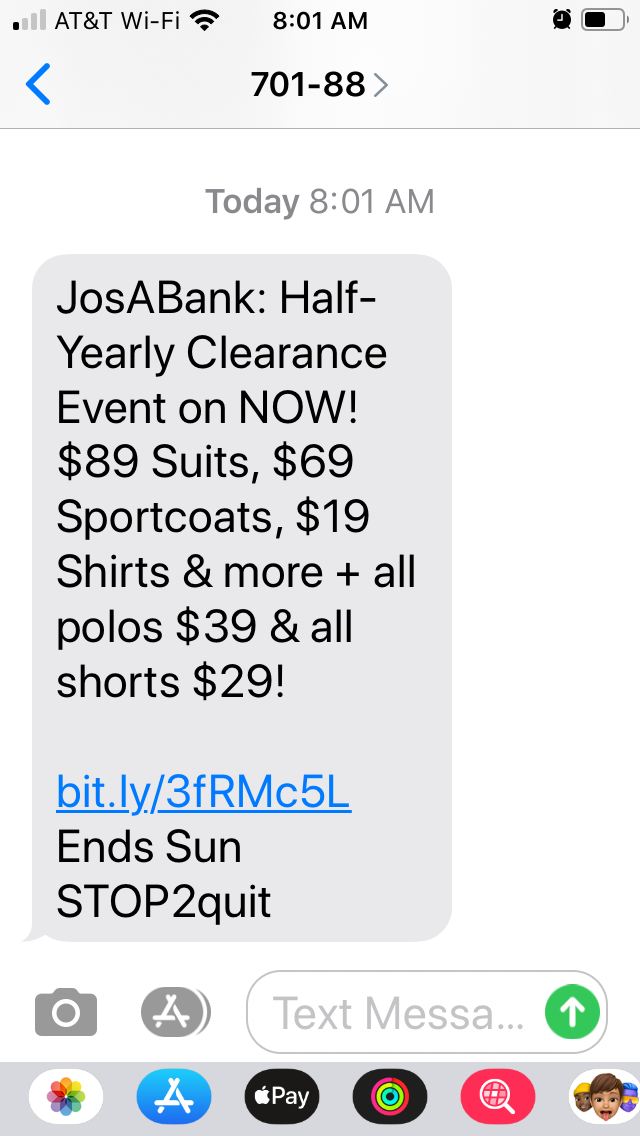
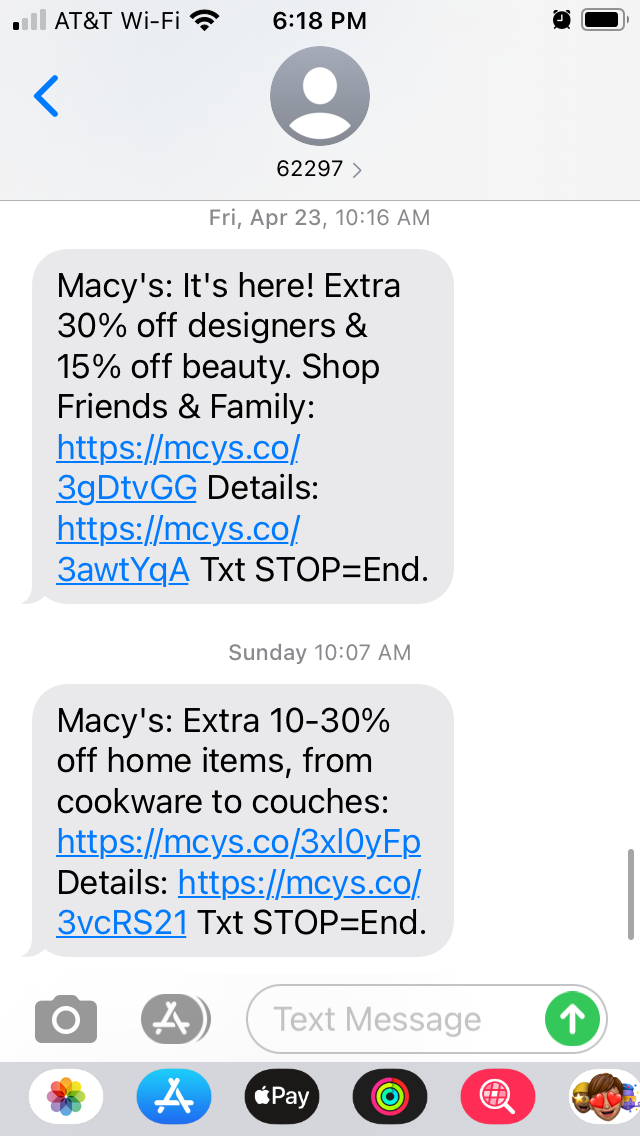
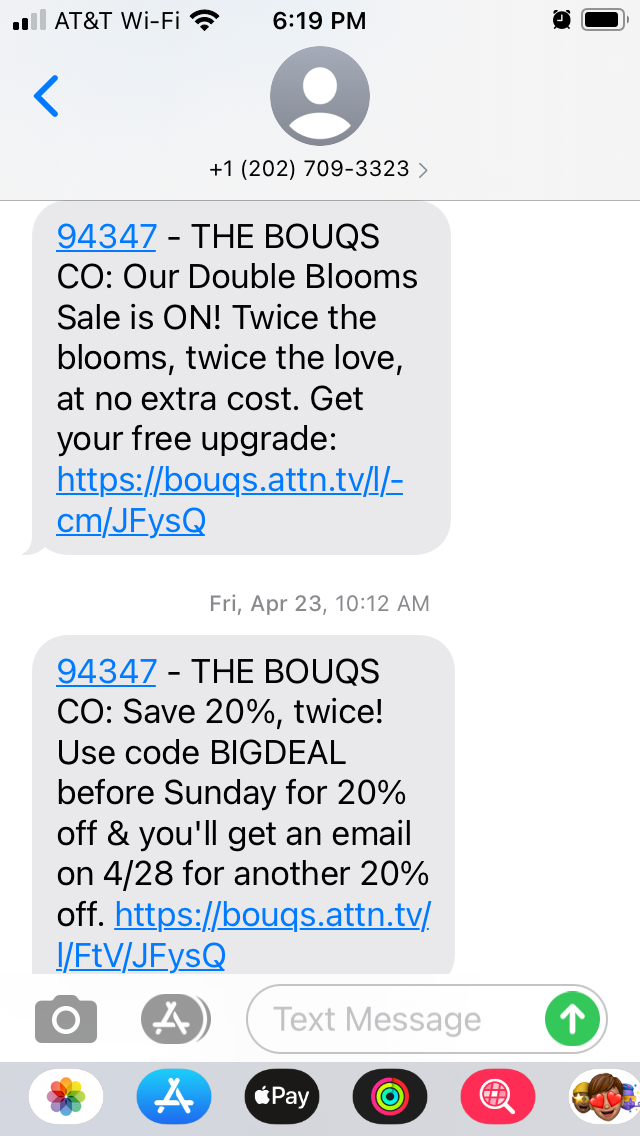
SMS Marketing Examples









Using Behavioral Science in Marketing
Stop guessing what makes customers click. In this post, you’ll dive into real-world behavioral science applied in marketing, from headline hooks and social-proof nudges to decision-making shortcuts and conversion strategies. Science meets strategy, ready to plug into your campaigns.
What is Behavioral Science in Marketing?
Behavioral science in marketing focuses on how people think, feel, and make decisions, then applies those insights to influence engagement and conversions. By using cognitive biases, social proof cues, and decision-making shortcuts, marketers can create more persuasive messages and higher-performing campaigns.
Using Behavioral Science in Marketing
If you ask a hundred people what makes a good article headline or email subject line, you may get a hundred different answers. After all, it’s subjective, isn’t it?
Not entirely, as many marketers know. There’s a science behind what makes a consumer open an email, click on a call to action (CTA), and make a purchase. Whether it’s writing an attention-grabbing headline or getting someone to “click and convert,” understanding that people rely on certain decision-making defaults helps marketers nudge them to take a desired action.
In this article, I discuss how to use behavioral science to improve marketing campaigns. Topics include:
Strategies to write effective headlines and subject lines
Using social proof
Content and landing pages
Choosing compelling images
Use of charts and graphs
Principle of authority
The science behind pricing
CTA colors
The science behind “possession” and how it can reduce returns
Tactile experience
CLICK HERE TO CONTINUE READING
Why 2021 Is Your Mobile Strategy Doomsday
Change with the times, or the times will change you. These words have never been more true than they are today. That’s because mobile devices, especially smartphones, are changing the game for retailers. Mobile is more than just the way emails render. Mobile is the primary way people consume information. Consider this:
Change with the times, or the times will change you.
These words have never been more true than they are today. That’s because mobile devices, especially smartphones, are changing the game for retailers. Mobile is more than just the way emails render. Mobile is the primary way people consume information. Consider this:
eMarketer found that since 2013, mobile devices have gained more than one hour in major media consumption time, up to 3:17, while TV has declined to 4:01.
According to Fluent, the smartphone is the primary device (55%) used to access the internet, while only 26% prefer a laptop or desktop.
What does this all mean for commerce marketers? Has this trend toward mobile been overstated? How quickly are things changing? Let’s take a look at what the industry has been seeing and how you can prepare for what’s coming our way.
The Growth of Online Sales
Year over year, ecommerce is not only growing but taking an increased percentage of total retail sales. According to eMarketer, ecommerce sales accounted for $396 billion last year, which was more than 8% of total retail sales. That’s a significant increase from the year before, with ecommerce sales totaling $343 billions and accounting for 7.3% of total retail sales.

Ecommerce and retail sales 2012-2016
When we look at sales from mobile commerce, 2016 clocked in at nearly $116 billion in sales—29% of total ecommerce sales. In 2015, mobile commerce accounted for nearly $81 billion in sales and 23.6% of total ecommerce sales. Once again, you can see not only strong overall growth, but the increased contribution of mobile to online sales.

Mobile commerce sales 2014-2016
When we hear mobile commerce, we immediately think of smartphones—and rightfully so. They continue to be the go-to mobile device for consumers. In 2016, 58% of mobile sales were made on smartphones, up from 46% the year before. Smartphone purchasing is rapidly increasing year over year. This can’t be ignored.

Smartphone and mobile commerce sales 2014-2016
What’s Next For Mobile Commerce?
It’s time to get serious about mobile. It’s predicted that by 2021, mcommerce will make up more than 50% of total ecommerce sales. While it’s important today to optimize for mobile, not being fully optimized in only a few short years will officially leave you behind the times.
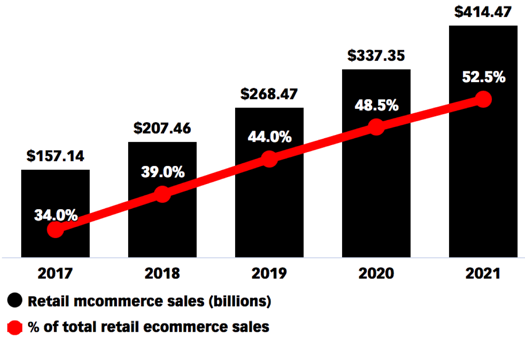
Retail mobile commerce sales 2017-2021
Be prepared. Take time to analyze where you might need improvement. Here are a few things to think about:
Are your checkout pages optimized for mobile? Are they integrated with mobile payment solutions, such as Apple Pay? The days of filling out long forms on mobile devices, manually moving from one box to the next, are on their way out.
Is your website completely mobile-friendly, from search to checkout?
Are your emails designed for mobile?
Are your communications relevant? If emails, recommendations, and search results are not relevant, consumers will simply move on.
According to Statistica, an average mobile user checks their phone 150 times each day. They can do whatever they want, wherever they want, whenever they want. They can find any product they are looking for, regardless of where in the world it’s located. If you don’t provide a frictionless, relevant, up-to-date user experience, someone else will.
Why Mobile Payments Are Killing the Checkout Form
A colleague recently told me over lunch how much he loves pizza apps. “They’re just so easy.” When I asked him what was so easy, he said that while picking from the menu is part of the ease, the bigger part has to do with paying. It’s one touch.
Now before you run out and hire a team to create an app for your brand, let’s think about how to make paying easier – whether someone visits your website from a desktop or wants to take advantage of email offers directly from their mobile device.
A colleague recently told me over lunch how much he loves pizza apps. “They’re just so easy.” When I asked him what was so easy, he said that while picking from the menu is part of the ease, the bigger part has to do with paying. It’s one touch.
Now, before you run out and hire a team to create an app for your brand, let’s think about how to make paying easier – whether someone visits your website from a desktop or wants to take advantage of email offers directly from their mobile device.
We talk a lot about omnichannel and the customer experience – making sure the cart is available, regardless of device, and providing a seamless shopping experience. But simply making shopping easy is just step one. Making it easier to pay is the key to conversion.
Mobile Shopping Is Here to Stay
According to eMarketer, 58% of mobile sales came from smartphones in 2016, and that number is expected to grow. Overall, mobile made up 29% of all ecommerce sales. But by 2021, it’s predicted that mobile will make up more than half of all ecommerce sales.
Retailers need to consider what this means for their sales. When consumers are looking to purchase on their devices, they expect a frictionless experience. And what provides more friction than being asked to enter an endless stream of billing and shipping details, often moving manually from box to box, all while on a small mobile screen?
Another colleague tells me she frequently abandons items at checkout when trying to buy on her mobile device. “Those forms are better than a strict budget for keeping my spending in check.’’ She recently recounted how she suffered through one form on a national retailer’s site solely because her too-busy-to-shop teenage daughter actually liked one of the dresses she had selected, and she couldn’t bear to abandon the shopping trip after thumbing through 120 sleeveless mini-dresses. She completed her purchase out of necessity, not convenience. If she could have found that baby blue skater dress on Amazon, she might have been tempted to bail altogether.
If your competitor offers a frictionless purchase experience and you do not, you may not only lose a sale now, but customers may remember this and bypass you altogether the next time they shop.
Security Plays a Key Role In Mobile Payment Behavior
The counter-argument is that most retailers allow users to save their credit card information on their site to make future checkouts easier. However, online security issues have minimized the usage of this tool. In fact, due to hacking concerns, 33% of consumers never save their credit card information, and 30% only use trusted payment methods, such as PayPal.
The result? More and more consumers are storing their payment information in their phones. There are one million Apple Pay accounts being activated weekly worldwide. As consumers continue to adopt mobile payments on their primary connected device, creating an easy way to allow consumers to check out will be an essential requirement in the very near future.
An intriguing facet to mobile payments is that Amazon’s U.S. patent for one-click payment technology expires this year, leaving the door open for other retailers to implement their own one-click solutions without licensing the technology from Amazon. Google is reportedly working on a one-click payment system that integrates with the Chrome browser.
This integration with Chrome goes beyond just mobile, and that itself is telling of the power that mobile payment options hold. The purchase process between an app, a laptop, and a mobile version of a site is almost always different from one another, but the goal is symmetry. As mobile purchasing becomes the standard, non-mobile devices will be forced to match that experience. Storing payment info in Chrome will allow users to easily check out regardless of the device they are on. Creating a symmetrical experience not only allows for a quicker checkout (which should decrease abandonment), but also improves the customer’s overall experience with your brand.
The time is right for retailers to provide a more simplified, convenient checkout experience. Don’t think of it as simply a way to optimize for mobile. It’s not. Mobile is the norm. Think of it in terms of giving your customers what they want. Long checkout forms on mobile devices are a thing of the past. Don’t believe it? Ask 100 people if they’d rather fill out a long form on their phone or make their next mobile purchase with the simple touch of a thumb.
This was originally published on Multichannel Merchant.
Is Google Trying to Kill the Mobile Popup?
As you may have heard by now, come January 2017, Google’s search rankings will begin penalizing mobile websites that have pop-ups and interstitials. The reason? Google says it is focused on providing users with a smooth mobile experience and allowing them to access the information they are looking for without interruption. The search provider believes that even if “optimized” for mobile devices, these features contribute to a poorer experience because of the devices’ smaller size.
As you may have heard by now, come January 2017, Google’s search rankings will begin penalizing mobile websites that have pop-ups and interstitials. The reason? Google says it is focused on providing users with a smooth mobile experience and allowing them to access the information they are looking for without interruption. The search provider believes that even if “optimized” for mobile devices, these features contribute to a poorer experience because of the devices’ smaller size.
Here are a few examples from a recent Google post of interstitials that will be penalized:
These examples include some common tools for email subscription used by many online retailers.
Not all interstitials will be treated equal, however. Google will not penalize mobile sites that use them for legal obligations, login dialogs, or banners that use a “reasonable amount” of space and are easily dismissible as seen below. It should be noted that the sizing specs for “reasonable” have not yet been specified.
Will It Really Matter?
So how much will this actually affect retailers? We don’t know yet. It’s only one of hundreds of criteria that determine Google’s ranking. In their blog post, Google states that “a page may still rank highly if it has great, relevant content.” Relevance seems to be the key word here. For larger retailers, such as WalMart, any negative impact may be minimal for them.
Smaller online retailers, who consistently rank lower and rely more heavily on ads to drive traffic, may feel the negative effect of keeping their pop-up is worth it. Growing their email list allows them to continually market their products to potential customers, and this may be their highest priority. Retailers will need to determine which side of the coin they fall on and whether the potential benefits outweigh the risks.
Are There Workarounds?
In looking at the allowable interstitial that uses a “reasonable amount of screen space,” there may be an opportunity to embed or link a subscription form into that appropriately-sized interstitial. It may be only a matter of time before maximizing that area will become the next targeting strategy.
Going “Old School”
This change does reinforce the importance for retailers to once again focus on the “old school” best practices for email collection. Strategies often abandoned in favor of a pop-up or lightbox, such as a prominent sign-up that lives above the fold on almost all pages of the site will be critical for maximizing sign-ups for mobile users.
Pop-ups and interstitials will still be allowed on the desktop version without penalty, which is good news for retailers looking to grow their subscriber file while still using these methods. But if you didn’t think providing customers with a smooth, mobile-first experience was absolutely critical before, it certainly is now. If you would like to see how mobile-friendly your website currently is, Google has a quick and easy tool for that.
While there’s still plenty of time to prepare prior to January, I wouldn’t wait. The conversation about email acquisition and other interstitial strategies should take place now so any changes can be implemented well in advance.
This was originally published on Multichannel Merchant.
5 Ways to Prepare for the Holiday Season
You’ve likely got a list of to-dos longer than a kid’s wish list for Santa. And with the hustle of the season, it’s easy for some tasks to fall by the wayside, which could result in a poor customer experience or first impression, lost sales, or even an under-performing holiday season. Don’t let this happen to you. Here are five essential tasks that should be on every commerce marketer’s holiday preparation list.
You’ve likely got a list of to-dos longer than a kid’s wish list for Santa. And with the hustle of the season, it’s easy for some tasks to fall by the wayside, which could result in a poor customer experience or first impression, lost sales, or even an under-performing holiday season. Don’t let this happen to you. Here are five essential tasks that should be on every commerce marketer’s holiday preparation list.
#1: Audit Your Forms
During the holidays, you’re likely to get a lot of new visitors, so be sure that the forms that help turn these visitors into subscribers are ready to go. And once they subscribe, they need to be able to access the manage preference form, especially if your welcome series directs them there.
A couple of questions for your team:
Where do the forms live?
Who can edit them?
How does a customer reach them?
Are they optimized for mobile?
Are subscribers being assigned to the correct lists?
Are the forms generally working as intended?
I recommend documenting each form and sharing with your team. If something breaks during the height of the holiday season, you must be able to fix it as quickly as possible without having to ask a lot of questions. This documentation will also allow you to easily add more forms over time without confusing how that form may affect other processes already in place.
#2: Evaluate Your Content
At this time of year, consumers will be inundated with emails, so be sure your current email content is optimized for the busy season. Some items to review include:
Scanability: Can people quickly digest the email and find the call to action (CTA)?
Responsive Design: Are your emails mobile-friendly? If not, make them so!
Send From Name Consistency: Is your company’s brand uniformly expressed across all messages (triggered and scheduled)?
Preheader Text: Are you using it effectively and supporting the subject line (not repeating it)?
Calls to Action: For emails that features several pieces of content, are the CTAs easily identifiable?
Social CTAs: How prominent are they, and do they detract from the conversion CTAs? Are you clear about what you’re asking customers to do?
While these suggestions also apply to transactional messages, consider a few other things as well. For instance, are you using the promotional space wisely too, for instance, suggest stocking stuffers or other seasonal items? And don’t forget to highlight extended return policies and other holiday specific value-adds.
#3: Analyze Last Year’s Plan
Hopefully, you’ve already looked at last year’s plan. If you haven’t, here are some items to pay special attention to:
Your High Priority Campaigns: Why were they must-haves? Did these campaigns perform as expected? If they didn’t, can you tell why?
The Poor Performing Campaigns: Why did some campaigns fail? Was it due to timing of the send, or has that particular promo jumped the shark (or reindeer in this case) with your audience? Should you repeat it this year with a new spin?
The Sending Cadence: Did you send more emails than anticipated? If so, why? Was it because a campaign was not delivering expected results and you needed additional sends to make up for it? Did you notice your competitors sending much more than you expected, causing you to match them for fear of losing out on revenue? How were unsubscribe rates with the increase in sends? What type of emails were added (i.e. types of discounts/free gifts, length of promo)?
#4: Plan for All Scenarios
Stuff happens. The Internet says so, so it must be true! In your planning, especially after looking at the items above, you should be prepared for all “oh no” scenarios. Get ready with:
Back-up promotions: Remember last year when your plan went off the rails thanks to an underperforming campaign? Be prepared! Create extra promotions with different offers (tiered discount, dollar vs. percentage, free shipping) or additional free gifts to include. A great place to start is with your key campaigns for this season. Prepare the content in advance, build the email and have it ready to deploy at a moment’s notice.
Don’t forget: Set your promo codes up in advance as well! If you never need them, great. But it will be one less step to perform if you’re in reactionary mode.
An answer to your “Oops” moment: Anticipate that Steve Urkel moment. Create “oops” messages covering the most common issues well in advance. You can even leave an editable space that allows you to either provide more clarity or customize a promo code. Some of the most common reasons for sending an oops email? A non-functioning promo code, a website that’s slow or completely down, promotion of the wrong incentive, and broken links.
But be sure the error warrants sending a message. If there’s a typo in the subject line, you probably don’t need to address it. If the subject line advertises a 50% off sale when it should have been $50 off, you’ll probably want to do something about it.
#5: Evaluate Your Season
Yes, you read this right! Once the season is complete, you should immediately evaluate the season. You can analyze better when the work is fresh in your mind. Nine months from now, you may not remember that the reason a key campaign underperformed was because of an error or a send time glitch. It also protects you if a key team member involved with the planning leaves during the year. Analyzing the season immediately gives you the best view of the current season and the information you need to accurately determine must-haves for next year. When planning time rolls around, compare these seasonal results with trends you have seen develop over the past year and determine whether a pivot needs to be made.
Final Thoughts
While this is not an all-inclusive list for holiday planning, it should at least get you thinking. By executing these ideas, you’ll be better prepared to deliver a smooth customer experience, react at a moment’s notice, and plan for the following year. If nothing else, knowing you’re prepared may help you sleep better at night, like a warm glass of milk. Just be sure it’s not the “big guy’s” milk.
This was originally published on Multichannel Merchant.
Mobile: It's Not Just for Millennials Anymore
Smartphones are everywhere, and people are becoming increasingly reliant upon them to accomplish everyday tasks: setting their wake-up alarm, listening to the radio, and, of course, shopping. Because of this consumer reliance on these devices, a mobile-first approach is essential for retailers today, from responsive design for emails to mobile-friendly websites (including the checkout process).
However, even with this increase in smartphone usage …
Smartphones are everywhere, and people are becoming increasingly reliant upon them to accomplish everyday tasks: setting their wake-up alarm, listening to the radio, and, of course, shopping. Because of this consumer reliance on these devices, a mobile-first approach is essential for retailers today, from responsive design for emails to mobile-friendly websites (including the checkout process).
However, even with this increase in smartphone usage, the majority of purchases are still happening on other devices. But why? Is it because technology has not yet caught up with consumer expectations for a purchase experience? Does age still dictate who uses smartphones for purchases? Or is it a combination of these, and then some?
Optimization Obstacle
Data from our recent survey, "How Consumers Across the Globe Use Multiple Devices to Shop and Buy," indicates that even in today’s mobile-first world, there are still inherent obstacles to making a purchase via a smartphone. Let’s think about why this might be the case.
Envision a scenario that challenges virtually every retailer today. You’re commuting on a train. You browse a website on your phone, find a product, cart the item and start to make a purchase, but the checkout process is not fully optimized for your smartphone. So you abandon the cart and finish your order via a friendlier device, such as a laptop. In this scenario, the mobile device was essential, but thanks to the obstacles of the brand’s mobile checkout, the conversion was dependent on another device. This gives would-be purchasers the opportunity to shop elsewhere.
This is exactly why retailers are focusing so heavily on prioritizing the mobile experience. They understand that allowing potential customers to leave their site without making a purchase not only gives them the opportunity to shop elsewhere but also establishes in the consumer’s mind that the brand is not customer-centric.
It's Not Just for Millennials
As you would expect, our research shows that age appears to influence the level of comfort with making purchases on smartphones. Millennials are more likely to view mobile purchasing as the norm, but the behavior isn’t limited to younger generations. The older age groups are also comfortable making mobile purchases via the smartphone, which underlines the necessity to focus on providing a smooth mobile experience.
It’s expected that, over time, mobile purchasing across almost all age groups will increase, and it will likely be a result of two things. First, as smartphone payment technology advances and retailers streamline their purchase process, smartphone conversions will become as easy and as natural as walking into a store and paying for an item.
And as technology further cements itself into every aspect of everyday life, consumers, even in the older age groups, will be less reliant on desktops and laptops to make a purchase.
Until complete adoption, though, here are three ways you can help streamline the mobile purchase process:
Add a message to your welcome series inviting new subscribers to create an online account. This can help make entering payment and shipping information easier during the checkout process, as entering this information on smaller devices is often a major obstacle during a mobile purchase.
Ensure your emails are responsive and your message is clear. Don’t use too much text in your emails. Not only can it be hard to read on mobile phones, but attention spans are short. If you can’t convey your messaging in a matter of seconds (think three or fewer), your contact will likely swipe away from your email.
Focus on the mobile site experience, including the checkout process. Can people easily navigate the site, save items and check out? Look for areas of high friction and improve them.
At the end of the day, the mobile experience matters. Whether mobile is used to start the purchase process or complete one from start to finish, a mobile-first approach is paramount in providing consumers the shopping experience they expect.
How Consumers Across the Globe Shop and Buy Online
Consumer technology is constantly evolving, reshaping the way retailers and consumers interact on a daily basis. These changes force retailers to provide functionality that allows consumers to easily make purchases on their device, or devices, of choice. It’s become critical to understand how devices are used in different ways from one region to another.
Consumer technology is constantly evolving, reshaping the way retailers and consumers interact on a daily basis. These changes force retailers to provide functionality that allows consumers to easily make purchases on their device, or devices, of choice. It’s become critical to understand how devices are used in different ways from one region to another.
Looking at results from a recent Bronto-commissioned survey of adult populations in the UK, US and Australia with access to a laptop, desktop, tablet, smartphone or wearable, the device of choice and shopping patterns change, not surprisingly, based on demographics and locale. So what does this tell us about how retailers need to prepare for shifts in consumer purchasing behavior?
Location, Location, Location
Smartphone adoption, to no one’s surprise, is at 75% or greater in the United States, Australia, and the United Kingdom, with Australia leading the way at 88% adoption. However, the UK appears to be leading the way in terms of ditching their reliance on desktops and laptops in favor of mobile devices. Desktop ownership is significantly lower than both the US and Australia, and the country has the highest tablet ownership of the three.
Does Buying Behavior Match?
In the US and the UK, 60% of respondents have used multiple devices to complete a purchase, while only 35% of Australians have done so. While this may signify a smoother purchase process regardless of device in Australia, we see a lower overall adoption of purchasing via mobile device in Australia. This leads me to believe that consumers are less comfortable making mobile purchases in AU, while UK and US consumers are still struggling to find a seamless, one-device experience. In those regions, it may be that the purchase process on mobile devices is still not fluid enough for consumers to complete the purchase on their device, causing them to abandon and later complete the purchase on a second device, likely a laptop or desktop.
In the US and AU, desktops and laptops remain the most common devices for purchasing, while in the UK, laptops and smartphones are the most common methods. When looking specifically at mobile devices, smartphone purchasing is fairly even between the US and UK, but tablet purchasing is significantly higher in the UK than in the US or AU.
What’s the DNA of Who’s Buying?
It is not surprising that the younger the demographic, the more comfortable they are shopping via smartphones. Younger consumers in the US appear to be most comfortable making purchases via smartphone, with the UK and AU following respectively. However, the US begins to see the noticeable drop with the 45-54 group (from 58% to 31%), while the AU and UK see the decline with those ages 35-44. While US consumers under the age of 54 are more comfortable using smartphones for purchases, they are still not ready to ditch the more traditional methods.
When it comes to gender differences, we see men owning slightly more devices than women in all three countries. However, when it comes to smartphone purchases, the AU and UK are dead even with 37% of men and women making purchases via smartphones. Surprisingly, we see a significant disparity in the US, with 43% of men making smartphone purchases versus only 35% of women.
Take Two Tablets and Call Me in the Morning
In the UK and AU, the 25-34 year-old demographic leads the way with regards to tablet purchases, while in the US, it’s those 35-44. Overall, this is not entirely a surprise, considering the low desktop ownership in the UK. But it may indicate that, in the UK, tablets have successfully replaced desktops in the home and thus generated a greater share of those purchases.
Final Thoughts
Purchasing with a mobile device is fast becoming the norm, and streamlining the online purchase process will be essential to provide your customers the experience they expect. Here are a few ways to ensure a smoother consumer experience:
Focus on mobile first. Mobile devices are constantly becoming more powerful and are fully embedded into everyday life. Assume this, or another mobile device, will be the primary form of engagement now and in the future. Be sure your emails are mobile-friendly and your website provides a great mobile experience.
Make it easy to purchase. Having a mobile-friendly site does not mean you have optimized your purchase process. You must streamline the checkout process and reduce obstacles to conversion. Consider promoting account creation in your email messaging when acquiring new email subscribers to support a smooth checkout process.
We know that consumers expect a consistent omnichannel experience, but delivering it in a manner your audience expects will be critical in order to maximize revenue and create long-lasting customer loyalty.
This was originally published on Multichannel Merchant.