Featured Post: My Reading & Podcast List
Here are recent books I’ve read and podcasts I enjoy. If you’re looking for something interesting to listen to or read, these are a few that have stood out to me. Let me know if you have a recommendations.
Notable Email and SMS Marketing Trends From the First Half of 2023
A recently released email and SMS marketing report shed light on these performance trends and helped answer questions like “Do consumers find SMS intrusive?” and “Are consumers over email?” The report analyzed more than 10.5 billion e-commerce marketing emails and 62 million SMS messages, among other channels, sent by Omnisend customers in the first half of 2023.
Here are four notable takeaways for brands to pay attention to.
More Sends, More Engagement, More Orders
Brands sent 32.8 percent more scheduled emails, 99.2 percent more automated emails, and 47.9 percent more SMS messages year-over-year (YoY).
Increased consumer engagement allows brands to continue finding sales success with these channels. The click-to-conversion rate for email increased nearly 5 percent over the same period last year and orders are up 8.3 percent. Automated email orders increased by 132 percent, and SMS orders increased by nearly 17 percent year-over-year.
As the holiday season quickly approaches, having a pulse on the performance of various marketing channels is essential for brands to maximize their return on investment. This is especially true when it comes to heavily relied upon opt-in channels like email and SMS.
A recently released email and SMS marketing report shed light on these performance trends and helped answer questions like “Do consumers find SMS intrusive?” and “Are consumers over email?” The report analyzed more than 10.5 billion e-commerce marketing emails and 62 million SMS messages, among other channels, sent by Omnisend customers in the first half of 2023.
Here are four notable takeaways for brands to pay attention to.
More Sends, More Engagement, More Orders
Brands sent 32.8 percent more scheduled emails, 99.2 percent more automated emails, and 47.9 percent more SMS messages year-over-year (YoY).
Increased consumer engagement allows brands to continue finding sales success with these channels. The click-to-conversion rate for email increased nearly 5 percent over the same period last year and orders are up 8.3 percent. Automated email orders increased by 132 percent, and SMS orders increased by nearly 17 percent year-over-year.
This increase in sends tells us brands rely on the channels to generate sales. The increase in orders tells us consumers welcome them.
Don’t Ignore Email and SMS: Consumers Surely Haven’t
Looking for a marketing edge?
Of course you are, but little did you know that the elusive edge may be closer than you realize.
Omnisend’s recently released yearly email and SMS marketing benchmark report analyzed more than 17 billion marketing emails and 107 million SMS sent by brands in 2022. It showed how deeply consumers used email and SMS as part of their shopping and product discovery journey as well as provided clues as to what makes the messages appealing to consumers.
Here are the primary email and SMS marketing highlights from the report and ways brands can apply these consumer shopping trends to gain an edge in 2023.
Overall Email Marketing Trends
Email marketing continues to be a core component of e-commerce brands’ online marketing strategies. Continuing its year-over-year (YoY) trend, brands sent 42 percent more email messages in 2022 than the year before, resulting in a 12 percent increase in email-related orders.
Looking for a marketing edge?
Of course you are, but little did you know that the elusive edge may be closer than you realize.
Omnisend’s recently released yearly email and SMS marketing benchmark report analyzed more than 17 billion marketing emails and 107 million SMS sent by brands in 2022. It showed how deeply consumers used email and SMS as part of their shopping and product discovery journey as well as provided clues as to what makes the messages appealing to consumers.
Here are the primary email and SMS marketing highlights from the report and ways brands can apply these consumer shopping trends to gain an edge in 2023.
Overall Email Marketing Trends
Email marketing continues to be a core component of e-commerce brands’ online marketing strategies. Continuing its year-over-year (YoY) trend, brands sent 42 percent more email messages in 2022 than the year before, resulting in a 12 percent increase in email-related orders.
The reliance on email was also prevalent at a crucial time for retailers, Q4. YoY, email was responsible for a 13.8 percent increase in orders on Black Friday, a 34.4 percent increase during the Cyber 10, and an 18.7 percent increase in overall Q4 orders.
Holiday Email and SMS Performance Shed Light on Brands’ 2023 Marketing Strategies
E-commerce brands faced a holiday shopping season filled with uncertainty — uncertainty around when the shopping season would start in earnest, inflation’s impact on consumer spending, and the costs and performance of paid marketing channels. And with good reason.
Throughout the year, the cost and performance on channels such as paid social and paid search fluctuated, raising questions and concerns about holiday marketing spend on the channels. And if consumers just shopped less in general, how else might brands generate the sales they needed?
As it played out, Black Friday and Cyber Monday e-commerce sales were up slightly from the previous year's unusual dip. Accounting for inflation, however, indicates the increase in sales was due to the cost of goods rather than an increase in shopping. Cost effectively securing early holiday sales was important, and when it mattered most, brands seemed to shift back and rely more on established and consistently performing opt-in channels like email and SMS — and it worked.
E-commerce brands faced a holiday shopping season filled with uncertainty — uncertainty around when the shopping season would start in earnest, inflation’s impact on consumer spending, and the costs and performance of paid marketing channels. And with good reason.
Throughout the year, the cost and performance on channels such as paid social and paid search fluctuated, raising questions and concerns about holiday marketing spend on the channels. And if consumers just shopped less in general, how else might brands generate the sales they needed?
As it played out, Black Friday and Cyber Monday e-commerce sales were up slightly from the previous year's unusual dip. Accounting for inflation, however, indicates the increase in sales was due to the cost of goods rather than an increase in shopping. Cost effectively securing early holiday sales was important, and when it mattered most, brands seemed to shift back and rely more on established and consistently performing opt-in channels like email and SMS — and it worked.
Consumers Turned to Email Marketing When Shopping
According to a new holiday marketing report by Omnisend, year-over-year, email marketing was responsible for a 13.8 percent increase in orders on Black Friday, and a 34.4 percent increase during the Cyber 10, a 10-day span beginning on the Sunday before Black Friday through Giving Tuesday. The increase in sales was accompanied by a greater reliance on email marketing.
The Impact of iOS 15 on Email Marketing — One Year Later
On Sept. 20, 2021, Apple released its much-anticipated iOS 15 software update. The update included various “privacy protection” features for iPhone users, including "Mail Privacy Protection." This feature prevents companies from seeing whether subscribers opened their emails, and instead reports an open rate of 100 percent for those using the Apple Mail app.
As the update release approached, it was predicted that the changes would significantly diminish the value of open-based engagement metrics for email marketers and impact their day-to-day strategy, including how brands use "remails" (i.e., automatically resending unopened emails), identify engaged users for cross-channel retargeting and deliverability list cleaning, and report on open-based metrics like click-to-open rate.
Now that we’ve passed the one-year mark since the update’s release, what has the impact been? After analyzing 15 billion marketing emails sent by Omnisend since iOS 15 was released and 20 billion sent before the update, dating back to 2019, we have a much clearer understanding of the true impact iOS 15 has had on e-commerce brands’ email marketing programs.
On Sept. 20, 2021, Apple released its much-anticipated iOS 15 software update. The update included various “privacy protection” features for iPhone users, including "Mail Privacy Protection." This feature prevents companies from seeing whether subscribers opened their emails, and instead reports an open rate of 100 percent for those using the Apple Mail app.
As the update release approached, it was predicted that the changes would significantly diminish the value of open-based engagement metrics for email marketers and impact their day-to-day strategy, including how brands use "remails" (i.e., automatically resending unopened emails), identify engaged users for cross-channel retargeting and deliverability list cleaning, and report on open-based metrics like click-to-open rate.
Now that we’ve passed the one-year mark since the update’s release, what has the impact been? After analyzing 15 billion marketing emails sent by Omnisend since iOS 15 was released and 20 billion sent before the update, dating back to 2019, we have a much clearer understanding of the true impact iOS 15 has had on e-commerce brands’ email marketing programs.
Steady Adoption, Just in Time for the Holidays
iOS 15 was released just before the 2021 Q4 holiday shopping season, and as with most updates, adoption was not instantaneous but it was evident. Open rates gradually increased through Q4 2021.
New Email and SMS Marketing Report Showcases Their Value to Brands
A pullback on consumer spending, high inflation, and an uncertain holiday season. Toss in paid social’s cost and targeting effectiveness being in a state of perpetual fluctuation and retailers find themselves faced with a myriad of challenges in trying to increase sales and maximize return on investment.
To maximize sales and profits, brands need to ensure all marketing channels work together as efficiently as possible, with data from one channel feeding another. This is where opt-in channels become valuable for retailers. Email and SMS marketing are two opt-in channels that tend to have fewer cost fluctuations and are driven by first-party data, making targeting more accurate and their effectiveness more evident.
However, as the economy and consumer shopping habits change, how are consumers responding to these channels and what can brands learn from it?
A new email and SMS marketing report analyzed more than 8 billion e-commerce marketing emails, 43 million SMS messages, and 73 million web push messages sent by Omnisend customers in the first half (H1) of 2022. The results provide a clear direction for how brands can adapt their marketing and increase sales.
A pullback on consumer spending, high inflation, and an uncertain holiday season. Toss in paid social’s cost and targeting effectiveness being in a state of perpetual fluctuation and retailers find themselves faced with a myriad of challenges in trying to increase sales and maximize return on investment.
To maximize sales and profits, brands need to ensure all marketing channels work together as efficiently as possible, with data from one channel feeding another. This is where opt-in channels become valuable for retailers. Email and SMS marketing are two opt-in channels that tend to have fewer cost fluctuations and are driven by first-party data, making targeting more accurate and their effectiveness more evident.
However, as the economy and consumer shopping habits change, how are consumers responding to these channels and what can brands learn from it?
A new email and SMS marketing report analyzed more than 8 billion e-commerce marketing emails, 43 million SMS messages, and 73 million web push messages sent by Omnisend customers in the first half (H1) of 2022. The results provide a clear direction for how brands can adapt their marketing and increase sales.
Email Marketing: Still Powerful, But it’s Not Created Equal
Email marketing continues to be the centerpiece marketing channel for most brands due to its high engagement, relatively steady cost, and effectiveness at generating sales. For consumers who clicked on a scheduled email campaign, 6.7 percent of them went on to make a purchase. This number soared to 35 percent with automated emails. At worst, email performs well. At best, it performs exceptionally well, especially when compared to paid media channels.
SMS Marketing: The Secret Weapon for E-Commerce Brands This Black Friday and Cyber Monday
Planning for Black Friday and Cyber Monday (BFCM) is already top of mind for many e-commerce brands, and includes the usual channels like email marketing, paid search, paid social, and marketplace ads. But as the cost and effectiveness of channels like paid social continue to fluctuate, brands are continuously searching for ways to maximize return on investment in a competitive and crowded space.
Unlike paid channels like search and social, which mostly rely on third-party data, an opt-in channel like email marketing is less susceptible to sudden cost increases and uses first-party data. This helps explain why it has historically generated a more consistent and predictable ROI for brands.
It’s this combination of opt-in marketing and first-party data that companies need to take full advantage of during this year’s holiday season if they wish to maximize profits. SMS marketing fits this description perfectly and the timing couldn’t be better.
Planning for Black Friday and Cyber Monday (BFCM) is already top of mind for many e-commerce brands, and includes the usual channels like email marketing, paid search, paid social, and marketplace ads. But as the cost and effectiveness of channels like paid social continue to fluctuate, brands are continuously searching for ways to maximize return on investment in a competitive and crowded space.
Unlike paid channels like search and social, which mostly rely on third-party data, an opt-in channel like email marketing is less susceptible to sudden cost increases and uses first-party data. This helps explain why it has historically generated a more consistent and predictable ROI for brands.
It’s this combination of opt-in marketing and first-party data that companies need to take full advantage of during this year’s holiday season if they wish to maximize profits. SMS marketing fits this description perfectly and the timing couldn’t be better.
Why E-Commerce Brands Should Use SMS Marketing During the Holidays
First, SMS marketing is growing and shows no signs of slowing. Last year, brands sent 94 percent more SMS than in 2020, a year which itself sent nearly 400 percent more messages than the year prior. During the 2021 Cyber 10 (the Sunday before Black Friday through Giving Tuesday), e-commerce merchants increasingly relied on SMS, sending 40 percent more SMS than in 2020.
CONTINUE READING ON TOTAL RETAIL
3-Minute Video Tip Series: How to Grow Your Email Marketing List
I recently created a three-minute marketing tip series designed to help busy marketers generate more revenue from their email marketing program. The idea was simple: in three minutes or less each day, I would provide easy-to-follow advice on how to improve specific aspects of their program. Each episode can be found on YouTube, embedded below, and syndicated as season four of the Cart Insiders Podcast.
The topics I covered were:
Email marketing list growth
Email marketing welcome series
Email marketing cart abandonment
SMS marketing
This week’s tips covered how to grow your email marketing list. Let’s dive in.
I recently created a three-minute marketing tip series designed to help busy marketers generate more revenue from their email marketing program. The idea was simple: in three minutes or less each day, I would provide easy-to-follow advice on how to improve specific aspects of their program. Each episode can be found on YouTube, embedded below, and syndicated as season four of the Cart Insiders Podcast.
The topics I covered were:
Email marketing list growth
Email marketing welcome series
Email marketing cart abandonment
SMS marketing
This week’s tips covered how to grow your email marketing list. Let’s dive in.
What kinds of information should I collect on an email pop-up form?
My recommendation is to keep this information to a need-to-know minimum, focus on customer intent, and let them carry on with their shopping session. Collect only what you need or will immediately use.
When it comes to customer intent, think to yourself, “why did someone sign up for my email program?” Was it so they could receive a birthday message 8 months from now or so they could share their zip code? Of course not. Their intent is most likely to make a purchase.
So while birthdate and location are nice to have, they are not need-to-have pieces of information.
Information like gender is slightly different. Knowing their gender may help you determine what style of products they may be shopping for. If this is information you will USE immediately, like with customized product recommendations or features in your welcome series, then you can collect it. Otherwise, don’t bother. You can get this info with your welcome messages themselves — more on this in a later episode.
The same holds true for other types of similar information, like whether they are a B2B or B2C buyer if you service both types of customers, or for some sites are shopping for themselves or as a gift.
Listen to the complete answer below.
Should I collect mobile numbers on an email marketing pop-up form?
The short answer is yes!, regardless of whether or not you have an SMS program in place. SMS is a must-have marketing channel, and collecting this info now will be beneficial for a few reasons.
Here are 5 reasons you should collect mobile numbers for SMS marketing:
It is an opt-in channel, meaning only people who want to sign up will.
It will indicate whether your audience wants to receive SMS messages from your brand.
SMS can fill in brand-to-consumer marketing gaps left from email unsubscribed.
It can help reduce your retargeting costs (especially for email unsubscribers), since SMS is an opt-in channel.
Everyone texts! It is no longer about generational cohorts. Baby Boomers, Gen X, Millennials, and Gen Z all text.
Need more proof? SMS sends increased 94% in 2021 compared to the year before, and 2020 saw a nearly 400% increase from the year prior. If you’re not using SMS, you’re leaving money on the table.
Listen to the complete answer below.
What Types of email list growth forms should I use?
Three types of email sign-up forms your store can use are a common pop-up form, an exit-intent form, and a spin-the-wheel form.
An email capture pop-up form is the most common form you likely come across on most brands’ websites, like is seen here. A visitor is prompted to enter their email address to sign up for a brand’s marketing emails.
A spin-the-wheel form is a gamified form where a visitor enters their email address and after clicking “submit,” a game wheel spins, stopping on a discount. This discount can then be used immediately and encourages a purchase.
An Exit-intent form is a pop-up that appears when a web visitor makes a movement indicative of leaving. Ecommerce brands can reveal a form that makes a last-ditch effort to capture an email address before the visitor leaves.
How to style an email pop-up form?
When designing your pop-up form be sure to incorporate your brand assets like colors, product images, and company logo. At certain times of the year, consider creating holiday-specific designs, such as for Valentine’s and St. Patrick’s Day.
Listen to the complete answer below.
How to Make your list growth pop-up form convert better
First, make sure the pop-up can easily be closed if the subscriber is not interested. Make sure you can easily find the “close” button on both mobile and laptop.
Second, test the pop-up on multiple browsers and phones, including using different text sizes on phones. Zoomed-in text can make pop-ups frustrating for users. While you can’t account for every size, do your best.
Third, if you are OK doing so, offer an incentive. Presume the intention of being on your site is to shop. Offering an incentive can help you increase the sign-up and conversion rate.
Fourth, make sure your pop-ups are ADA compliant. Using ADA-compliant forms can help you sidestep any legal obstacles that may arise.
Finally, make sure the information is being added to your email provider after submission. After all, that’s the point!
Listen to the complete answer below.
Email list growth and pop-up best practices
Ecommerce brands looking to grow their email and SMS marketing lists should utilize optimized pop-up forms. Here are 8 list growth best practices I talked about this week.
When it comes to asking for information on your pop-up, focus on things that will help you immediately send more relevant messages, such as gender or the purpose of shopping—like gifting. Consider collecting nice-to-have information such as birthdate later.
Collect mobile numbers. SMS is a must-have opt-in channel used by all generational cohorts.
Brand your form with stylized text, colors, images, and logos.
Test different types of email collection forms, including gamified spin-the-wheel and exit intent forms.
Offer an incentive if you can, but don’t feel required to.
Ensure the pop-ups are easy to exit out of and test them on different browsers and phones.
Be sure your pop-ups are ADA-compliant.
Ensure all contacts are being passed to your email marketing provider.
I hope you enjoyed these list growth tips.
If you think these tips can help someone else, please feel free to share them. and be sure to reach out if I can help in another way. Cheers!
The Slowdown of E-Commerce and How Online Brands Can Adapt
A recently released Mastercard SpendingPulse report showed a year-over-year (YoY) retail sales increase of 7.2 percent in April. However, within this figure, we see that in-store sales increased 10 percent while e-commerce declined by nearly 2 percent.
Amazon.com, Wayfair, and Target all reported slowdowns in their e-commerce business in Q1. Amazon saw online sales decline by 3 percent, and Wayfair reported fewer active customers. While Target’s digital comps were up 3.2 percent, that was down from the pandemic-driven 50.2 percent increase in 2021.
If the slowdown of e-commerce wasn’t enough, customer acquisition and retargeting costs continue to increase. Business Insider reported YoY ad cost increases for Google, Meta (Facebook), TikTok, and Amazon sponsored products.
While retail is still strong overall, inflation’s impact on consumer spending combined with the return to in-store shopping means e-commerce businesses are left fighting for a bigger piece of a smaller, crowded, and uncertain pie. Throw rising acquisition and retargeting costs into this mix, and you have yourself a not-so-favorable recipe.
Luckily for e-commerce brands, there are ways they can adapt their marketing efforts to these market conditions to increase customer retention, reduce paid media costs, and increase profit.
The COVID-fueled e-commerce party couldn’t last forever. Businesses knew that it was only a matter of time before consumers reverted to their pre-pandemic shopping habits of mixing online and in-person shopping. That time appears to be upon us.
A recently released Mastercard SpendingPulse report showed a year-over-year (YoY) retail sales increase of 7.2 percent in April. However, within this figure, we see that in-store sales increased 10 percent while e-commerce declined by nearly 2 percent.
Amazon.com, Wayfair, and Target all reported slowdowns in their e-commerce business in Q1. Amazon saw online sales decline by 3 percent, and Wayfair reported fewer active customers. While Target’s digital comps were up 3.2 percent, that was down from the pandemic-driven 50.2 percent increase in 2021.
If the slowdown of e-commerce wasn’t enough, customer acquisition and retargeting costs continue to increase. Business Insider reported YoY ad cost increases for Google, Meta (Facebook), TikTok, and Amazon sponsored products.
While retail is still strong overall, inflation’s impact on consumer spending combined with the return to in-store shopping means e-commerce businesses are left fighting for a bigger piece of a smaller, crowded, and uncertain pie. Throw rising acquisition and retargeting costs into this mix, and you have yourself a not-so-favorable recipe.
Luckily for e-commerce brands, there are ways they can adapt their marketing efforts to these market conditions to increase customer retention, reduce paid media costs, and increase profit.
Focus on Intent-Based Marketing
When it comes to marketing, sending messages that are highly relevant to the current state of a customer’s journey leads to sales, especially with opt-in channels like email and SMS. With an average conversion rate of 1.9 percent (compare this to paid media), behavior-based automated emails accomplish this. They generate nearly 30 percent of all email orders while accounting for only 2 percent of the sends.
The reason: they’re driven by consumer intent.
3 Ways to Use Marketing Automation to Improve CX
Retailers are constantly looking to improve the customer shopping experience. For e-commerce brands, it may mean implementing live chat, improving site speed, using 3D product images, and offering free returns. However, the shopping journey isn’t isolated to technical website details and store policies; it also applies to marketing.
With email marketing, brands tend to look at it exclusively as a direct sales channel — especially when it comes to automated emails. And for good reason. A recent Omnisend report shows that in 2021, behavior-based automated emails generated 29.6 percent of all email marketing orders with only 2.2 percent of sends.
But focusing automated emails only on sales and not on how they can improve the customer experience is a mistake most brands make. In today’s environment, brands need to do both simultaneously. Here are three ways e-commerce brands can use marketing automation to improve the shopping experience and increase sales:
Retailers are constantly looking to improve the customer shopping experience. For e-commerce brands, it may mean implementing live chat, improving site speed, using 3D product images, and offering free returns. However, the shopping journey isn’t isolated to technical website details and store policies; it also applies to marketing.
With email marketing, brands tend to look at it exclusively as a direct sales channel — especially when it comes to automated emails. And for good reason. A recent Omnisend report shows that in 2021, behavior-based automated emails generated 29.6 percent of all email marketing orders with only 2.2 percent of sends.
But focusing automated emails only on sales and not on how they can improve the customer experience is a mistake most brands make. In today’s environment, brands need to do both simultaneously. Here are three ways e-commerce brands can use marketing automation to improve the shopping experience and increase sales:
1. Ditch the old welcome series.
A welcome series is a set of messages sent to new email subscribers. Last year, these messages generated a conversion rate of 2.8 percent compared to 0.1 percent for scheduled promotional messages, and were responsible for 43 percent of all automated email orders.
The 'Buy it Now' Consumer is Here: Are You Prepared?
Consumer expectations and shopping habits are constantly evolving. How brands adapt to the constant evolution, from logistics and staffing to marketing strategy and tactics, ultimately determines whether they stay relevant in consumers’ eyes and their business continues to grow.
We’re witnessing another evolution in purchasing behavior, ushering in a new breed of consumers — the "buy it now" consumer. What exactly is the "buy it now’" consumer, what propelled their emergence, and what do brands need to know about them in 2022?
Consumer expectations and shopping habits are constantly evolving. How brands adapt to the constant evolution, from logistics and staffing to marketing strategy and tactics, ultimately determines whether they stay relevant in consumers’ eyes and their business continues to grow.
We’re witnessing another evolution in purchasing behavior, ushering in a new breed of consumers — the "buy it now" consumer. What exactly is the "buy it now’" consumer, what propelled their emergence, and what do brands need to know about them in 2022?
The Rise of the 'Buy it Now' Consumer
This evolution has been happening over the past several years and COVID may have been the tipping point for its ascension. Both email and SMS conversion rates have steadily grown, but saw a significant jump in early 2020, despite the fact click rates declined over this period — indicating more intent-based shopping where consumers identified products and made an immediate purchase. But that’s just the beginning.
How iOS 15 Will Kill Email Open Rates—And How Marketers Can Prepare
Picture this: Your company's email campaigns have an average open rate of around 15%. Then one day it suddenly skyrockets to 40%.
Maybe it's just a fluke, you think... until it happens again. And again.
Anyone with marketing chops will know it's not a cause for celebration. Something is just not right.
For companies that send emails, that scenario may play out as early as mid-September. But it won't require much detective work to solve: Apple's forthcoming iOS 15 privacy update will soon render open rates irrelevant, and marketers need to start adapting now.
Picture this: Your company's email campaigns have an average open rate of around 15%. Then one day it suddenly skyrockets to 40%.
Maybe it's just a fluke, you think... until it happens again. And again.
Anyone with marketing chops will know it's not a cause for celebration. Something is just not right.
For companies that send emails, that scenario may play out as early as mid-September. But it won't require much detective work to solve: Apple's forthcoming iOS 15 privacy update will soon render open rates irrelevant, and marketers need to start adapting now.
Why Traditional Open Rates Will Die
You might be wondering how one tech giant's move could obliterate a metric that marketers have depended on for two decades.
Here's how: Apple users who upgrade to iOS 15 will choose whether they want to activate "Mail Privacy Protection" for any Apple Mail apps they use to read emails. Language in the beta version makes the convincing case that most users will choose to do so, and in that case all emails will be marked "opened"—even if they aren't.
The change is understandably rattling e-commerce merchants, whose clientele is more likely to check their emails via mobile app. But it also matters to B2B businesses, even if just a small portion of their email subscribers fit that profile.
Keep ThemHow to Effectively Leverage The Power of Digital Marketing, PPC, & Email to Dramatically Increase Sales Engaged
Marketing a product or service today is easier than ever before in history. Using platforms like Facebook ads or Google ads, a company can market their product directly to people who perfectly fit the ideal client demographic, at a very low cost. Digital Marketing tools, Pay per Click ads, and email marketing can help a company dramatically increase sales. At the same time, many companies that just start exploring with digital marketing tools often see disappointing results.
In this interview series called “How to Effectively Leverage The Power of Digital Marketing, PPC, & Email to Dramatically Increase Sales”, we are talking to marketers, advertisers, brand consultants, & digital marketing gurus who can share practical ideas from their experience about how to effectively leverage the power of digital marketing, PPC, & email.
As a part of this series, I had the pleasure of interviewing Greg Zakowicz.
Marketing a product or service today is easier than ever before in history. Using platforms like Facebook ads or Google ads, a company can market their product directly to people who perfectly fit the ideal client demographic, at a very low cost. Digital Marketing tools, Pay per Click ads, and email marketing can help a company dramatically increase sales. At the same time, many companies that just start exploring with digital marketing tools often see disappointing results.
In this interview series called “How to Effectively Leverage The Power of Digital Marketing, PPC, & Email to Dramatically Increase Sales”, we are talking to marketers, advertisers, brand consultants, & digital marketing gurus who can share practical ideas from their experience about how to effectively leverage the power of digital marketing, PPC, & email.
As a part of this series, I had the pleasure of interviewing Greg Zakowicz.
Thank you so much for joining us in this interview series! Before we dive in, our readers would love to “get to know you” a bit better. Can you tell us a bit about your ‘backstory’ and how you got started?
The Death of the Open Rate: How Email Marketers Can Prepare for iOS 15
Email marketers at e-commerce brands use traditional reporting data such as open, click, and conversion rates to measure email campaign performance. But what happens when you suddenly take away one of those long-established data points?
Buckle up because we’re about to find out.
Apple’s announcement of its upcoming iOS 15 update, which is expected this fall, includes a feature that prevents companies from seeing whether subscribers opened their emails while using the Apple Mail app. Not everyone uses iOS or Apple's email app. But losing even partial data makes the rest unreliable for making informed marketing decisions across your email program.
Email marketers at e-commerce brands use traditional reporting data such as open, click, and conversion rates to measure email campaign performance. But what happens when you suddenly take away one of those long-established data points?
Buckle up because we’re about to find out.
Apple’s announcement of its upcoming iOS 15 update, which is expected this fall, includes a feature that prevents companies from seeing whether subscribers opened their emails while using the Apple Mail app. Not everyone uses iOS or Apple's email app. But losing even partial data makes the rest unreliable for making informed marketing decisions across your email program.
It’s not all doom and gloom for marketers, even if 61.7 percent of all emails are opened in Apple Mail. I believe it’s quite the opposite. This is an opportunity for e-commerce brands to work on what really matters.
Here are six ways you can prepare your email marketing program for the death of the open rate:
SMS Marketing Examples & Stats
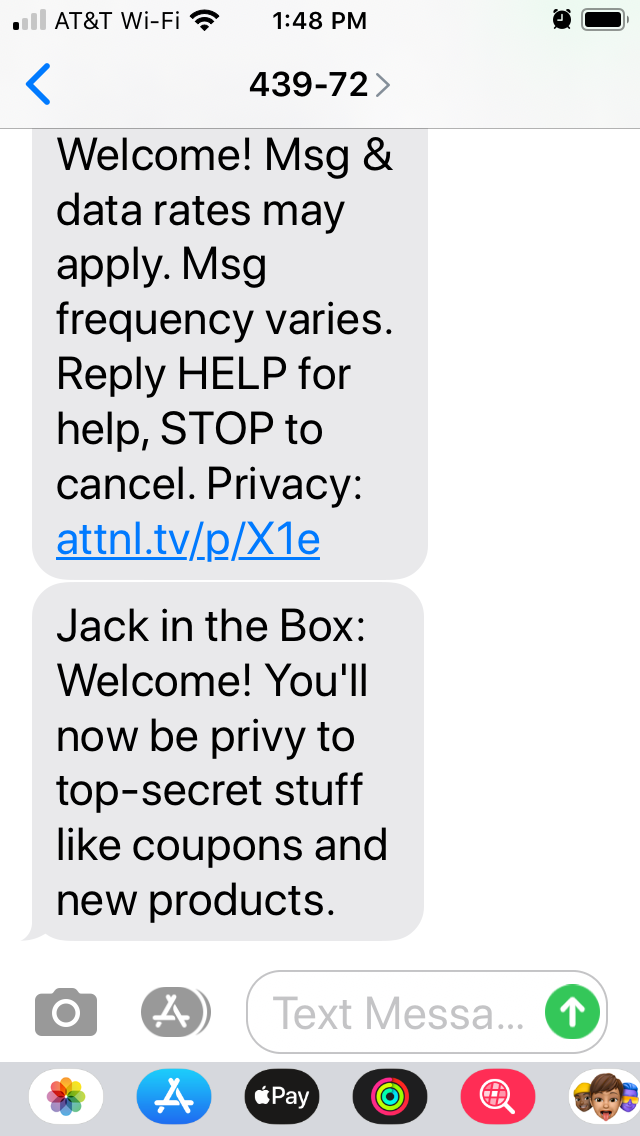
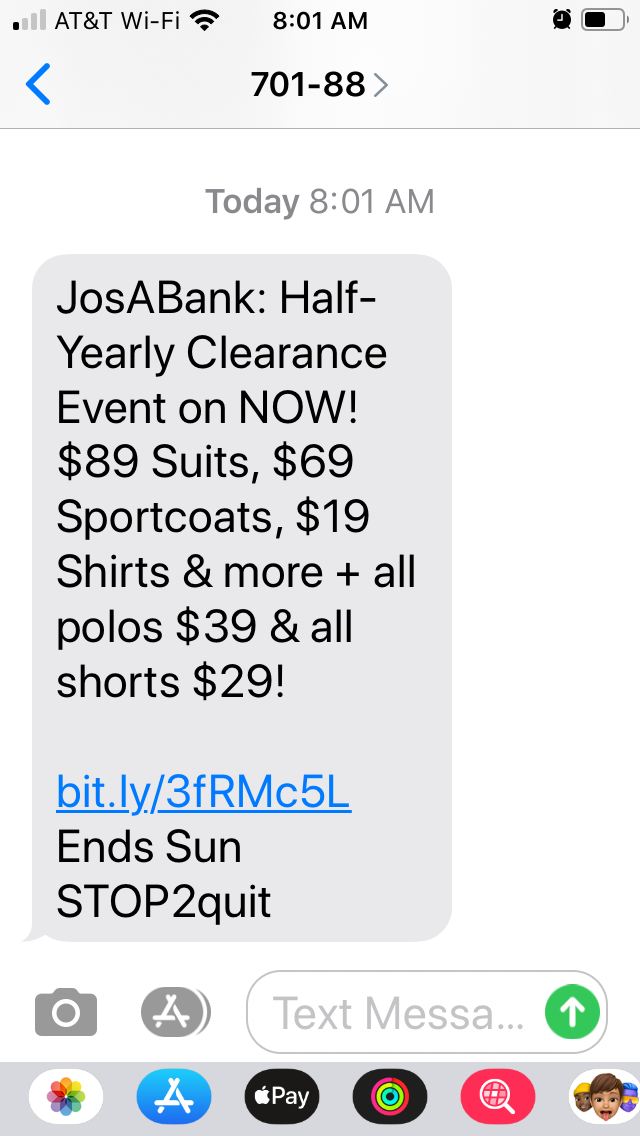
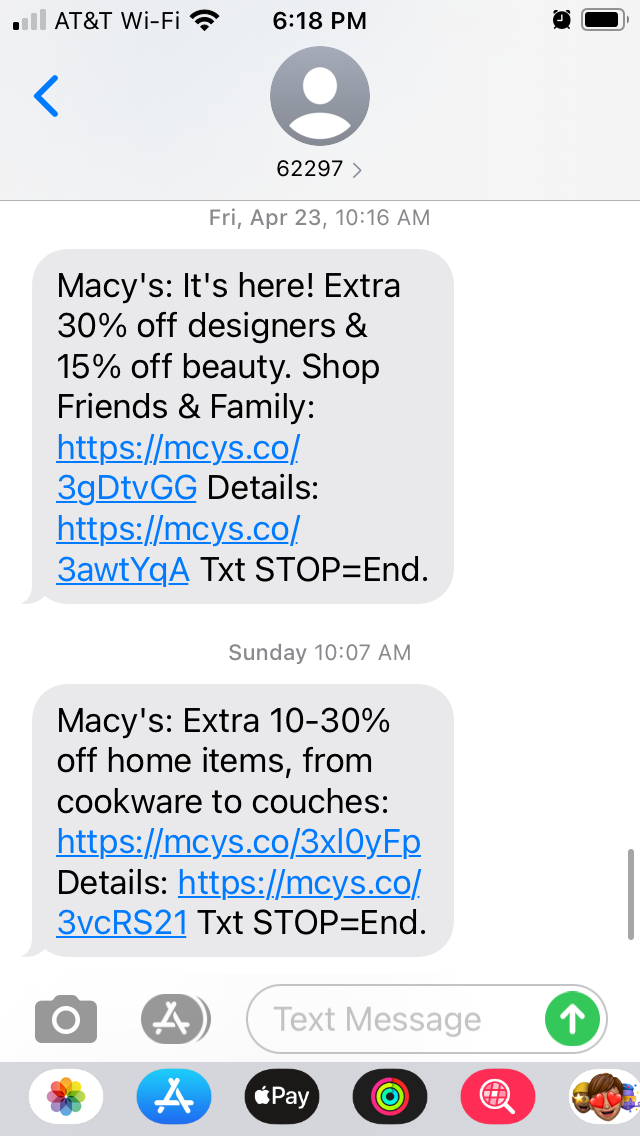
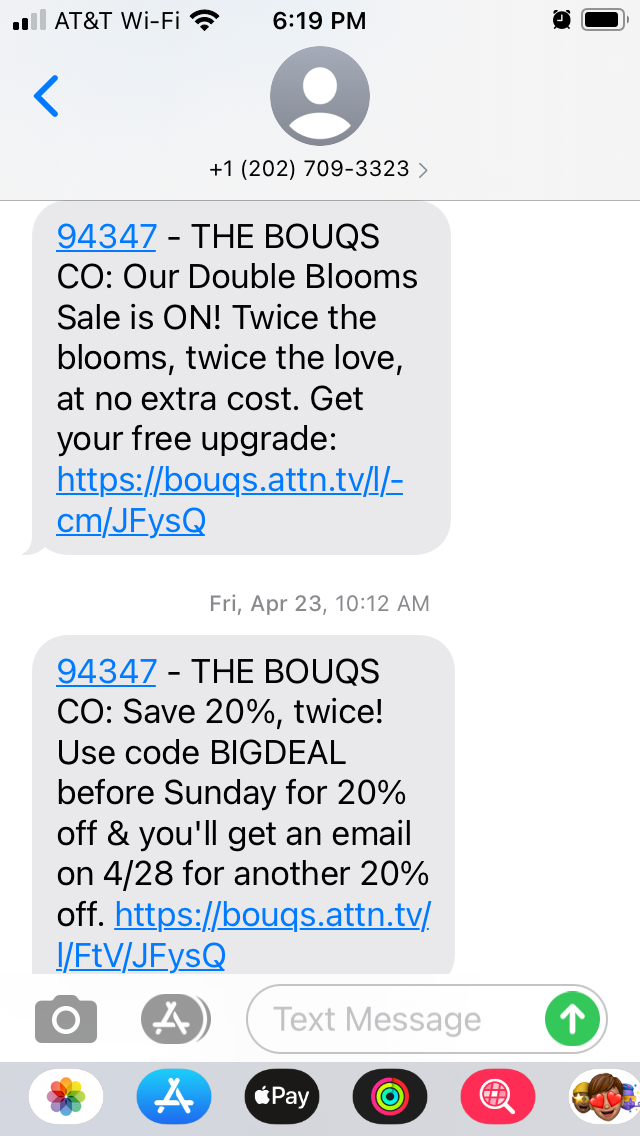
SMS and MMS Marketing Examples
SMS is a must-have marketing channel for ecommerce brands. The reason: everyone texts. It is no longer reserved for younger generations. Brands that fail to utilize SMS marketing are missing out on sales.
SMS Marketing Statistics
SMS marketing continues to grow. Ecommerce brands sent 31% more SMS sends in 2024 than the year before. Previously, the year-over-year lift was 58% in 2023, 62% in 2022, and 75% in 2021.
2026 SMS Marketing Statistics (promotional messages):
Click-to-sent rate: 12.38%
Conversion rate: 0.12%
Click-to-conversion: 0.97%
AOV: $125
Revenue per send: $0.15
2026 SMS Marketing Statistics (automated messages):
Click-to-sent rate: 20.32%
Conversion rate: 0.77%
Click-to-conversion: 3.81%
AOV: $96
Revenue per send: $0.74
Automated SMS messages generated nearly 5× more revenue per send than campaigns ($0.74 vs. $0.15). That gap exists for the same reason it does in email: automated messages reach subscribers at high-intent moments triggered by their own behavior, rather than interrupting them with batch-and-blast messages.
I’ve been saying it for years, SMS is a must-have channel in the shopping journey. — Greg Zakowicz, Email & SMS Marketing Epxert
SMS Marketing Examples









The Customer Journey Has Changed — Has Your Marketing?
Let’s face it; the traditional linear model of the customer journey is no longer accurate. Today’s consumers shop how they want, where they want, and when they want—all while facing distraction at a moment’s notice. They are choosing how they interact with brands and on which channels they do so. They have all of the power. Who said being a marketer is easy?
Let’s face it; the traditional linear model of the customer journey is no longer accurate. Today’s consumers shop how they want, where they want, and when they want—all while facing distraction at a moment’s notice. They are choosing how they interact with brands and on which channels they do so. They have all of the power. Who said being a marketer is easy?
Today’s model more closely resembles that of a spiderweb, with its zigs, zags, and non-uniform strands. As chaotic as it may look, everything is connected and working in concert with one another.
This is the new digital customer journey—unique, non-uniform strands that are all connected to serve a common goal.
Because of the multitude of siloed channels, the distraction, and increased global competition, marketers need to rethink how multiple channels, like email and SMS, can work in unison with one another to create a relevant experience that meets consumers’ ever-increasing expectations of retailers.
How The Journey is Moving Beyond Single Channels
According to a report by Omnisend, marketing campaigns utilizing three or more channels have a 287% higher conversion rate than campaigns relying on a single channel. For retailers, ensuring that campaigns have multiple cohesive channels working together can have a significant impact on the bottom line. Multiple channels matter, but how they’re delivered matters more.
While retailers are using multiple channels to communicate with and retarget consumers, many of them are working in silos. For example, an email subscriber may click on an email and then abandon the website. In response, they begin seeing ads on their social media platforms. But if the consumer comes back and makes a purchase, often these retargeting ads follow them around the internet, sometimes for days or weeks, while still receiving generic promotional email messages.
Consumers increasingly expect communications from brands to be both timely and relevant. The example above is not that.
Retailers need to understand how consumers naturally interact. Take Gen Z, for instance. These digital natives make up more than a quarter of the US population, and being digital natives means SMS is a natural communication channel. Even so, 83% expect to increase or maintain their email usage over the next several years. Both channels hold importance to them.
Retailers who have adopted SMS as a marketing channel have reported over a 2,700% ROI, and omnichannel campaigns that involve SMS are 47.7% more likely to end in conversion.
It’s time for retailers to break down these silos and make available additional channels for customers to opt into. Adding channels that appeal to their customers is just the first step. Creating relevant messaging is another.
The Rise of Multi-Channel, Behavior-Based Messaging
Consider that customer who is on a website and browsing products only to leave without placing an item in the cart. The consumer has shown some level of interest. Recognizing this, a retailer would traditionally continue sending them standard promotional emails and retarget the customer through search and social media. But this experience has challenges. Paid retargeting can be expensive, the strategy is siloed, and standard promotional emails are not always relevant.
But this relevance matters. The same Omnisend report showed that that segmented campaigns earned 62% higher order rates than non-segmented ones. The reason—segmented messages are more relevant.
This is where automated behavior-based, multi-channel messaging can deliver a more user-friendly experience and guide the customer along their purchase journey.
Consider the impact of sending abandonment messages via the channel(s) of the customer’s choosing—after all, no one chooses to see ads on their social feeds. Retailers can easily send automated reminder messages (e.g., email, SMS, push) for the products they were viewing via any, or all, channel(s)—and if the consumer completes their order, the other channels recognize and cease their retargeting efforts.
Automated behavior-based messaging, such as browse abandonment, delivers segmented, relevant, and timely messaging to customers. Consumers recognize the value in them. That’s why it is not uncommon to see retailers drive over 25% of their email revenue on these messages alone.
This is just one example of automated, behavior-based messaging. Others include cart abandonment, welcome series, post- and lapsed-purchase, and re-engagement messages. I expect to see a continued increase in behavior-based automation adoption and the use of data, such as cart total or purchase history, to make these messages even more relevant than they naturally are.
Paving the Way for the Future
Utilizing behavior-based marketing automation to create relevant messaging and delivering it via the channel(s) of the customers’ choosing is going to be essential for catering to the modern-day online customer journey.
Tomorrow’s successful retailers will be those who cohesively incorporate other channels into their traditional siloed pillars of email, paid search, and paid social to create one unified, spiderwebbed e-commerce journey. After all, if you’re trying to catch flies, it’s good to be the spider who makes the web.