Featured Post: My Reading & Podcast List
Here are recent books I’ve read and podcasts I enjoy. If you’re looking for something interesting to listen to or read, these are a few that have stood out to me. Let me know if you have a recommendations.
Holiday 2025 Shopper Mindset: What Marketers Need to Know
Shoppers are still buying this holiday season, but they’re taking a more careful, value-driven approach. Greg Zakowicz shares a few observations from his MarTech Cube guest article on how shopper behavior is shifting and what it means for marketers heading into the holidays.
Holiday Shopping 2025: What Marketers Need to Know
The holiday season always brings surprises, but this year feels different. Shoppers are still buying, but they’re doing it with more intention. Prices remain high, budgets are tighter, and people are weighing decisions a bit longer than they used to.
I recently wrote a guest post for MarTech Cube, digging into this shift in shopper mindset. Here’s a quick look at what stood out.
Shoppers Are More Careful With Their Money
People haven’t stopped spending, but they’re more cautious. They’re sticking to budgets, comparing more, and thinking harder before committing.
For brands, that means your value story has to be clear. Customers want to know why your product is worth it, not just that it’s on sale.
Promotions Still Matter but Not in the Same Way
Holiday discounts will always grab attention, but blanket markdowns aren’t the only way to win.
Smarter incentives like early access, bundles, or tiered offers tend to resonate more with today’s value-focused shopper. It’s less about racing to the bottom and more about showing that your promotion actually makes sense.
Convenience Goes a Long Way
The easier you make the purchase experience, the better. Clear delivery timelines, smooth returns, and straightforward policies all influence buying decisions. These aren’t “extras” anymore — they’re part of what shoppers expect.
Email and SMS Still Deliver
Despite all the noise in the market, lifecycle messaging remains reliable. Email and SMS continue to drive strong results during peak shopping periods.
Well-timed sends and solid automation, such as cart abandonment messages, back-in-stock alerts, and post-purchase series, matter. a lot.
Read the Full Article
You can read the complete post on MarTech Cube here:
»» Holiday 2025: What Marketers Need to Know About Shoppers’ New Mindset
47 Ways to Prepare Your Email Marketing and Ecommerce Store For The 2020 Holiday Season
The holiday shopping season is fast approaching there is a lot of uncertainty about what will unfold. Questions surrounding the health of the economy and what a resurgence of COVID-19 might have on the supply chain make planning for this holiday season unique. Here are 47 ways you can prepare your marketing program and e-commerce store for the holiday shopping season.
The holiday shopping season is fast approaching there is a lot of uncertainty about what will unfold. Questions surrounding the health of the economy and what a resurgence of COVID-19 might have on the supply chain make planning for this holiday season unique.
One thing I do expect from this season is for ecommerce to further increase its already-increased share of retail sales. We saw email become a go-to channel for consumers during the COVID pandemic with a nearly 23% lift in conversion rates, and I expect this to carry over into the holidays. If you are an email marketer, here are 47 ways you can prepare your marketing program and ecommerce store for the holiday shopping season.
General:
- Start marketing early — e.g., late October
- Pay attention to the Cyber 10
- Pay close attention to the feel of the nation (COVID, economy) and adjust your marketing copy accordingly
- Don’t wait until Black Friday to start marketing—again, start early
Technical Prep:
- Collect SMS numbers along with email addresses—grow your trusted marketing channels
- Audit website forms (e.g., sign-up, exit-intent)—how to edit them and who has access to do so
- Test sign-up forms and ensure they work properly
Email Design:
- Use emojis in subject lines
- Use emojis in the preheader text
- Make your emails mobile-friendly
- Include a “top gifts” or similar section in your nav bar
- Create a custom, holiday-themed header
- Keep the CTA obvious in emails (let people digest the message quickly)
- Make sale exclusions obvious—avoid misleading people and frustrating them at checkout
- Acknowledge that self-gifting is real and design your messaging to account for it
Promotional Marketing Messages:
- Promote value-adds/differentiators in your emails (e.g., extended return policies, always free shipping)
- Use remails—but not every time (think about when it makes sense)
- Send multiple emails on peak days (Thanksgiving Day, Back Friday, Cyber Monday)
- Utilize SMS marketing, both as a stand-alone channel and to complement email
- Utilize a sense of urgency (subject lines, CTA, copywriting)
- Use product recommendations in your emails (for self-gifting, of course)
Automated Email Marketing Messages:
- Adjust workflow timing (are you suppressing new signups from Black Friday emails?)
Welcome series
Cart abandonment
Lapsed-purchaser
Product review emails - Create seasonal automated messages (e.g., holiday-specific welcome series)
- Optimize your transactional messages for sales (shipping and order confirmation)
- Adjust abandoned cart timing rules
- Increase the number of abandoned cart messages
- Adjust the discounting strategy in your cart abandonment messages (is the discount worse than your holiday everyday promotion?)
- Use browse/product abandonment messages—please, use them!
- Integrate SMS messages into your email automation workflows, especially cart abandonment
Paid Search/Social:
- Monitor your ROAS
- Retarget email contacts on social and paid search
- Test different/new social channels and search engines (e.g., Bing, Pinterest, YouTube)
- Use influencers
Customer Service:
- Implement live chat on your website
- Extend your return policies
- Solidify your BOPIS strategy/expand BOPIS offerings
- Collect info for gift-reminder messaging
Discounts/Benefits:
- Test different incentives (% off, & off, tiered discounts, deals of the day, X days of deals, flash sales, free shipping, free express shipping, VIP-only, SMS-only, email-only, for BOPIS-only orders, etc.)
- Understand that free shipping has increasingly being used as THE incentive as the season winds down. Test it and save yourself some margin.
- Make a holiday playlist on Spotify (for both your customers and employees)
- Offer free gift wrapping
Prepare for the Unexpected:
- Prepare an “oops” email in advance
- Have backup promotions and coupon codes already created and loaded in your ecomm platform
- Identify potential shipping challenges and have a contingency plan in place
- Identify possible supply chain chokepoints and prepare for the “what if”
- Prepare for a pandemic resurgence — and what that measns for your business
Finally:
- Have fun and enjoy the season!
If you have any specific questions around the holiday season, please feel free to contact me!
And, of course, some of these tips from 2019 may still be useful, so check out this post, “Top Holiday Email Marketing Planning Resources”
2019 Email and E-commerce Holiday Season Recap
The 2019 holiday season has concluded, and once again ecommerce experienced record-breaking sales. This online holiday season registered just above $142 billion in online sales, a 13% increase from last year, according to Adobe Analytics.
But what made the 2019 holiday season so successful, and which trends have become the new normal? In this recap I’ll discuss the Cyber Five, the Cyber Ten, smartphone growth, the value of email marketing, daily sales benchmarks and more.
The 2019 holiday season has concluded, and once again ecommerce experienced record-breaking sales. This online holiday season registered just above $142 billion in online sales, a 13% increase from last year, according to Adobe Analytics.
But what made the 2019 holiday season so successful, and which trends have become the new normal? Let’s explore.
The Subtle Nuances of November
In sports, subtle moves with a major impact are called the “game within the game,” which succinctly describes the continuing evolution of Gray November’s month-long series of discounts.
We started seeing pre-Black Friday deals and other heavy discounts start in late October. But once we entered November, we started seeing this “game within the game” begin to play out.
Black Friday is Now a Week-long Event
The concept of Black Friday week started in 2018 and became an official thing this year. Many retailers started their sales on the previous Sunday, and many others jumped in on Monday.
Beginning that day, more than a quarter of subject lines in my personal retailer tracking inbox had the term “Black Friday.” It’s possible that Black Friday week was a result of the day falling later in the year, but it continues the trend of a growing sales event. Expect this to be the new norm.
The Cyber Five Expands to the Cyber Ten
The Cyber Five (Thanksgiving through Cyber Monday) now accounts for 20% of the holiday season’s ecommerce revenue. But this period has morphed into the Cyber Ten, thanks in part to Black Friday week.
The ten days from the Sunday before Thanksgiving to Cyber Monday accounted for seven of the top online sales days of the entire season, with six of them hitting $3 billion+ in ecommerce sales and accounting for 27% of the total holiday revenue.
Black Friday, Cyber Monday Remain Tentpoles
Black Friday recorded $7.4 billion in ecommerce sales, falling just short of Cyber Monday 2018’s record-setting $7.9 billion day.
But this year, shoppers propelled Cyber Monday to $9.4 billion in ecommerce sales, meaning both days grew nearly 20% year-over-year. While consumers show a willingness to shop early, they’re also willing to shop often, especially on these tentpole days.
The New Daily Online Sales Benchmark is $2B
Only a couple of years ago, $1 billion in one-day ecommerce sales was the benchmark to hit during the holidays. In 2018, only the period of Dec. 22-25 failed to reach that mark.
But in 2019, only Christmas Eve missed it, with $850 million in ecommerce sales. Two billion dollars is now the new online sales benchmark, with 29 days reaching it, including each day during the Cyber Ten.
Mobile Revenue Grows, Smartphones Gain Share
Mobile continued its march toward the dominant shopping method in the 2019 holiday season. However, tablet’s share of mobile was replaced by smartphones.
In 2019, purchases on smartphones accounted for nearly 35% of revenue, according to Adobe, while tablets accounted for 5%
In 2018 season, smartphones made up 31% of revenue, and tablets 9%
We saw this same shifting pattern for mobile devices in web traffic:
In 2019, smartphones accounted for 58% of retail web traffic, while tablets hit 5%
This was up from 51% in 2018, when tablets made up 8% of the traffic
I have repeatedly said if you’re not mobile optimized, you’re not optimized – and we’re clearly at the point now where smartphone optimization is table stakes.
Consumers Continue to Value Email
Email marketing continued to drive ecommerce sales, accounting for 17% of online revenue this year, nearly half of which (49%) came from smartphones. To put this in context, social media drove less than 2% of sales. You can see why email marketing is a powerful promotional tactic.
Email volume continues to increase year over year, confirming that Gray November is alive and well. This season, average daily sends began to increase the last week of October and continued through November. Overall, there were 10% more emails sent in November than in October.
Emails sent from the Bronto Marketing Platform supports the notion that Black Friday week is a promotional event. In November, there were 54% more emails sent during Black Friday week than in the previous weeks. This represents a significant increase in sends during the week of Black Friday compared to previous years.
Of course, discounting in email remained the top tactic. Eighty-four percent of consumers said they’re more likely to open emails with discounts, and 58% felt that relevant email offers had a higher likelihood of purchasing.
2019 Holiday Season Takeaways and How to Use Them
Analyzing the 2019 holiday season does no good unless you implement the lessons learned to further your marketing program. From the takeaways above, here are opportunities for some marketing reflection and optimization throughout 2020:
$2B is the New Daily Ecommerce Sales Benchmark
Question: How do you plan to attract new customers and increase AOV to take advantage of this increase in consumer spending?
Email Marketing Needs to be a Major Program Component
Question: What specifically can you do to improve your email program throughout the year?
The Cyber Ten replaced the Cyber Five
Question: Do you have enough value-adds and promotional strategies to take full advantage of this extended sales period?
Smartphones Took Over Web Traffic, Getting There for Online Sales
Question: Are your website, emails, popup forms and paid search strategies optimized for mobile users?
Now is the time to dive deep into the types of offers customers responded to, the types and timing of automated email messages (i.e., abandoned cart, post-purchase, etc.), subject line tactics, paid search strategies, and the traffic sources and devices.
These tactics will allow you to test hypotheses and roadmap improvements to your overall marketing programs, giving you an early start on next year’s planning while driving increased sales year-round.
2019 Email Marketing Sends - By Day and Month
(IN PROGRESS): The chart below reflects the daily email send volume of 2019. The daily lifts and declines reflect the average number of emails retailers sent on that day of the week compared to the overall number of emails sent during the entire year.
For example, retailers sent …
Top Email Send Days of 2019
The chart below reflects the daily email send volume in 2019. The daily lifts and declines reflect the average number of emails retailers sent on that day of the week compared to the overall number of emails sent during the entire year.
For example, retailers sent 8.32% fewer emails on Sundays than the average number of 2019 daily email sends. As you can see, Thursdays was the most popular day for retailers to send marketing emails, followed by Friday and Tuesday.
Weekends were the least popular days to send marketing emails, with Saturday being the day of the week where the fewest emails were sent.
Continue reading to see monthly and daily breakdowns. In 2019, Fridays saw a decrease in email sends while Tuesdays saw an increase compared to 2018. You can view 2018 results here and see how daily send patterns may have changed.

Does this chart tell you that you should avoid sending marketing emails on weekends? Absolutely not. Again, each business will have their own circumstances. Some retailers might look at this as an opportunity to increase their sends on lower-volume days as a way to stand out in an otherwise crowded inbox. Others may choose to follow the crowd.
Test your email send days, but remember, people do shop on the weekends.
Monthly Email Marketing Sends
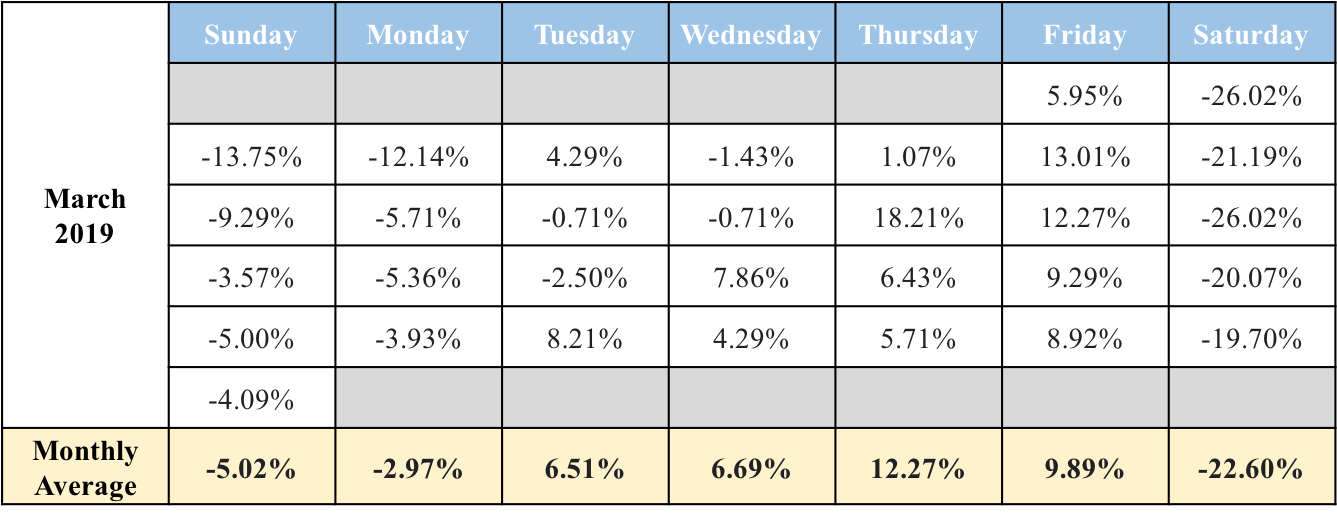
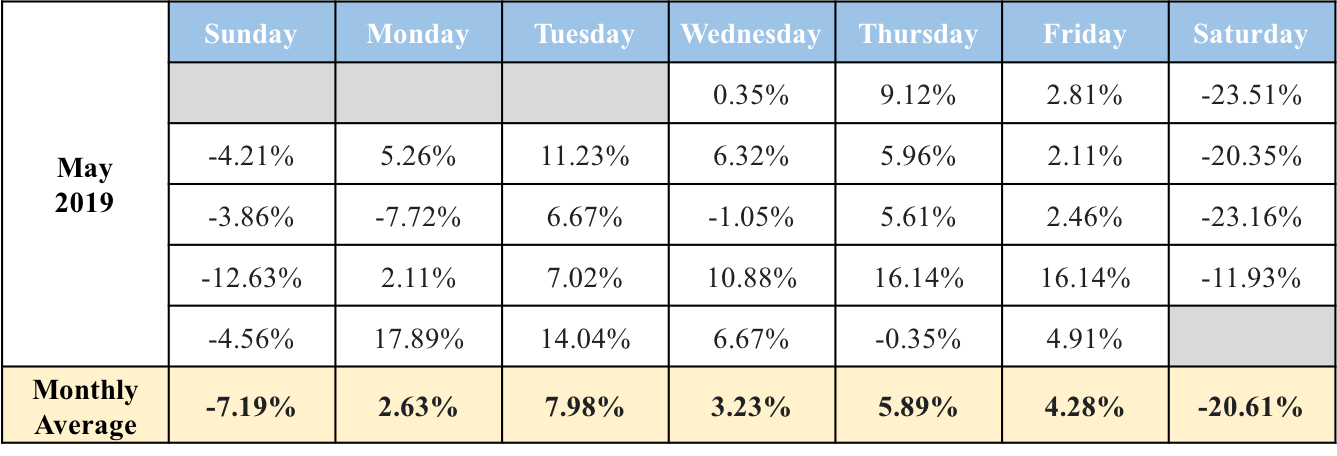
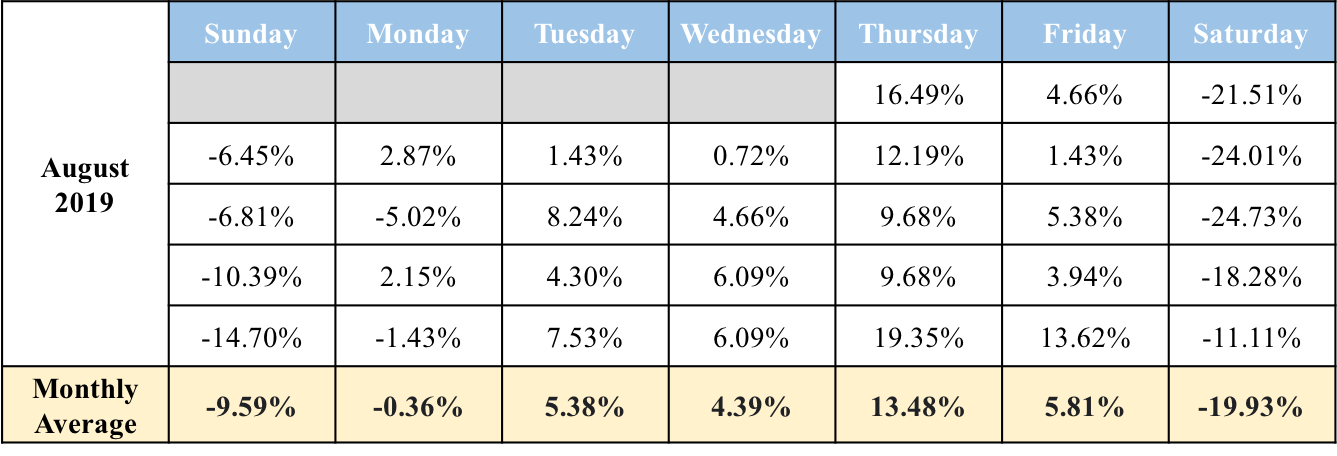
This monthly and daily breakdown is based on monthly results. The lifts and declines are based on the average number of sends for that day compared to the average number of emails send that month.
In this example, January’s highest send days are slightly different than the daily sends for the entire year. You’ll continue to see these daily shifts throughout the year.







3 Holiday Promotions That Keep Subscribers Opening Your Emails
There’s no shortage of promotions retailers can choose when planning their holiday email marketing strategy. However, the holiday season is long, so retailers need to find ways to not only increase sales but also keep subscribers opening their emails.
Here are three kinds of promotions that I expect will be heavily-used by retailers throughout this upcoming holiday season to accomplish these goals.
There’s no shortage of promotions retailers can choose when planning their holiday email marketing strategy. However, the holiday season is long, so retailers need to find ways to not only increase sales but also keep subscribers opening their emails.
Here are three kinds of promotions that I expect will be heavily used by retailers throughout this upcoming holiday season to accomplish these goals.
1. Category and Daily Deals
Category-specific sales, promotions where one category of products is discounted, have been an increasingly popular holiday promotion over the past several years. With Black Friday sales now lasting the entire week for many retailers, category-specific sales are a way to keep the discounts new and exciting, which keeps consumers checking their emails.
If you do plan to offer daily deals, there’s no need to leave them a mystery. Consider letting people know early on which categories will be on sale and when. This approach allows the consumer to better plan their purchases.
Sure, they may want to wait two days to purchase sweaters at an additional discount, but many will want to consolidate purchases, especially if there’s a free shipping threshold they need to reach. Use a sense of urgency in your marketing by reminding people that items may sell out quickly to encourage order consolidation.
Offering daily category sales can also help you plan additional ad campaigns and year-end promotions later in the holidays. By knowing that one category of products didn’t sell as expected, you can begin to offer deeper discounts on these products throughout the season or feature them in year-end closeout promotions.
2. Free Shipping
Free shipping has quickly become a consumer expectation. According to Deloitte, it was the second-most appealing discount to shoppers last holiday season, behind only price discounts.
This likely explains why, according to eMarketer, there was a year-over-year increase in holiday orders that were shipped free, starting with Black Friday week and continuing through Christmas Day.
Last season, there was a noticeable increase in retailers’ advertising free shipping as a primary incentive. Consumers will once again be drawn to free shipping, and you’ll want to be ready to take full advantage of it.
As the season begins to wind down and expedited shipping becomes necessary, consider offering free or upgraded shipping as the primary incentive, not as an add-on to another promotion. You may want to lower or remove the spend threshold to qualify for these offers, as many retailers did last season.
In a lot of cases, you may find consumers spend above the previous threshold as they round out their gift buying. Just be sure to promote free shipping in both the subject line and email body copy.
3. Buy Online Pick Up In-Store (BOPIS) is for everyone
Whether you’re an omnichannel retailer or not, BOPIS affects you. Forty-one percent of consumers used this service last holiday season, and 50% of consumers decided where to shop based on whether BOPIS was a fulfillment option.
If you are an online-only retailer, you need to account for your competition who offer it — and maybe even alter your free shipping strategy to account for it. If you’re a retailer who offers it, you’ll want to use this to your advantage.
According to the NRF, the No. 1 reason consumers chose BOPIS was to avoid paying for shipping. If you’re an omnichannel retailer, promote BOPIS as a stand-alone incentive, potentially offering a discount, gift card or free gift for BOPIS orders.
As the season winds down, focus on those holiday procrastinators by encouraging a sense of urgency and pitting free in-store pickup against costly next-day shipping offered elsewhere.

Source: National Retail Federation, “2018/2019 Winter Consumer View,” Jan, 2019
But this value-add does not have to be saved until the end of the season. Consider giving the service a little customer-friendly pizzazz, such as by offering free gift-wrapping on these orders or in-store coupons at time of pick-up to encourage unplanned purchases, or even by providing complimentary hot chocolate, coffee, tea, and holiday cookies.
If you offer BOPIS, be sure to promote it wherever you can:
In a dedicated section of your emails
Embedded into your primary email creative
Even in lifecycle messages, such as in a welcome series.
And, of course, clearly provide a link to a store locator in your emails, such as in the header or navigation bar.
Wrapping It Up
The holiday season is long, but by planning promotions that can last the whole season and provide competitive differentiation, you can keep subscribers opening your emails and be ready to earn as much of the shoppers’ wallet as possible.
Top Holiday Email Marketing Planning Resources
Email marketers are always looking for holiday-related content, and me — I provide a few pieces this time of year. Between sifting through and analyzing tens-of-thousands of holiday emails in my personal inbox, charting daily emails received, identifying reoccurring themes, looking through the previous years' online sales data, reading industry analysis, interviewing podcast guests, and talking to industry peers, I am left connecting dots with what retailers and email marketers will be promoting this holiday season.
Email marketers are always looking for holiday-related content, and I provide a few pieces this time of year. Between sifting through and analyzing tens of thousands of holiday emails in my personal inbox, charting daily emails received, identifying recurring themes, looking through the previous years' online sales data, reading industry analysis, interviewing podcast guests, and talking to industry peers, I am left connecting dots with what retailers and email marketers will be promoting this holiday season.
As a former email marketing consultant, I know email marketers are always looking for as many actionable holiday resources as they can get. So here you are — a collection of my holiday resources (so far — there's more to come), including articles, podcasts, and webinars, all in one place. I will continue to update this as items become publicly available. I hope you find these to be useful!
2019 Holiday PLANNING RESOURCES:
Cyber 10: The Holiday Shopping Sprint You REALLY Need to Prepare For (article, GrowWire)
3 Holiday Promotions That Keep Subscribers Opening Your Emails (article)
Five Often-Overlooked Holiday Email Marketing Tips (article)
How to Use Free Shipping to Boost the Power of Your Holiday Emails (article, Multichannel Merchant)
Holiday Email Lookbook - 2019 Edition (download)
The Most Important Things to Know About Holiday Email Planning (article, Multichannel Merchant)
Ready, Set, Sell: 7 Tweaks Retailers Can Make Now to Maximize Holiday Profitability (article, Brainyard)
2019 Consumer Insights: 6 Trends Dominating This Year’s Holiday Shopping Season (Whitepaper, Shopkick)
Holiday Webinars:
Holiday Email Marketing Trends, Tips, and Tactics for 2019 (Bronto Marketing Platform)
Call-To-Action! Top 2019 Holiday Email Marketing Trends and Tactics (RetailWire)
Holiday Email Marketing 2019: Trends, Tips and Tactics (Retail Dive)
Holiday Podcast:
The Commerce Marketer Podcast: Ep. 061: Preparing Email Marketing for the Holidays
Listen on: Spotify, Apple Podcasts
2019 HOLIDAY RECAP:
2019 Holiday Season Takeaways and Ecommerce Marketing Action Items
Five Often-Overlooked Holiday Email Marketing Tips
As the holidays approach email marketing teams are busy determining promotional schedules, designing messages, and inputting coupon codes into their e-commerce platforms among a slew of other items. With all of this work happening behind the scenes, there are a few holiday items that all-too-commonly fall by the wayside. When preparing your email marketing program for the season, don’t overlook some of the items that can help you deliver a better customer experience and generate more sales. Here are five items to not overlook this holiday season.
As the holidays approach, email marketing teams are busy determining promotional schedules, designing messages, and inputting coupon codes into their e-commerce platforms, among a slew of other items. With all of this work happening behind the scenes, there are a few holiday items that all too commonly fall by the wayside. When preparing your email marketing program for the season, don’t overlook some of the items that can help you deliver a better customer experience and generate more sales. Here are five items not to overlook this holiday season.
1. Optimize transactional messages
Messages like order and shipping confirmation messages are some of the most read email messages. At a minimum, be sure these messages are branded, aesthetically appealing, and have clear and obvious customer service information. To make these messages do more for you, include other elements, such as product recommendations, suggested upsells or cross-sells, sister brand promotions, a customer-only promotion, and a callout to subscribe to your email marketing program. Remember, all customers receive these messages, not just email subscribers.
2. Audit lifecycle messages
Consider your current lifecycle messages, their automation rules, and how they impact the customer experience during the holidays. For instance, let’s say your welcome series spans four days and withholds new subscribers from receiving promotional emails. Do you really want to withhold new subscribers from marketing emails on Black Friday or Cyber Monday?
You may want to make adjustments to the series, which could include:
Sending only the welcome message and suspending the series.
Create a new welcome series that reinforces holiday content, such as gift guides, hot products of the season, extended return policies, BOPIS services, or other value-adds.
Continue to send the welcome series, but allow subscribers to receive promotional messages.
This is just one example. Look at your other automated messages. Do you have a purchase anniversary message sent each year on Black Friday, offering a worse incentive than your Black Friday promotion? I receive one of these each year, and it provides no value to me as a subscriber. Do you need to adjust the timing, number of, or discounts with your abandoned cart messages? Remember, automated messages should never be considered “set it and forget it.”
3. Audit forms
You are going to receive increased traffic during the holidays, so be sure to audit each of your forms to ensure they work properly. These include embedded email subscription forms, pop-up signups, manage preference pages, and unsubscribe forms.
To audit the forms, go through the process of accessing the form like a web visitor, email subscriber or customer would. Do they display (and not display) as they should, do they close properly, are the landing pages correct, and do the desired actions (e.g., list assignment) function appropriately? You want to ensure the forms are not only functioning properly, but they are also assigning contacts to the correct lists.
When you are auditing your forms, don’t forget to test on mobile devices. Last year, for the first time, more than half of all retailer web traffic during the holidays was from smartphones. Ensure you test the forms not only on a laptop but also on smartphones.
Be sure to document where each of these forms lives on the backend, which employees have access to them, and how customers access the forms. This will give you the ability to quickly identify and resolve any issues that might arise during the season.
4. Preach your differentiators
During the holiday season, why should someone choose to shop with you and not someone else, especially seeing as many retailers are matching deep discounts with one another? You need to give consumers a reason to choose you by preaching your competitive differentiators. Some of these customer-first differentiators include free shipping, free returns, extended return policies, price matching, satisfaction guarantees, and buy online, pick up in-store (BOPIS).
Prominently advertise these value-adds with banners or dedicated sections of your email, on your websit,e and your social pages. And when it comes to email, prominently showcase these in high-consideration messages, such as welcome, abandoned cart, and browse recovery messaging.
By focusing on what the customer wants and how you, as a brand, can deliver that can mean the difference between securing a holiday sale or losing it to your competitor.
5. Plan for the unexpected
Things rarely go as planned, and good email marketers prepare for those times. When it comes to the holiday season, there are a few specific ways to prepare for those “what if” moments, whether that be a slow website, lagging sales, or errant promo code.
Prepare back-up promotions: Projections are just that, projections. If you find your sales through the season are lagging, sending another promotion can help jump-start those orders coming in. Create emails that utilize alternate incentives (such as tiered discounts, or free shipping with no minimums) or tried-and-true discounts that you know will resonate with your customers. By preparing these promotions in advance, you will prevent those last-minute scrambles and rush errors from your creative team.
Promo codes: Set any promo code you plan on using in your e-commerce platform before you need it. While you may not need to use some of the alternate or extra promotional codes, it provides the ability to easily deploy email campaigns as needed.
“Oops” message: Websites and e-commerce platforms have become more reliable, but there is still one of those “oops” moments each year. Some of these include a slow or crashed website, a wrong promo code, and order processing errors. Creating an anticipatory email ahead of those moments will allow you to send a correction email as soon as possible. When errors like this occur, every second can cost you a sale.
Planning for the holidays means more than just creating a few emails and sending them off to your subscribers. It is ensuring all aspects of your program is optimized, and you are prepared for every scenario. Making sure every “I” is dotted, and every “t” is crossed means you are doing everything you can to maximize your holiday sales.
Cyber 10: The Holiday Shopping Sprint You REALLY Need to Prepare For
Most digital marketers have heard of the Cyber Five, the five shopping days from Thanksgiving Day through Cyber Monday. These five days happen to be the top five online sales days for the entire holiday season, accounting for 19% of all online holiday sales.
And now, within Gray November comes another consumer shopping evolution that will become a holiday season norm — the Cyber 10.
The holiday season is upon us, and, once again, it’s expected to set online sales records to the tune of $142 billion, according to eMarketer estimates. As online sales rapidly increase year-over-year, trends evolve and retailers adapt.
Take Gray November, for example. Over the past couple of years, we have seen those signature stand-alone online shopping days like Black Friday and Cyber Monday morph into a month-long series of discounts leading up to those days.
And now, within Gray November comes another consumer shopping evolution that will become a holiday season norm — the Cyber 10.
In this article, I discuss why marketers need to look beyond the Cyber Ten and pay attention to the Cyber Ten. Topics include:
Which days make up the Cyber Ten
Why the Cyber Ten is no longer a trend, but an annual occurrence
Which days in the Cyber Ten are seeing the biggest year-over-year growth
Why Cyber Monday, even with all of the changes, remains king
CLICK HERE TO CONTINUE READING
Holiday Predictions Recap: Did I Hit the Mark or Shoot My Eye Out?
The holiday season exploded, much like a shot fired from a Red Rider carbine action, 200-shot, range model air rifle, with a compass in the stock and this thing that tells time. Back in October, I laid out my predictions for the 2017 holiday season. Now it’s time to take aim at my predictions and see whether I had Black Bart in the crosshairs or ended up shooting my eye out.
The holiday season exploded, much like a shot fired from a Red Rider carbine action, 200-shot, range model air rifle, with a compass in the stock and this thing that tells time. Back in October, I laid out my predictions for the 2017 holiday season. Now it’s time to take aim at my predictions and see whether I had Black Bart in the crosshairs or ended up shooting my eye out.
Where I Hit the Mark
Prediction: More Mobile Sales
Last year, mobile accounted for 30% of all online sales. I predicted mobile sales would increase to roughly 35%.
Result: We all saw this coming. Mobile accounted for 40% of online purchases, 33% of online revenue, and 56% of traffic, according to Adobe. If I’ve said it once, I’ve said it a million times; if you’re not optimized for mobile, you’re not optimized.
Prediction: Early Sales
Online holiday sales will start in October.
Result: Seeing as every day in November drove $1 billion in online sales, we know people were shopping the deals early. From my personal inbox, the incentives offered by retailers during the final week in October were right in line with those offered in November.
Prediction: Exclusions Apply
You will see fewer “off everything” promotions and an increase in discounts on “select items.”
Result: I did notice an uptick in select categories of sale items, such as discounts on pajamas one day and sweaters the next. While I did see exclusionary sales, I think they were handled much better than last year. Last year, in many instances, I would cart items only to find out at checkout that they were not discounted. This year, I noticed the sales having their own sections on websites and emails clearly defining which categories of products were on sale.
Prediction: Black Friday and Cyber Monday
I predicted both days would drive over $1 billion in mobile commerce and that the promotions for these days would start on Sunday or Monday prior.
Result: Black Friday raked in nearly $1.9 billion in mobile revenue, nearly 37% of all of Black Friday’s online revenue. Cyber Monday became the first day ever to reach $2 billion in mobile revenue, setting a new mobile benchmark.
Black Friday wasn’t just a day – it was a week-long event. Even though Gray November was in full effect, many retailers started their Black Friday earlier that week. I made 92% of my purchases prior to Black Friday, and the other 8% on Black Friday itself. The deals were out early.
Prediction: Thanksgiving Day
I predicted that Thanksgiving Day would cross $2 billion in online sales for the first time ever.
Result: Online sales clocked in at $2.87 billion for the day. This day keeps growing as a critical online shopping day.
Prediction: Browserless Commerce
I predicted voice assistants would be the hottest sellers of the season, with Amazon devices being the No. 1 sellers in this group.
Result: Well, Apple’s HomePod was delayed until 2018, handing market share to Google and Amazon, and Google did not disclose how many devices were sold during the holidays.
But does it even matter? Amazon appears to be the big winner here. Amazon’s David Limp, head of devices, said that millions of Alexa-enabled devices were sold over Black Friday weekend. Amazon later said the Echo Dot was the top-selling item on the website worldwide during the holiday season, while the Fire TV Stick was runner-up. Can households claim Alexa as a dependent?
Prediction: Amazon’s Take
Amazon captured 38% of the online holiday sales in 2016, and I predicted this figure would inch up to the 45% mark.
Result: Amazon is king. GBH Insights estimated Amazon accounted for between 45% and 50% of online sales during the holidays. On Thanksgiving and Black Friday, Amazon accounted for 45% of online transactions among the 50 top retailers, according to Hitwise. Amazon also announced Cyber Monday was its best day ever, surpassing even Prime Day. Considering they were responsible for 44% of all online sales in 2017, this all sounds like just another day in Amazon-land.
A Few Half-Baked Holiday Results
Prediction: Even More Mobile Clicks
In Q4 2016, mobile accounted for nearly 57% of paid search clicks, with 47% coming from smartphones. I predicted we would see continued increases.
Result: At the time of writing, the data is not yet available. However, with 56% of holiday traffic coming from mobile, I would expect this prediction to be a successful one.
Prediction: In-Store Exclusives
In an attempt to drive in-store traffic, I predicted you might see a rise in brick-and-mortar retailers offering “off everything” or deeper discount sales for in-store only.
Result: There was a noticeable increase in retailers offering an additional discount, on top of the online discount, for shopping in-store. However, a relatively small number offered store-only discounts. In fact, I was astounded to see some omnichannel retailers make specific mention of the discounts being for online purchases only. Why would they not want their customers to come into the store? If anything, make it available in both places.
Prediction: Re-engineering the Brick-and-Mortar Experience
I predicted we’d see a lot of in-store-only Black Friday and Cyber Monday sales, as well as some in-store price-matching.
Result: While there was a noticeable rise in extra in-store incentives, there seemed to be relatively few in-store-only sales for these signature days. This might be why Shopertrak reported that foot traffic to physical retail stores was down 1% on Black Friday.
And to no one’s surprise, Black Friday deals were widely available for the entire week (and weekend) of Thanksgiving. Looking at my own inbox, more than 20% of all email subject lines contained the term “Black Friday” on the Monday before.
And yes, price-matching was seemingly everywhere. Stores like Dick’s, Walmart, Best Buy, Sears, Newegg, and even Amazon, in some cases, all deployed price-matching strategies during the holidays.
Prediction: Email Marketing Will Continue to Dominate
Result: This one is still pending, as complete data is still being analyzed. Adobe did report that on Cyber Monday, email drove 24.9% of sales, closely followed by the 22.9% from paid search. My inbox was extremely busy. In November, I received almost 25% more emails this year than last year. Year over year, Bronto sent more than 25% more emails on both Black Friday and Cyber Monday. Email continues to be a highly effective marketing tool for retailers.
Where I Shot My Eye Out
Prediction: More Billion Dollar Days.
I predicted we’d see 60 of the 61 days in November and December rake in $1 billion in online sales, up from the 57 days in 2017.
Result: 58 of 61 days topped the $1 billion mark. Every day in November reached this milestone, further reinforcing Gray November as a mainstay, not a trend. While improving upon last year, December let me down. Come on, December!
Prediction: The largest online shopping day of the year
I predicted that for the first time, Black Friday – not Cyber Monday – would be the largest online shopping day of the year.
Result: Here’s the big one. I predicted Black Friday to be the online king of the year. My reasoning was based on the industry-accepted benchmark of 2016 Black Friday and Cyber Monday online sales of $3.34 and $3.45 billion, respectively. We have been seeing this gap seemingly close year over year. Inexplicably, when the 2016 baselines were referenced, these numbers were surprisingly different, at over $4.3 and $5.65 billion each day, respectively. What a difference! While the industry thought Black Friday was about to catch Cyber Monday in sales, these adjusted numbers show that this wasn’t quite the case.
All in all, this year’s Cyber Monday reportedly clocked in at $6.59 billion, and outperformed Black Friday by $1.5 billion. Although Cyber Monday has some breathing room as king of online sales, Black Friday, at over $5 billion, is no day to smirk at.
And What About My “Bold” Predictions?
Predictions:
Starbucks will take flak over its holiday cup design. ‘Tis the season!
I will once again purchase my tree on Black Friday.
Fruitcake, while good in theory, will continue to be a poor party dessert.
Results: A little, yes, and yes!
The Starbucks cup design faced only minor controversy this year. Hey, someone has to complain, right?
I again purchased my tree on Black Friday, but not from the usual store. Upon arriving at my usual retailer, I was greeted with a ghost town. My local fire department’s tree lot was the winner this year. I absolutely loved my tree, and that usual retailer may have just lost my tree business forever.
And no, I did not serve fruitcake at my holiday party.
While not all of my predictions for 2017 hit the target, coming up with them is always fun. And by all accounts, this holiday season was great for consumers looking for a deal. Although retailer margins may have been squeezed, retailers certainly benefited from the high shopping turnout. This year, I look forward to seeing who Amazon acquires (I have my thoughts), how consumer behaviors will shift, and how retailers will adapt to meet their needs. These will, of course, all affect my predictions. Hopefully, next year, my predictions will be more like a Red Rider and less like pink bunny pajamas. Only time will tell.
Confessions of a Holiday Shopper: Why I Didn’t Wait Until Black Friday
This holiday season was predicted to be the best yet for online retailers – and it was. Fifty-eight out of 61 days drove over $1 billion in online sales, including every single day in November. Gray November, the month-long period of deep discounts, is now commonplace. But do people buy more or simply buy earlier?
This holiday season was predicted to be the best yet for online retailers – and it was. Fifty-eight out of 61 days drove over $1 billion in online sales, including every single day in November. Gray November, the month-long period of deep discounts, is now commonplace. But do people buy more or simply buy earlier?
This year, I wanted to find out how early discounts affected my own shopping behavior and see what lessons it might offer for retailers. So, I conducted a little experiment.
A Little Background
My yearly holiday shopping comes with a double whammy. See, my wife’s birthday falls one week before Christmas. After buying gifts for my wife and the kids, my digital wallet looks more like a countdown clock in an email message, getting smaller and smaller as the seconds tick away.
I traditionally draft my gift list a few days before Black Friday and then purchase over that weekend. But this year, I pivoted. Having tracked the Gray November phenomena over the past several years, I felt confident that the discounts would be just as strong prior to Black Friday weekend as during it.
You can’t write about holiday shopping (or conduct your own holiday shopping experiment) without addressing the elephant in the room – Amazon. Although I purchase from Amazon, I am not a Prime member. Am I allowed to say that? I guess the first step is admitting it. As a non-Prime member, here's what I was looking for in my shopping experience:
Could other retailers compete with Amazon for my attention and wallet?
Would I regret buying “early”
Was Amazon the right retailer, or did someone else offer value or service that was better?
In the end, how much wallet share would Amazon nab, and why?
Let the Purchasing Begin
Although my very first purchase took place on November 13, my primary shopping started on November 16. I completed 75% of my shopping prior to Thanksgiving Day and 92% prior to Black Friday.
To Amazon or Not to Amazon?
HitWise reported that Amazon accounted for 55% of Black Friday sales and 45% of Thanksgiving Day sales. For the holidays overall, GBH Insights estimates Amazon accounted for about a 50% share of online revenue.
For me, 33% of my purchases were made on Amazon, accounting for 11% of my wallet. However, my November 13 purchase was a one-time, big-ticket item. By removing this specialty purchase, the adjusted wallet share Amazon earned from me jumps to 29%. Even though money spent is money spent, I view this adjusted 29% as a more accurate number, as it's based on my typical gifting habits.
One of the main reasons I chose Amazon was the convenience of buying many diverse products in a single order at a price that was comparable to or better than a competitor’s. When the price was comparable, I mostly leaned toward Amazon for value-add reasons, such as my confidence in their customer service.
But Amazon certainly lost out on a few of my purchases. Twenty-five percent of the time, the price was higher. Another 25% of the time, I was concerned about the quality of the Amazon offerings (particularly the private-label offerings), and 17% of the time, Amazon didn’t carry what I was looking for.
My Black Friday purchases all came from Amazon. I purposely shopped for the items prior to Black Friday, placed them in my cart, and left them abandoned. The prices at this time were comparable to other sites, and I knew that come Black Friday, I’d get a deal somewhere. Interestingly enough, Amazon was the one that came through with the largest price drops.
Customer Service and the Consumer Experience
I had two notable customer service experiences while shopping. The first was from Amazon. For one purchase, I ordered a product that was fulfilled by Amazon. The product quantity showed there were six remaining. One full day after placing my order, I received an email from Amazon stating the item could not be fulfilled due to the product not being in stock. But the website still showed the product as in stock and ready to ship. Needless to say, I found this to be a very poor customer experience.
On November 18, I placed an order from a national omnichannel retailer. They had a 50% off sale on several items I was shopping for. However, one of the items on my list was not on sale. The question became: do I purchase now or wait to see if the other item goes on sale? I assessed the situation. Because they offered free shipping and free returns, I had nothing to lose. After all, if they discounted the item later, I could simply return the order and place a new one with all of the items on sale.
So I purchased, paying full price for the one item. The very next morning, the full-price item went on sale at 50% off. Because it was less than 24 hours since the order was placed, I emailed customer service asking if they would credit the difference. They declined to do so, instead instructing me to sign up for their emails so I don’t miss a future sale. Umm, OK. Instead, I let them incur the cost for not only shipping the new order but also processing the return. This incident reduces my chances of doing business with them in the future.
These two experiences highlight a lesson for retailers: Be sure the product counts on your website are accurate and that your customer service policies allow you to meet customer expectations. In both cases, I had a negative experience. For Amazon purchases, I’m skeptical of the value of paying for Prime. For the other retailer, knowing they won’t address a simple price adjustment gives me little confidence that they would satisfactorily address a more complex customer service issue.
Final Thoughts
I’m just one shopper, but I feel confident my buying behaviors are fairly representative – customer service and value trump price. Don’t leave the success of your business dependent on discounts. If you're a retailer, spend the next six months forging stronger relationships with your customers. Review your customer service policies. When issues arise, don’t just say you’re sorry. Go out of your way to make things right! Communicate value-adds that are meaningful for your customers.
When it comes to purchasing from you or a competitor, give shoppers a reason to choose you. If you rely on price alone, you’ll eventually lose.
Eggnog and Fruitcake: Holiday Predictions That You Can Stomach
With the holiday shopping season about to begin, I thought this would be the perfect time to share my expectations for the end of the year. After all, planning is all about anticipation, and knowing what to anticipate will help you better prepare for the holidays. Here goes:
With the holiday shopping season about to begin, I thought this would be the perfect time to share my expectations for the end of the year. After all, planning is all about anticipation, and knowing what to anticipate will help you better prepare for the holidays. Here goes:
More Billion Dollar Days. 2016 saw 57 of 61 days in November and December rake in $1 billion in online sales. This year, I expect to see 60 of 61 days hit that mark. Why not all 61? Everyone needs a day to rest.
More Mobile Sales. Last year, mobile commerce grew nearly 54% during the holidays and accounted for 30% of all online sales. Mobile sales have been increasing year over year, and this trend will continue. Be sure you’re optimized for mobile because I expect it will account for roughly 35% of all online holiday sales.
And Even More Mobile Clicks. In Q4 2016, mobile accounted for nearly 57% of paid search clicks, with 47% coming from smartphones. Expect this to continue. Mobile is no longer a trend; it’s the way most consumers shop – at least some of the time. The smartphone is now the primary device that the majority of internet visitors use to access the internet. And in the not-so-distant future, it’ll be their primary device for buying online.
Promotions and In-Store Sales
Early Sales. Online holiday sales will start in October. Retailers have been discounting earlier and earlier to get a jump-start on their competition, turning Cyber Weekend into a month-long event that I like to call Gray November. But with Amazon taking in nearly 40% of all online sales last holiday season, and Prime memberships continuing to rise, retailers have even more to lose by not getting an early start.
Exclusions Apply. For the past several years, especially last year, I saw a noticeable trend in holiday sales having mass exclusions. As a heavy shopper during this period of time, I found myself frustrated. But frustrated or not, I expect this trend to continue. You will see fewer “off everything” promotions and an increase in discounts on “select items.” If you plan to restrict sales, be clear as to what is – and isn’t – included.
In-Store Exclusives. You may see a rise in brick-and-mortar retailers offering “off everything” or deeper discount sales for in-store only. This allows a retailer to drive that sought-after in-store traffic, while offering shoppers deeper discounts and no shipping fees. Seems like an obvious win-win.
Re-engineering the Brick-and-Mortar Experience. I expect in-store sales to increase from last year, but not as much as ecommerce sales. You’ll see a large push from multichannel merchants to drive in-store traffic, touting extra incentives for shopping in-store and even discounts for in-store pickup. As 65% of consumers make additional purchases when going in to pick up items, the tactic makes a lot of sense. Expect to see in-store-only Black Friday and Cyber Monday sales (likely all weekend long), as well as some in-store price-matching. While never a long-term model for success, many retailers may find it worthwhile during the holidays.
The Big Shopping Days
Black Friday and Cyber Monday. While no longer the start of the shopping season, these days are still known as deep discount days. Shoppers oblige and spend more online on these two marquee days than any others during the year. But which day is bigger?
Both days will drive over $1 billion in mobile commerce.
For the first time, Black Friday –not Cyber Monday – will be the largest online shopping day of the year.
Of course, the marketing and promotions for these days will start on the Sunday or Monday prior.
Thanksgiving Day. This will continue its growth as an online shopping day and cross $2 billion in online sales for the first time ever.
Marketing Tools, Top Gifts and the Obligatory Amazon Mention
Browserless Commerce. Speaking of the Echo, voice assistants will be the hottest sellers of the season. While I predict Amazon devices to be the number-one sellers in this group, Google and Apple will see significant sales in this arena. The age of voice is upon us. “Hey Santa, bring me a new train set.”
Email Marketing. Email will continue to dominate as an online marketing tool during the holidays. Last year, Bronto sent 50% more messages than they did during Black Friday and Cyber Monday 2015, sending more messages in November than ever before in company history. I know my inbox will be busy.
Amazon’s Take. Amazon captured 38% of the online holiday sales last year, and it will once again own a substantial portion of the holiday ecommerce space. With the rise in Prime memberships and adoption of the Echo, I would not be surprised to see this figure inch up to the 45% mark.
Three Even Bolder Predictions:
Starbucks will take flack over its holiday cup design. ‘Tis the season!
I will once again purchase my tree on Black Friday.
Fruitcake, while good in theory, will continue to be a poor party dessert.
What could go wrong? Apart from the hostility of rogue nation states, what else could throw holiday shopping into a tailspin? How about fallout from the Equifax data breach? Potential widespread credit card fraud resulting from this breach could put a major wrench in holiday spending and shopping habits. Credit cards could be frozen due to fraud, consumers could lose trust in online security when purchasing, and it could over-inflate online sales data if fraudulent sales are racked up. There have already been reports of a 15% increase in fraud as early as August of this year. This lack of trust in security might wind up benefiting major, name-brand retailers, as many consumers tend to put more trust in them.
What do you think you’ll see this holiday season? I plan to watch my inbox, shop my exclusionary sales online, and sip my coffee from a ridiculed Starbuck’s cup, all from the comfort of my living room. Just don’t be a Scrooge and charge me for shipping!
Key Holiday Trends That Keep on Giving
Commerce marketers seem to start preparing for the holiday season earlier and earlier each year – and with good reason. Consumers now start their holiday shopping earlier than ever. Getting ready for such an early shopping season can come with great challenges, but there’s no need to reinvent the wheel. Take a look at the trends over the past couple of years, especially those from last year, and identify opportunities for success. Here are two of the trends I noticed last year that can help you set the stage for a successful season.
Commerce marketers seem to start preparing for the holiday season earlier and earlier each year – and with good reason. Consumers now start their holiday shopping earlier than ever. Getting ready for such an early shopping season can come with great challenges, but there’s no need to reinvent the wheel. Take a look at the trends over the past couple of years, especially those from last year, and identify opportunities for success. Here are two of the trends I noticed last year that can help you set the stage for a successful season.
Trend 1: Self-Gifting and Discounting
While people are shopping earlier in the season, it’s not necessarily for others. The trend of self-gifting has been increasing over the years for a variety of reasons, including early access to discounts, social influence, the economy, and constant consumer connectivity.
In 2016, 57 of 61 days in November and December generated $1 billion in online sales, including 29 of 30 days in November. To put this into perspective, Cyber Monday 2010 was the only billion-dollar day that season.
Retailers who want to secure sales before their competitors have been offering deeper discounts earlier in the season, which has turned what was once a month leading up to the ever-popular Black Friday and Cyber Monday into Gray November, a month-long discounting period. Now, those two days, while still prominent, are merely a part of it.
Takeaways:
Start your marketing early! Waiting until Black Friday rolls around means you’ll be losing out on sales and leaving money on the table. Consumers will shop early, so plan to start your holiday push in late October or very early November. But just because you start marketing early doesn’t mean you need to run your deepest promotions from the get-go.
If you plan on discounting, start by offering sales and promotions that can help protect margins. Test promotions such as tiered discounts, where you earn a deeper discount by hitting certain spend thresholds. Consider offering free gifts, flash sales, or special sales on specific categories or groups of products. They can all encourage shoppers to buy for themselves and for others while doing more to protect your overall margins.
Trend 2: Black Friday, Cyber Monday and Other Key Dates
As I said, Gray November has dethroned Black Friday as the start of the shopping season, but that doesn’t mean Black Friday and Cyber Monday are dead. While they’re no longer the standalone days of yesteryear, they’re still popular with shoppers and remain marquee shopping days. Last year, they were the two biggest online shopping days in history, with Cyber Monday leading the way.
According to Adobe Digital Insights, Black Friday generated $3.34 billion in online sales (and was the first day ever to do $1 billion in mobile commerce), while Cyber Monday saw $3.45 billion in online sales. Interestingly, Black Friday saw a 21% increase in online sales from the year before versus just 12% for Cyber Monday. From an online sales perspective, Black Friday is growing faster than Cyber Monday. If this trend continues, expect Black Friday 2017 to become the biggest online shopping day in history.
Online retailers have a tendency to focus on Cyber Monday, but doing so is a mistake. If you wait until Cyber Monday to run your peak deals, you may miss the chance to capture sales. Come December, the shopping season is only getting started. Remember, 57 of 61 days in the last two months of the year had over $1 billion in online sales. Once the calendar flips to December, don’t let up. If customers are self-gifting, they still have lots of room to buy for others.
But December also brings procrastinating shoppers and shipping deadlines. You must create a sense of urgency when deadlines are approaching. The last thing you want is for consumers to run off and sign up for Amazon Prime to get quick, free shipping because they waited too long.
Brick-and-mortar retailers have been making a conscious effort to drive buy online, pick up in-store purchases. After all, it’s a win-win approach. It satisfies the consumer’s need for immediacy, and 65% of customers make additional purchases when picking up orders in the store. If you offer this service, be sure to advertise it all season long.
Takeaways:
When planning your best deals, consider not only the impact of Gray November but also how Black Friday and Cyber Monday are treated. Start early by marketing the week leading up to these days as Cyber Week. Many retailers already do this to get a jump on their sales while still taking advantage of named days, such as Black Friday. Considering Amazon accounted for 38% of all holiday sales last year, it’s critical to maximize revenue this holiday season.
If you have brick-and-mortar locations, focus on buy online, pick up in-store callouts. With UPS’s surcharge on holiday shipping, this may be even more important this year. If you can, use geolocation to identify the nearest store for the consumer inside your email or on the website itself. This tactic will be especially critical once shipping deadlines have passed. To encourage the use of this tactic, consider offering a free gift, such as stocking stuffers, for orders picked up in the store.
When it comes to email marketing, subject lines can tell a lot. Looking at my own inbox during the 2016 holiday season, three interesting things stood out to me:
On Thanksgiving Day, 34% of emails I received used the term “Black Friday” – only 20% used “Thanksgiving.”
On Sunday, November 27, “Cyber Monday” was used in 21.8% of emails, while “Black Friday” was still being used in 14.4%.
In late December, only 12 emails out of thousands included my first name. It’s much more important to focus on the value you’re offering in these messages than the recipient’s name.
There’s no magic formula for success when it comes to planning for the holiday season. But preparation is key. Look at consumer and retail trends, as well as your own historical data, to help determine what will be successful this season. Whether it’s online or in-store, consumers will find deals that suit them, and they’ll start shopping early. They just no longer need to throw elbows to get those deals, although someone probably will.
This was originally published on www.bronto.com
3 Holiday Trends: Prepare for the Marathon, Not a Sprint
The holiday shopping season is the ecommerce version of the Boston Marathon’s Heartbreak Hill. It’s a season that will challenge retailers, stress them, push them to their limits and, many times, either make or break them. Effectively planning for the final stretch requires not only looking at last year’s results, but considering what went well for your peers. Let’s look at three trends from last year that will keep you from hitting the wall this year.
The holiday shopping season is the ecommerce version of the Boston Marathon’s Heartbreak Hill. It’s a season that will challenge retailers, stress them, push them to their limits and, many times, either make or break them. Effectively planning for the final stretch requires not only looking at last year’s results, but considering what went well for your peers. Let’s look at three trends from last year that will keep you from hitting the wall this year.
Every Day Is a Holiday
Last year, 57 of the 61 days in November and December generated over $1 billion in online sales. In November, 29 of 30 days reached this major milestone. The rise of consumer self-gifting and the tendency of retailers to offer earlier and deeper discounts have contributed to this trend. Premier stand-alone days like Black Friday and Cyber Monday have increasingly given way to Gray November, a month-long discounting period, and consumers have quickly bought into it.
When preparing for the holiday season, don’t wait until Black Friday week. Treat the season as a marathon, not a sprint. Many of your competitors will begin their holiday marketing when the calendar flips to November, if not sooner. Planning for an extended holiday season will allow you to better balance the types of promotions and discounts you offer.
Mobile Is King
We all know mobile shopping is growing, and last holiday season really proved that. Mobile accounted for 30% of all online holiday sales, growing nearly 54% and outpacing that of not only retail (4.8%), but also ecommerce (17.8%). Mobile purchasing is becoming more prevalent each year. Expect this trend to continue.
If people are searching more via mobile devices, you would expect paid ad results to follow a similar trend. Predictably, they did. The percentage of paid search clicks on mobile devices has been steadily rising year over year. In Q4, it accounted for nearly 57% of all paid search clicks, with 47% coming from mobile phones. In 2015, those numbers were 48% and 32.6% respectively. When planning your paid search spend this holiday season, factor in which devices you are targeting with that budget.
The Resurgence of Black Friday … Online
Everyone knows Black Friday and Cyber Monday have historically been premier seasonal shopping days. But with the emergence of Gray November, they are no longer the “start” of the shopping season – they’re merely a part of it. In some respects, they even mark the final days before gift-giving and stocking stuffers become the major marketing theme.
As we know that promotions and consumer shopping now starts at the beginning of November, it’s important to plan your special sales around these key dates. Let’s look at what we’re seeing play out between these two premier days.
Last year, Black Friday online sales totaled $3.34 billion. At that time, it was the largest online shopping day in history. Not only that, but this was the first day ever to see $1 billion in mobile commerce.
The title of history’s largest online sales day lasted only a couple of days, however, as Cyber Monday edged it out with $3.45 billion in online sales. Online retailers might expect Cyber Monday to be the prime promotional day of the year, but I believe this is a mistake. Remember: While Cyber Monday is commonly regarded as an online retailer sales day, almost everyone is online nowadays. Cyber Monday is no longer the online version of Black Friday. Black Friday is.
Black Friday has been growing as an online sale day year after year. In fact, it’s growing faster than Cyber Monday. Even as close as they were in online sales last year, Black Friday grew nearly 22% year over year, whereas Cyber Monday grew only 12%. Expect Black Friday to be the biggest online shopping day of 2017.
If you are planning your peak sales or promotions around these mid-season days, I would make Black Friday the pinnacle. You don’t want to be late to the party and miss out because customers shopped other Black Friday deals. And don’t forget that many retailers will start their Black Friday deals prior to Black Friday. Welcome to Gray November!
Plan for Success
Even the best planning won’t guarantee success. The season is long, and the hill is steep. But we know consumers will shop – and shop early. We know they will browse and buy on mobile devices. And we know every day will be its own little holiday. A bit of internal analysis and time spent planning for these trends will give you the best chance of crossing the holiday finish line with ease.
3 Ways to Cultivate Post-Holiday Customer Loyalty
How do retailers turn seasonal gift buyers into year-round customers? The fact is, it’s a struggle. Some customers may not want to hear from you for another 365 days, while others may need more personalized suggestions before they’ll make another purchase. Either way, at the very least, you want them to come back next year. But too often, retailers don’t devise a plan and simply lump these customers back into the regular stream of batch-and-blast messaging.
How do retailers turn seasonal gift buyers into year-round customers? The fact is, it’s a struggle. Some customers may not want to hear from you for another 365 days, while others may need more personalized suggestions before they’ll make another purchase. Either way, at the very least, you want them to come back next year. But too often, retailers don’t devise a plan and simply lump these customers back into the regular stream of batch-and-blast messaging.
True story. My colleague used to buy a gift basket every year from the same company. She came to rely on their perfectly timed email with details of the previous year’s purchase and the option to reorder. It was so simple that she never bothered to shop around for a better deal. But last year, she didn’t receive that email. Instead, the company blasted her inbox with generic promotional emails. Figuring one of the promotions would help her get to the price point she’d enjoyed in the past, she started shopping. But she soon gave up. The promotions were all designed to promote a higher spend, so she ended up buying her gift basket from a competitor.
Instead of using the same old batch-and-blast strategy and expecting different results, you should be looking at every possible angle to exploit gift-giving opportunities well beyond the holiday season. Setting up a gift reminder email program is one of these opportunities. While common among online floral companies, it’s surprisingly underutilized by other retailers. Let’s change that.
Setting up such a service doesn’t have to be major undertaking. It’s actually quite easy to collect the necessary data and integrate it into your automated email process. Here are a few ways to begin turning those seasonal gifters into year-long buyers with a basic gift reminder program.
Optimize Your Forms
No need to start from scratch. Try tweaking your existing managed preference form. Update it to include fields such as occasion date, first name of possible recipient, relationship (e.g. child, parent) and occasion.
You can always create a new form and embed it on your purchase confirmation page. Just be sure to use warm, friendly language and let people know why you’re asking for this information. Those who find value in your products as gifts will typically see the value of your reminder service.
Optimize Your Transactional Messages
Take the time to incorporate promotional material into your order and shipping confirmations. Beyond the immediate upsell, create a section that calls attention to your gift reminder service. Not only are these messages opened at a high rate, but they are also sent to non-subscribers. This could double as a great way to grow your subscriber base.
Create Dedicated Messaging
Advertise your gift reminder service through stand-alone messaging. From an automated standpoint, include these messages in your engagement series, such as your post-purchase and welcome series. For a new subscriber, this is a value-add your site offers that your competitor might not. For those who just purchased, it might plant the seed that they should keep you top of mind the next time they’re looking for a gift. In addition to these automated messages, consider sending these messages to your entire audience once or twice a year.
No matter how you collect this important data, it will allow you to better target your messages and include product recommendations that cater to the specific recipient or the event. A subscriber searching for an upcoming anniversary gift will most certainly want to consider a different assortment of products than the parent shopping for a five-year-old’s birthday. Just imagine the personalization possibilities. Talk about relevant messaging!
A great user experience requires relevant content. A gift reminder service provides this relevance and helps build a connection between the consumer and the brand. Collecting more specific details from your customer creates so many opportunities to sell to these gift-buyers throughout the year, promote your brand as a go-to gift destination, and provide an overall better user experience.
Gray November Is Almost Here. Are You Ready?
Over the past 4+ years of advising retailers on how to drive more revenue from email programs, I began noticing a general shift Q4 promotional strategy. It started earlier each year and featured more aggressive discounts. This shift forced other retailers who fight for the same customers to keep up with the Joneses and offer their own discounts earlier in the season.
One week at a time, year after year, this transformation turned planning for Black Friday and Cyber Monday into a Gray November – a month-long extension of the traditional holiday shopping season.
Over the past 4+ years of advising retailers on how to drive more revenue from email programs, I began noticing a general shift Q4 promotional strategy. It started earlier each year and featured more aggressive discounts. This shift forced other retailers who fight for the same customers to keep up with the Joneses and offer their own discounts earlier in the season.
One week at a time, year after year, this transformation turned planning for Black Friday and Cyber Monday into a Gray November – a month-long extension of the traditional holiday shopping season.
But are the number of earlier discounts actually increasing, or was I just imagining things? Well, it appears early discounting is happening. The National Retail Federation (NRF) reported the number of retailers who included promotions leading up to Thanksgiving week increased each week in November in 2015 when compared to 2014. They also report the discount percentage offered by retailers raised only slightly from the first three weeks of November heading into Thanksgiving week. This hints at deeper discounts being offered earlier in November, leaving little room to further increase them come Cyber Weekend. The month has become one big deep discounting period. Move over Black Friday, Gray November has arrived.
Changing Times of Black Friday
So how did this metamorphosis happen? Ironically, it started when retailers began giving consumers what they want. According to the NRF, 40% of shoppers say they start buying gifts before Halloween. In an attempt to snag these earlier sales, retailers targeted consumers with deeper offers. And it worked! However, in addition to these earlier purchases, retailers also wanted to capture additional purchases from these customers later in the holiday season. Because of this, they continued to offer deep discounts throughout the entire holiday period. The result? Retailers have they trained their customers to wait for deep discounts and convinced themselves they need to discount more heavily to capture the purchase. When competitors match this strategy in an attempt to keep up, it creates an endless cycle.
While retailers must be thinking about how to break this cycle, they shouldn’t panic just yet. Even with this extended discount period, Cyber weekend continues to be strong in sales. According to comScore, Cyber Monday 2015 marked the largest online spending day in history. So the good news is that Black Friday and Cyber Monday are not dead. They just no longer signal the start of the holiday shopping season.
Instead, I’d argue that the emergence of Gray November is a warning shot to retailers that they need to invest heavily in building customer engagement and focusing on value rather than price. It’s the only way to successfully retain customers without having to rely on an endless discount cycle.
Be Prepared for BFCM
So how can you begin driving home these value-adds to your consumers? First, analyze your strengths and what differentiates you from the competition. What do you offer that they don’t? Brand this value-add messaging wherever you can, including your emails, especially a new subscriber welcome series.
Next, focus your social media strategy on actually engaging your followers. I mean, really engage them. Ask questions, respond to comments and start conversations by commenting on others’ posts. Social media is not just another platform to speak at someone, it is a platform to be social with someone. It’s the ultimate online tool to bring a personal touch to your brand.
Establishing a connection and providing a better user experience will go a long way in driving sales, not only at holiday time, but all year round. So go ahead and get started. After all, whether you like it or not, Gray November will be here before you know it. Your customers are more than ready. Are you?